
Cash for canvas: Annual Calgary Stampede tarp auction sets record of $6.1M in bids
Advertisement
Read this article for free:
or
Already have an account? Log in here »
We need your support!
Local journalism needs your support!
As we navigate through unprecedented times, our journalists are working harder than ever to bring you the latest local updates to keep you safe and informed.
Now, more than ever, we need your support.
Starting at $15.99 plus taxes every four weeks you can access your Brandon Sun online and full access to all content as it appears on our website.
Subscribe Nowor call circulation directly at (204) 727-0527.
Your pledge helps to ensure we provide the news that matters most to your community!
To continue reading, please subscribe:
Add Brandon Sun access to your Free Press subscription for only an additional
$1 for the first 4 weeks*
- Enjoy unlimited reading on brandonsun.com
- Read the Brandon Sun E-Edition, our digital replica newspaper
*Your next Free Press subscription payment will increase by $1.00 and you will be charged $20.95 plus GST for four weeks. After four weeks, your payment will increase to $24.95 plus GST every four weeks.
Read unlimited articles for free today:
or
Already have an account? Log in here »
CALGARY – If you go by the Stampede chuckwagons, it appears Calgary’s economy is racing along nicely.
The Calgary Stampede canvas auction saw a record $6.1 million collected from sponsors, which is about $2 million higher than the year before.
The money secured partnerships for 27 drivers at this year’s Rangeland Derby during the Stampede, which begins July 3.
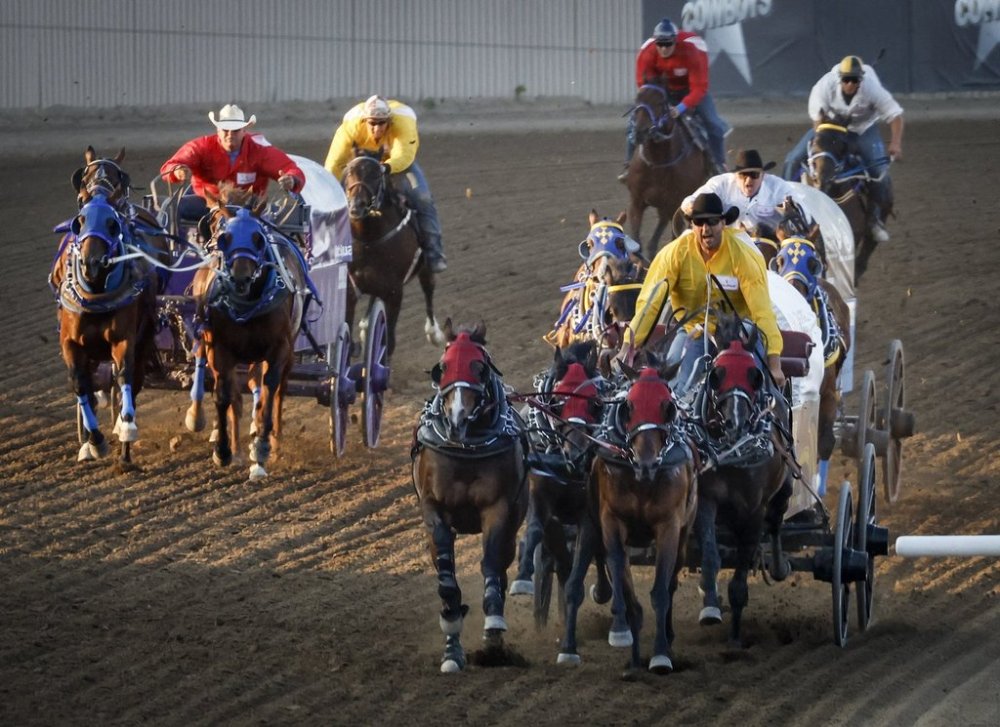
The top bid was $550,000 by Bar L5 Ranch for driver Rae Croteau Jr.
The annual event sees sponsors put up money to advertise on the chuckwagons in the festival’s signature race.
The auction is viewed as a bellwether of the oil city’s economy as many of the sponsors are from the energy sector.
“It’s a shocker, but it really shows the strength in Alberta, in the sport and in what the Calgary Stampede does,” said Croteau Jr. of the Thursday night bidding.
“This kind of support sets you up for the year. It’s not just the races, it’s the off-season, too — buying horses, building depth, sourcing feed — it even helps get the kids to hockey in the winter.”
This report by The Canadian Press was first published April 10, 2026.