
Alberta sticking to its gas tax formula as Ottawa announces cut amid high prices
Advertisement
Read this article for free:
or
Already have an account? Log in here »
We need your support!
Local journalism needs your support!
As we navigate through unprecedented times, our journalists are working harder than ever to bring you the latest local updates to keep you safe and informed.
Now, more than ever, we need your support.
Starting at $15.99 plus taxes every four weeks you can access your Brandon Sun online and full access to all content as it appears on our website.
Subscribe Nowor call circulation directly at (204) 727-0527.
Your pledge helps to ensure we provide the news that matters most to your community!
To continue reading, please subscribe:
Add Brandon Sun access to your Free Press subscription for only an additional
$1 for the first 4 weeks*
- Enjoy unlimited reading on brandonsun.com
- Read the Brandon Sun E-Edition, our digital replica newspaper
*Your next Free Press subscription payment will increase by $1.00 and you will be charged $20.95 plus GST for four weeks. After four weeks, your payment will increase to $24.95 plus GST every four weeks.
Read unlimited articles for free today:
or
Already have an account? Log in here »
EDMONTON – While Prime Minister Mark Carney announced federal measures to give Canadians relief at the pumps Tuesday, Alberta says its fuel tax will stay in place for now.
Alberta Finance Minister Nate Horner says he supports Ottawa’s move but says the province is sticking with its existing fuel tax — at least until July — in part because oil prices are inherently volatile.
He told reporters in the legislature the province is doing what it can.
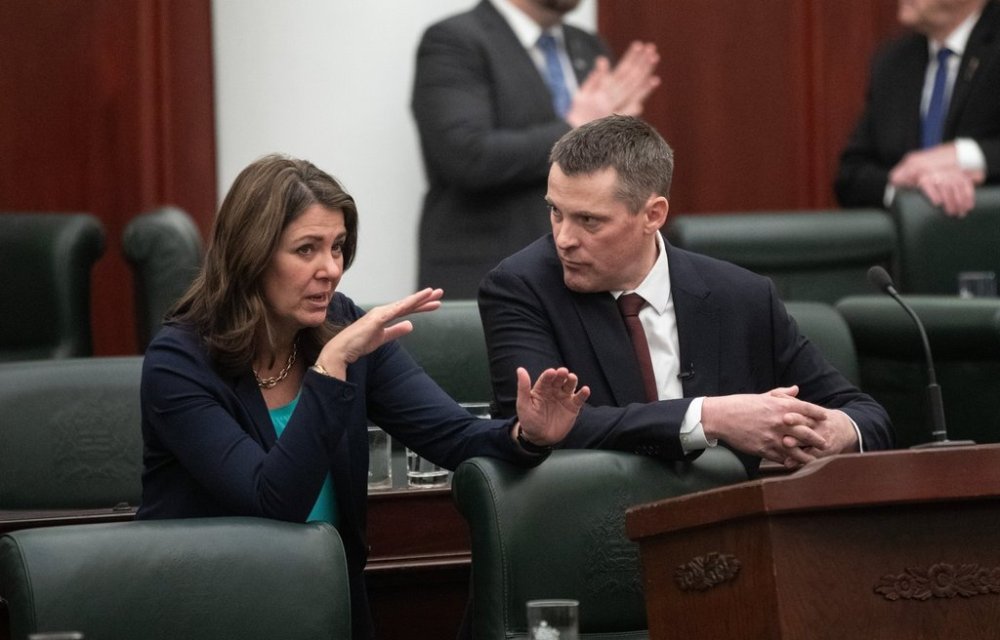
“If we’re going to give (the federal government) their flowers over this, you should also give us some on the fact we don’t have a (provincial) sales tax,” Horner said.
“They still have GST on fuel. There’s more they can do.”
The province’s current relief program would eliminate the tax of 13 cents per litre if the average benchmark North American West Texas Intermediate price remains at or above US$90 per barrel through portions of May and June.
As of Tuesday afternoon, WTI was hovering above the US$90 per barrel mark.
Alberta Opposition NDP Leader Naheed Nenshi has been calling on Premier Danielle Smith’s United Conservatives to drop the levy since the military conflict in the Middle East, which began in late February, choked global oil shipments and sent energy costs soaring.
Nenshi told reporters Tuesday the province needs to be more nimble in the face of extraordinary price fluctuations. He accused the government of hoarding windfall royalty revenues.
“They’re not willing to act, even though gas prices have gone up 40 cents a litre in a month. This is not normal. This is not normal fluctuation,” Nenshi said.
“They would rather have the money to cover up their monstrous deficit than to actually manage this government’s finances.”
Alberta’s 2025-26 budget was tabled two days before U.S.-Israeli attacks on Iran began, projecting a $9.4-billion deficit. That red ink is based in part on an estimated average WTI price of US$60.50 a barrel in the 2026 fiscal year, which began April 1.
Alberta’s budget is closely tethered to oil revenues. Every dollar change over the course of a year from the budgeted WTI is worth $680 million to Alberta.
In the legislature Tuesday, Nenshi again pressed Smith’s UCP to take action on the fuel tax, saying the average family could save over $300 per year.
Smith instead turned to her government’s record, noting it introduced a personal income tax cut that saw many two-income households save $1,500 per year.
“That saves five times the amount that a gas tax would,” said Smith.
She added she has sympathy for people dealing with the high cost of living.
“If we have surplus and windfall revenues, a portion of those will be returned to taxpayers,” she said.
The federal fuel excise tax break is to begin Monday and is expected to save Canadians 10 cents per litre on regular gasoline and four cents a litre on diesel until Labour Day.
The Canadian Automobile Association gas price tracker shows an average cost of $1.73 per litre at pumps across the country on Tuesday — more than 40 cents higher than a year ago.
Carney said waiving the excise tax for about four months means forgoing about $2.4 billion.
Alberta Energy Minister Brian Jean, at an unrelated news conference Tuesday, deferred to Horner when asked if he believes the provincial gas tax should be lifted.
But he added, “Albertans are generally going to be in a much better position today as a result of what’s happening around the world than other jurisdictions are.”
This report by The Canadian Press was first published April 14, 2026.
— With files from Craig Lord in Ottawa