
MPs question delay in Taiwan trade framework as diplomat says ball in cabinet’s court
Advertisement
Read this article for free:
or
Already have an account? Log in here »
We need your support!
Local journalism needs your support!
As we navigate through unprecedented times, our journalists are working harder than ever to bring you the latest local updates to keep you safe and informed.
Now, more than ever, we need your support.
Starting at $15.99 plus taxes every four weeks you can access your Brandon Sun online and full access to all content as it appears on our website.
Subscribe Nowor call circulation directly at (204) 727-0527.
Your pledge helps to ensure we provide the news that matters most to your community!
To continue reading, please subscribe:
Add Brandon Sun access to your Free Press subscription for only an additional
$1 for the first 4 weeks*
- Enjoy unlimited reading on brandonsun.com
- Read the Brandon Sun E-Edition, our digital replica newspaper
*Your next Free Press subscription payment will increase by $1.00 and you will be charged $20.95 plus GST for four weeks. After four weeks, your payment will increase to $24.95 plus GST every four weeks.
Read unlimited articles for free today:
or
Already have an account? Log in here »
OTTAWA – Conservative and Bloc Québécois MPs are calling on the Liberals to follow through on a trade co-operation framework with Taiwan after the territory’s envoy to Canada said Ottawa halted the process suddenly.
A senior Canadian diplomat said last week it’s up to cabinet to decide how to move forward on the agreement, which he suggested is almost ready for a signature.
“The government is considering the timing and the nature of moving forward on it,” Weldon Epp, the assistant deputy minister at Global Affairs Canada who oversees diplomacy in the Indo-Pacific, told the House foreign affairs committee on Thursday.
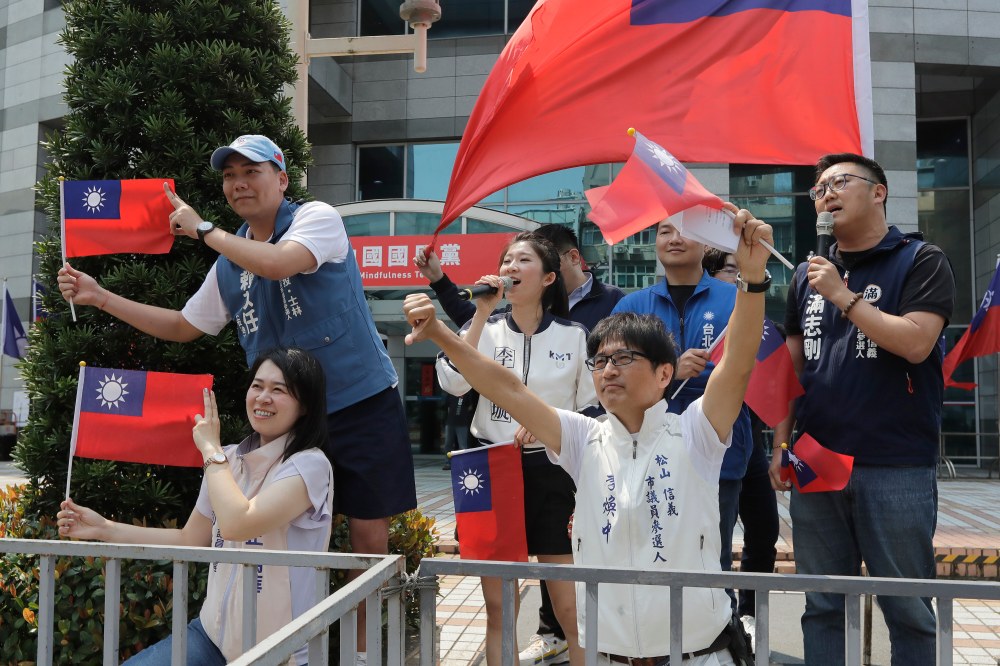
“I fully expect there will be decisions taken before too long on moving forward.”
He was speaking after Taiwan’s de facto ambassador Harry Tseng told Radio-Canada in a February report that the framework had been ready to be signed since April of last year.
Tseng, head of Taipei’s Economic and Cultural Office in Canada, declined an interview request last week.
He told Radio-Canada negotiating teams had initialled every page of the document. He said he suspected the Canadian government was stalling in order to improve relations with mainland China at Taiwan’s expense.
Prime Minister Mark Carney said at the time Canada could conduct trade with both jurisdictions.
“We have trade relations with Taiwan. But we’re focusing on strengthening our trade relations with China,” the prime minister said in French on Feb. 4.
Taiwan, a de facto autonomous island state, is regarded by the Chinese Communist Party as a rogue province that must be reunited with mainland China.
Under Canada’s long-standing One China policy, Ottawa regards Beijing as China’s sole representative but still collaborates with Taiwan.
At last week’s committee meeting, Bloc MP Alexis Brunelle-Duceppe accused the government of dragging its feet.
“It’s an agreement that doesn’t bring any risk,” he said in French. “The only valid reason right now for why we are not signing the agreement is simply because we do not want to upset Beijing.”
Conservative foreign affairs critic Michael Chong said the Tories want Ottawa to move “expeditiously” on the deal.
“We’re very supportive of the arrangement,” he told the committee.
The House trade committee has separately asked the government to “specify the anticipated timelines for the ratification of this agreement” and has asked International Trade Minister Maninder Sidhu to testify on the matter.
A spokesperson for Sidhu’s office said work on the deal is “highly advanced and is now under consideration by the minister” but did not offer a timeline for concluding the agreement.
“Informing the minister’s review will be the full spectrum of discussions Canadian officials are having with their Taiwanese interlocutors on a range of issues pertaining to the global trade environment,” wrote spokesman Mujtaba Hussain.
Epp said the framework is not a treaty — which would have to be tabled in Parliament — but merely an agreement that builds on existing pacts, such as the Canada-Taiwan foreign investment protection agreement.
He said the framework offers “an important opportunity for us to increase access for certain aspects of our economy.”
Darren Smith, the executive director of Indo-Pacific trade policy at Global Affairs, helped to negotiate the agreement. He told the committee the document is meant to set the stage for more specific agreements on things like the green economy, artificial intelligence and supply chains.
“It basically sets out process, architecture, contact points, those kinds of elements,” he said.
Last October, Foreign Affairs Minister Anita Anand affirmed the One China policy when asked about Taiwan in an interview.
“We will always put the needs of Canadians first and we will continue our engagement with Taiwan,” she said.
In a Jan. 21 interview, Chinese Ambassador to Canada Wang Di called on Canada to continue officially recognizing Beijing as the sole government of China while it engages with Taiwan.
“We don’t oppose unofficial activities — unofficial economic and people-to-people exchanges — but what we oppose is using economic and people-to-people exchange as a pretext to engage in official activities,” Wang said through his interpreter.
Epp said Global Affairs is following through on Anand’s request for an update to the Indo-Pacific strategy that Ottawa released in 2022 — before Carney took to office and shifted his government’s approach to China and India.
“I won’t presume as to the format of an update, whether it will be a document of speech or some other form. I’ll leave it to the minister,” he said.
This report by The Canadian Press was first published April 20, 2026.