
Manitoba premier says grocery tax cut will expand to corner stores
Advertisement
Read this article for free:
or
Already have an account? Log in here »
We need your support!
Local journalism needs your support!
As we navigate through unprecedented times, our journalists are working harder than ever to bring you the latest local updates to keep you safe and informed.
Now, more than ever, we need your support.
Starting at $15.99 plus taxes every four weeks you can access your Brandon Sun online and full access to all content as it appears on our website.
Subscribe Nowor call circulation directly at (204) 727-0527.
Your pledge helps to ensure we provide the news that matters most to your community!
To continue reading, please subscribe:
Add Brandon Sun access to your Free Press subscription for only an additional
$1 for the first 4 weeks*
- Enjoy unlimited reading on brandonsun.com
- Read the Brandon Sun E-Edition, our digital replica newspaper
*Your next Free Press subscription payment will increase by $1.00 and you will be charged $20.95 plus GST for four weeks. After four weeks, your payment will increase to $24.95 plus GST every four weeks.
Read unlimited articles for free today:
or
Already have an account? Log in here »
SELKIRK – Manitoba’s planned tax cut on prepared meals and snacks at grocery stores will be expanded to smaller outlets including convenience stores, Premier Wab Kinew said Friday.
The NDP government originally planned, in its March budget, to remove the sales tax from all food at grocery stores only, starting July 1, to help people with the cost of living.
Basic groceries are already tax-exempt at all stores, but the change would remove the tax from snacks, soft drinks and prepared meals such as rotisserie chickens, as long as it is sold at a grocery store.
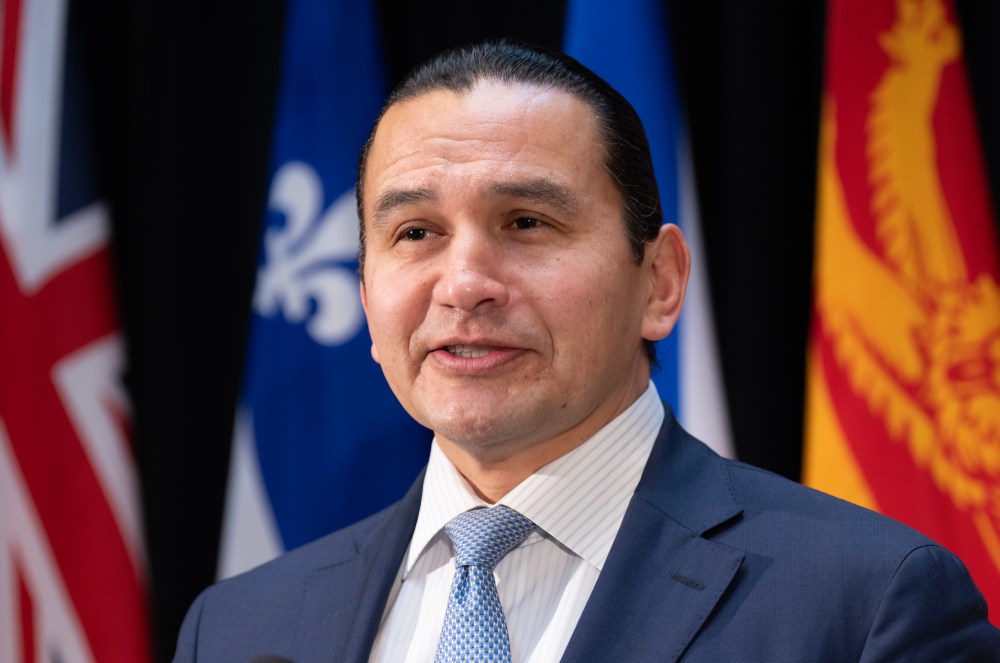
Convenience store owners had cried foul, saying they sell many of the same products and would be put at a disadvantage.
Kinew said the government has been studying the issue and has opted to include a wide range of retailers.
“You’re going to see the final word on this when we bring the budget (implementation) bill in May, but … the grocery store, the corner store, — wherever that you buy food and drinks that you’re going to take home for dinner, lunch, what have you — that’s going to be tax-free come Canada Day,” Kinew told reporters following a speech to business and political leaders north of Winnipeg.
The Retail Council of Canada, which had lobbied for the expansion, welcomed the news.
“It factors in the important role that convenience stores play … and ensures a level playing field between businesses selling the same products, often right across the street from each other,” regional director John Graham said.
There was no sign the expansion would go so far as to include restaurants, who have said it’s unfair that they’ll have to continue to charge tax on their takeout food.
Kinew also reiterated earlier comments about planning to end the changing of clocks in spring and fall.
The Alberta government recently announced plans to stay on daylight time year-round, which will bring it in line with Saskatchewan.
Kinew said Manitobans will be consulted in the coming months on the best way to proceed — year-round standard time or year-round daylight time — but the aim is to stick to one time by the end of the year.
He said if the province remains on standard time, all three Prairie provinces would essentially be in the same time zone, which could provide economic benefits.
Kinew admitted there is political risk to changing the current system — some people would like to keep the late sunsets offered by daylight time, but others prefer standard time to avoid later sunrises, which would have children going to school in the dark in winter.
“Maybe we can form a bit of a consensus by taking the time, explaining some of the health benefits, talking about some of the pros and cons, and just taking the time to listen,” Kinew said.
Public consultations are expected to start soon on the government’s consultation web site.
This report by The Canadian Press was first published April 24, 2026