
Joly unveils $1.5 billion in tariff relief after Trump ratchets up trade war
Advertisement
Read this article for free:
or
Already have an account? Log in here »
We need your support!
Local journalism needs your support!
As we navigate through unprecedented times, our journalists are working harder than ever to bring you the latest local updates to keep you safe and informed.
Now, more than ever, we need your support.
Starting at $15.99 plus taxes every four weeks you can access your Brandon Sun online and full access to all content as it appears on our website.
Subscribe Nowor call circulation directly at (204) 727-0527.
Your pledge helps to ensure we provide the news that matters most to your community!
To continue reading, please subscribe:
Add Brandon Sun access to your Free Press subscription for only an additional
$1 for the first 4 weeks*
- Enjoy unlimited reading on brandonsun.com
- Read the Brandon Sun E-Edition, our digital replica newspaper
*Your next Free Press subscription payment will increase by $1.00 and you will be charged $20.95 plus GST for four weeks. After four weeks, your payment will increase to $24.95 plus GST every four weeks.
Read unlimited articles for free today:
or
Already have an account? Log in here »
OTTAWA – The federal government said Monday it will put $1.5 billion toward tariff relief in response to the United States expanding the range and depth of its metal tariffs.
The announcement includes the creation of a new $1 billion program under the Business Development Bank of Canada to bolster the manufacturing sector, along with a $500 million top-up to the regional tariff response fund.
The new BDC loan programming is meant to shore up factories hit by U.S. tariffs affecting exports of products containing steel, aluminum and copper.
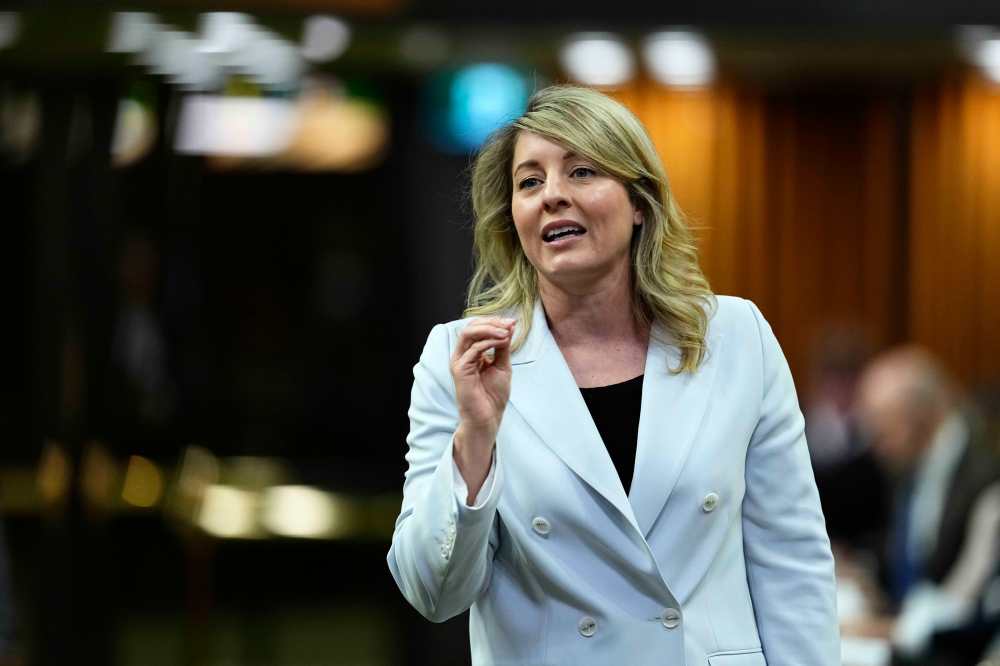
Ottawa will make available three-year, low-interest loans of up to $50 million for the aluminum, steel and copper sectors. The loans don’t have to be repaid for three years.
Industry Minister Mélanie Joly and Digital Innovation Minister Evan Solomon announced the new measures Monday morning. They said businesses need quick access to liquidity in the short term and medium-term help to find new export markets.
“We’re in a trade war. We are on the front lines and the goal is to protect workers and actually keep companies afloat,” Joly told a news conference in Ottawa.
“Our goal is really to make sure ultimately that the businesses keep their workforces and that we can help them pivot, and it’s not an easy task.”
Even with access to the extra funds, some manufacturing companies are warning they may not be able to stand the strain of President Donald Trump’s more aggressive tariff regime.
Trump signed a proclamation on April 2 to strengthen his steel and aluminum tariffs and added copper derivatives.
That has made it more expensive for Canadian manufacturers to export to the U.S. It also has added dizzying complexity to the way tariff rates on goods are assessed, sowing confusion among customs brokers and small Canadian firms.
Nicole Vlanich, executive director of the Canadian Association of Moldmakers, told The Canadian Press on Monday her industry appreciates the quick response from Ottawa but the loan plan doesn’t go far enough.
“These companies are already financially strapped, so adding more stress in the form of additional payments, even if it is extended terms, will just create more problems down the line,” Vlanich said.
Her organization is looking to have the federal government take on the cost of the additional tariffs implemented in April, which are slamming small and medium-sized business with thin profit margins.
“These tariffs are putting them in the red. What they need is support that creates certainty so they can continue on,” Vlanich said.
“We have members now receiving their first bills and for one shipment, it’s as high as $600,000 in tariffs, and that’s just the tariffs. It’s too much to manage.”
Catherine Cobden, head of the Canadian Steel Producers Association, said in a media statement Monday that her organization welcomes the new financial supports for the industry. She also called for additional measures.
She said Trump’s tariff tweaks are having a “profound impact on our downstream customers.”
Cobden called on Ottawa to strengthen its tariff regime to protect the Canadian market from imports of “derivative” steel products that domestic firms already produce.
Conservative industry critic Raquel Dancho said the measures are only a temporary fix and a “clear admission” by the Liberal government that there is “no deal in sight” to end the punishing tariffs.
“We’re increasingly concerned there isn’t urgency being had by the Liberal government,” Dancho said in the House of Commons foyer before question period.
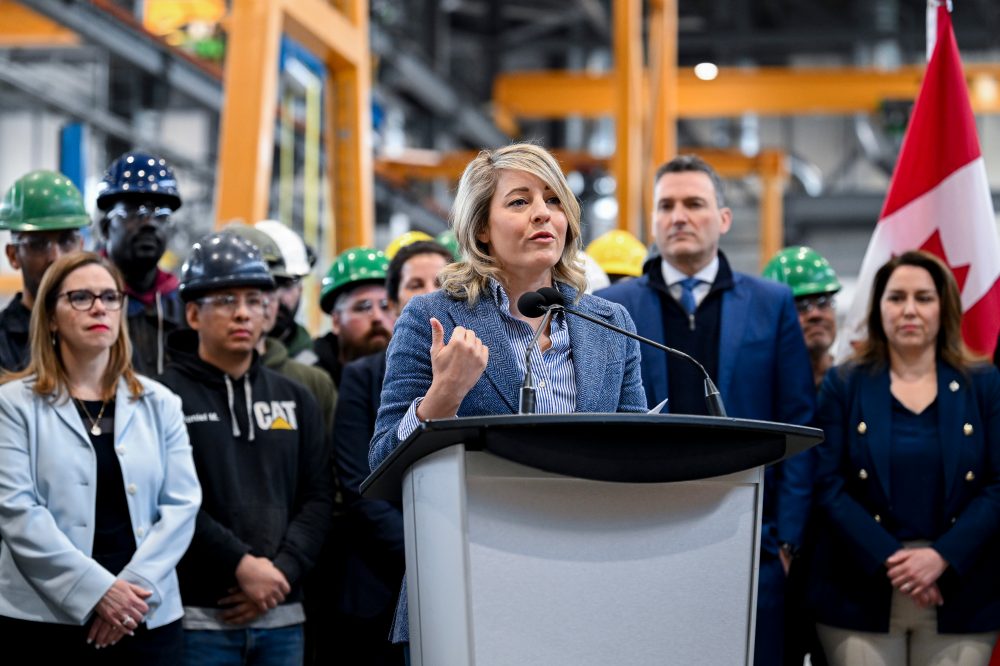
Joly’s Monday news conference to announce the new measures was held at the Les Ateliers Beau-Roc dump truck manufacturing facility on the outskirts of Ottawa.
It was attended by several Liberal MPs from ridings hit hard by tariffs, including Hamilton’s Lisa Hepfner and Sarnia’s Marilyn Gladu.
Dominique O’Rourke, the MP for Guelph — one of the most tariff-exposed regions in Canada — said the main thing affecting businesses in Ontario’s manufacturing belt is uncertainty, and this help is “urgently needed.”
“This new interpretation of the section 232 tariffs has really been significant because companies that were exporting under one assumption, things have turned on a dime for them,” she said.
“It’s a huge challenge for companies to be keeping track of the tariff changes.”
She said large firms have seen their production slow down, while assemblers and fabricators down the supply chain are seeing both shop floor slowdowns and job losses.
Joly said the government is currently in talks with softwood and forestry companies about further financial supports.
This report by The Canadian Press was first published May 4, 2026.