
US and China trade journalist expulsions in tit-for-tat moves
Advertisement
Read this article for free:
or
Already have an account? Log in here »
We need your support!
Local journalism needs your support!
As we navigate through unprecedented times, our journalists are working harder than ever to bring you the latest local updates to keep you safe and informed.
Now, more than ever, we need your support.
Starting at $15.99 plus taxes every four weeks you can access your Brandon Sun online and full access to all content as it appears on our website.
Subscribe Nowor call circulation directly at (204) 727-0527.
Your pledge helps to ensure we provide the news that matters most to your community!
To continue reading, please subscribe:
Add Brandon Sun access to your Free Press subscription for only an additional
$1 for the first 4 weeks*
- Enjoy unlimited reading on brandonsun.com
- Read the Brandon Sun E-Edition, our digital replica newspaper
*Your next Free Press subscription payment will increase by $1.00 and you will be charged $20.95 plus GST for four weeks. After four weeks, your payment will increase to $24.95 plus GST every four weeks.
Read unlimited articles for free today:
or
Already have an account? Log in here »
WASHINGTON (AP) — The Trump administration has revoked the visa of a Chinese national working for the state news agency Xinhua in the United States, in an apparent reciprocal act to Beijing’s decision to expel a New York Times reporter.
A person familiar with the matter confirmed the visa had been revoked. The person spoke on condition of anonymity because the matter involves visa privacy. A State Department official confirmed there was a plan to revoke the visa.
The tit-for-tat move by the Trump administration has followed the expulsion by Beijing of Vivian Wang, a China correspondent for The New York Times, apparently over the appearance of the Taiwanese leader in a DealBook event in which Wang had no role. It was a rare occasion of the U.S. government directly retaliating against Beijing’s expulsion of American journalists.
The Times, which first reported the reciprocal move by the Trump administration, said the newspaper does not ask governments to revoke media credentials or otherwise interfere with the work of any journalist. On Friday, the paper issued a statement calling for Wang to be reinstated as a credentialed journalist in China and urging both governments to “reverse this deterioration in journalist access.”
“The Chinese government’s decision to expel Vivian Wang is wrong,” Joseph Kahn, the paper’s executive editor, said in a statement published on the Times’ corporate website. “Her expulsion will make it even harder for our global audience to get accurate, independent and in-depth reporting about the world’s second largest economy at a critical time.”
The Chinese embassy in Washington did not immediately respond to a request for comment.
US media presence in China already dwindled
Wang is leaving China when the presence of U.S. media is already thin after previous rounds of disputes over journalistic credentials, leaving several U.S. news organizations with skeleton staffing in their China bureaus.
“The number of correspondents from American media outlets allowed to work in China has now fallen to an alarmingly low level, at a time when the need for people everywhere to understand China is greater than ever,” Kahn wrote.
Beijing moved to expel Wang, a China correspondent for the newspaper since 2020, after the media group’s DealBook Summit 2025 featured Taiwanese President Lai Ching-te in a recorded interview with host Andrew Ross Sorkin. Sorkin called Taiwan a country, and Lai warned of Beijing’s aggressive behavior in the Taiwan Strait and vowed that “Taiwan will do everything necessary to protect itself.”
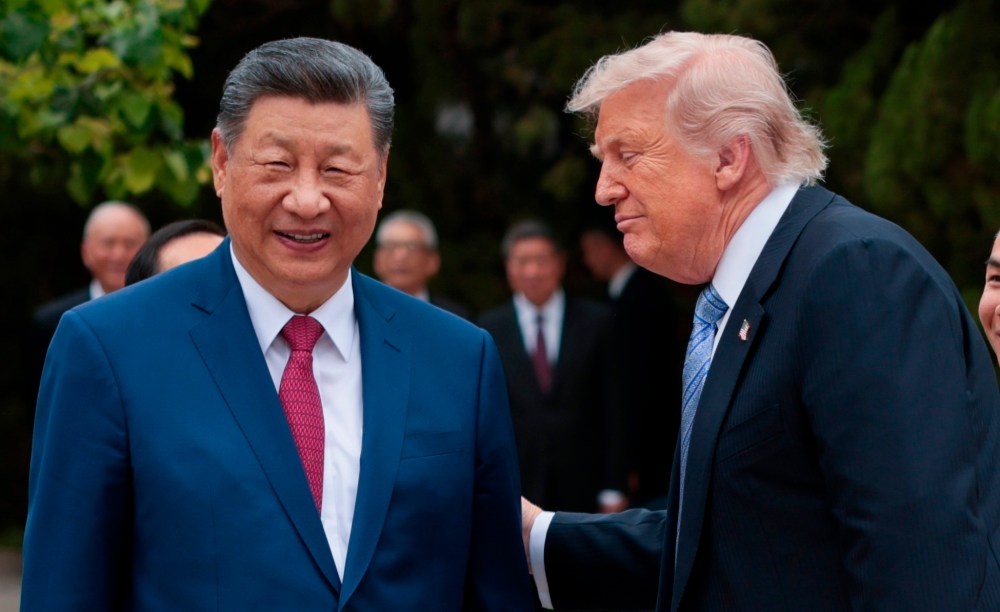
The Chinese government claims sovereignty over Taiwan, which split from the mainland in 1949 after Mao Zedong’s communists won a civil war. In the latest summit with President Donald Trump in Beijing, in mid-May, Chinese President Xi Jinping warned that China and the U.S. could “collide or even clash” over Taiwan if the issue is not handled properly.
Other Western media watching closely
The decision against The New York Times also has created unease among other Western media that might interview Lai, giving the self-governed island a voice, at the risk of losing their abilities to report within China.
All foreign journalists must be accredited by China’s foreign ministry to report in China, and Beijing has used the accreditation and visa policy to expel or keep out foreign journalists whose work has upset the Chinese leadership or to show displeasure with what Beijing views as unfavorable or malicious coverage of China.
In 2020, for example, the Chinese government expelled three Wall Street Journal correspondents after the financial newspaper ran an opinion piece titled “China is the Real Sick Man of Asia” following the outbreak of the COVID-19 pandemic.
As U.S.-China relations soured, the U.S. State Department in 2020 designated some major Chinese news groups as “foreign missions”. Xinhua, for example, is tasked by the ruling Chinese Communist Party to serve as the mouthpiece of the party and the government, which includes distributing their official news.
Beijing in turn drastically limited visas for journalists working for U.S. media.
In total, at least 18 foreign journalists working for The Washington Post, The New York Times and The Wall Street Journal were expelled in the first half of 2020, according to the Foreign Correspondents’ Club of China. Many others were given short visas ranging from one month to three months, according to the group’s annual survey.
The two governments later reached a one-time agreement that allowed U.S. media to send in a small number of correspondents to mainland China. Wang was one of them.
__
An earlier headline on this story said the expulsions happened days after Trump visited Beijing. The New York Times says its reporter was expelled from China in February.