
Shocking problem for osprey nests built on B.C. power poles prompts relocations
Advertisement
Read this article for free:
or
Already have an account? Log in here »
We need your support!
Local journalism needs your support!
As we navigate through unprecedented times, our journalists are working harder than ever to bring you the latest local updates to keep you safe and informed.
Now, more than ever, we need your support.
Starting at $15.99 plus taxes every four weeks you can access your Brandon Sun online and full access to all content as it appears on our website.
Subscribe Nowor call circulation directly at (204) 727-0527.
Your pledge helps to ensure we provide the news that matters most to your community!
To continue reading, please subscribe:
Add Brandon Sun access to your Free Press subscription for only an additional
$1 for the first 4 weeks*
- Enjoy unlimited reading on brandonsun.com
- Read the Brandon Sun E-Edition, our digital replica newspaper
*Your next Free Press subscription payment will increase by $1.00 and you will be charged $20.95 plus GST for four weeks. After four weeks, your payment will increase to $24.95 plus GST every four weeks.
Read unlimited articles for free today:
or
Already have an account? Log in here »
WILLIAMS LAKE – It’s a busy time for ospreys in British Columbia as they find a tall place to build their nests, but the provincial power utility says it can also be a dangerous period for them.
BC Hydro says its crews have recently moved two osprey nests in the Williams Lake area to purpose-built nesting platforms not far from their original nests on active power poles.
Hydro says in a statement that a bird’s choice of nesting on a power pole poses significant dangers to the animals, but as it keeps adding sticks to its home, it also increases the risk of power outages.
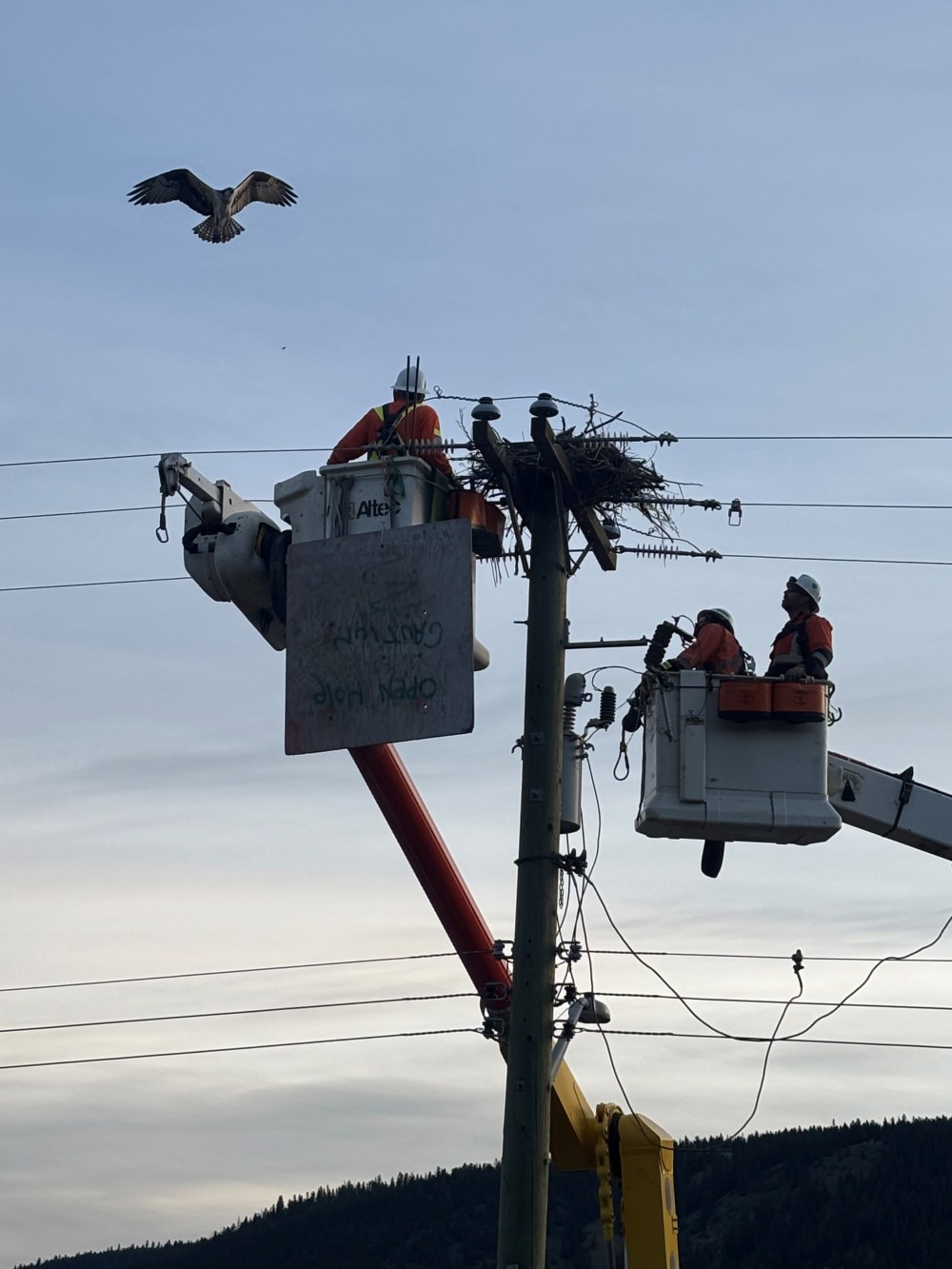
The utility says in a statement that the relocations are part of broader work to manage the osprey-related risks.
Crews in the southern Interior have worked on 16 nesting platforms this year, either for relocating nests, replacing aging platforms or installing new sites in areas with repeated osprey-related outages.
Peak nesting activity for the birds is from April to July, and BC Hydro says because ospreys often reuse their nests, early detection and relocation is especially important.
This report by The Canadian Press was first published June 2, 2026.