
Health experts tell Quebec politicians there are no benefits from energy drinks
Advertisement
Read this article for free:
or
Already have an account? Log in here »
We need your support!
Local journalism needs your support!
As we navigate through unprecedented times, our journalists are working harder than ever to bring you the latest local updates to keep you safe and informed.
Now, more than ever, we need your support.
Starting at $15.99 plus taxes every four weeks you can access your Brandon Sun online and full access to all content as it appears on our website.
Subscribe Nowor call circulation directly at (204) 727-0527.
Your pledge helps to ensure we provide the news that matters most to your community!
To continue reading, please subscribe:
Add Brandon Sun access to your Free Press subscription for only an additional
$1 for the first 4 weeks*
- Enjoy unlimited reading on brandonsun.com
- Read the Brandon Sun E-Edition, our digital replica newspaper
*Your next Free Press subscription payment will increase by $1.00 and you will be charged $20.95 plus GST for four weeks. After four weeks, your payment will increase to $24.95 plus GST every four weeks.
Read unlimited articles for free today:
or
Already have an account? Log in here »
Health experts told Quebec’s legislature that there are no health benefits to consuming energy drinks as Health Minister Sonia Bélanger hopes to pass a bill banning the sale of the beverages to those under 16.
The Quebec government has until Friday to pass a slew of bills, including the energy drink ban, before the parliamentary session ends. It will be the last session before the general election scheduled for October.
Pharmacists, cardiologists, public health and lobby groups spoke to the elected officials in Quebec City on Tuesday after the Conservative Party requested special public consultations.
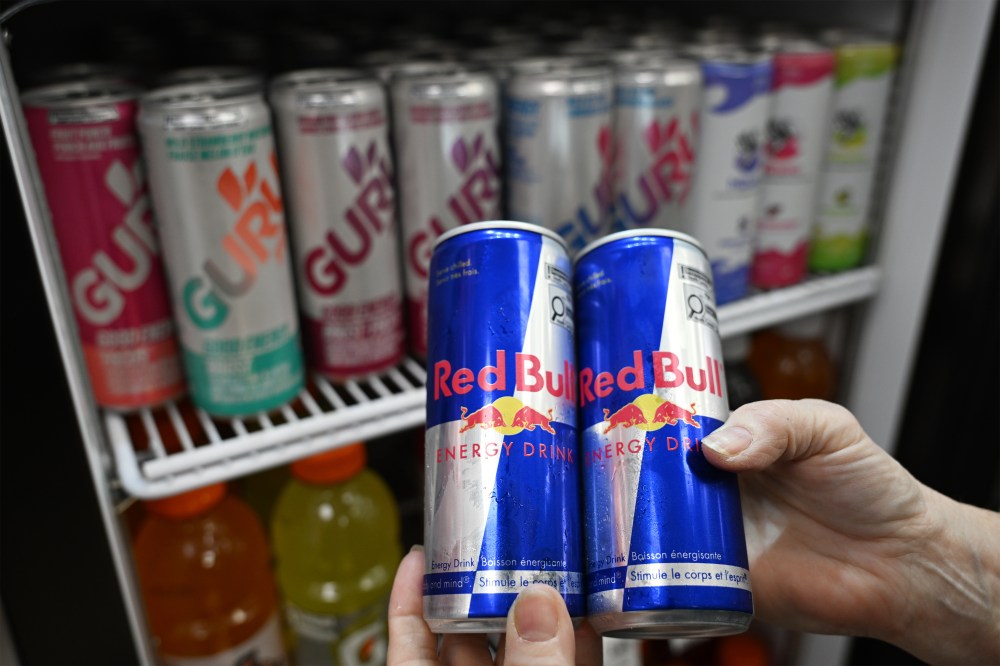
The health experts said they support a ban, adding that it must be accompanied with other measures like awareness campaigns and marketing regulation.
The government needs unanimous consent to fast-track legislation. The Parti Québécois, the Coalition Avenir Québec, Québec Solidaire and the Quebec Liberals have all said they support the proposed law.
Maïté Blanchette-Vézina, the sole Conservative representative at the legislature, said last week her party was hesitant to support the ban. She accused the government of rushing to pass its bill without proper debate.
Blanchette-Vézina, a former CAQ minister, is one of 10 independent members of the Quebec legislature who could prevent the unanimous consent needed to pass the bill.
“I’ve said it before, we aren’t going to oppose a fast-track procedure, although I don’t think the bill will achieve its objective, unfortunately. Instead, it will create a false sense of security,” she said in an interview after Tuesday’s public consultations.
Pressure has been mounting on the provincial government to place restrictions on the sale of energy drinks ever since 15-year-old Zachary Miron died after drinking a can of Red Bull while on ADHD medication in 2024.
A coroner’s report said the combination of the medication and caffeine may have caused an arrhythmia that led to his sudden death.
Blanchette-Vézina also met with Miron’s parents last Friday and said the discussions were “very moving.”
“I’ve always said that after this bill, I’ll vote with my mother’s heart, my own heart, but I think we also need to be rational,” she said.
During the consultations, public health experts, pharmacists and cardiologists agreed that energy drinks can be harmful to children.
A representative of the Canadian Beverage Association, a lobby group representing non-alcoholic beverage manufacturers, acknowledged there are no benefits to energy drinks but suggested launching a new awareness campaign instead of imposing a ban.
Carole Grenier, arguing on behalf of the association, said kids would still have access to coffee, which has an equivalent caffeine content.
The Institut national de santé publique du Québec, which looks into public health issues in the province, published a report on the risks associated to energy drink consumption in 2023 noting an uptick in consumption among teens.
Jean-Bernard Gamache, a head researcher in toxicology at the institute, said there are many public health issues when it comes to energy drinks.
“The sugar in them isn’t good. High caffeine consumption among young people, in our view, is not good. Then there’s the brand image that is promoted through these drinks,” he said.
He said the energy drinks are often marketed as “magic potions” that enhance performance or hydration, but can cause side effects like insomnia, restlessness, irritability, headaches, increased heart rate and increased blood pressure.
He said the beverages are marketed differently than other high-caffeine drinks like coffee and are attractive to teens.
Quebec’s order of pharmacists supports the ban, having already put out a memo asking chains and banners to prohibit the sale of energy drinks at their stores. Quebec City-based chain Familiprix has already pulled the beverages off their shelves.
President of the order Jean-François Desgagné said the drinks are “useless at best, harmful at worst,” citing the Canadian Pediatric Society. He said pharmacists have adjusted the warnings they give patients who are prescribed stimulants.
Cardiologist Dr. Bernard Cantin said sudden deaths like Miron’s are extremely rare and it can be difficult to establish correlations between the caffeine found in energy drinks and cardiac arrythmia.
He said while the risk is low, health complications leading to death can arise from overconsumption of the beverages.
This report by The Canadian Press was first published June 9, 2026.