
Manitoba eyes shrinkflation law, grocery store in downtown Winnipeg
Advertisement
Read this article for free:
or
Already have an account? Log in here »
We need your support!
Local journalism needs your support!
As we navigate through unprecedented times, our journalists are working harder than ever to bring you the latest local updates to keep you safe and informed.
Now, more than ever, we need your support.
Starting at $15.99 plus taxes every four weeks you can access your Brandon Sun online and full access to all content as it appears on our website.
Subscribe Nowor call circulation directly at (204) 727-0527.
Your pledge helps to ensure we provide the news that matters most to your community!
To continue reading, please subscribe:
Add Brandon Sun access to your Free Press subscription for only an additional
$1 for the first 4 weeks*
- Enjoy unlimited reading on brandonsun.com
- Read the Brandon Sun E-Edition, our digital replica newspaper
*Your next Free Press subscription payment will increase by $1.00 and you will be charged $20.95 plus GST for four weeks. After four weeks, your payment will increase to $24.95 plus GST every four weeks.
Read unlimited articles for free today:
or
Already have an account? Log in here »
WINNIPEG – Manitoba’s government says it is eyeing new rules to mandate unit pricing in grocery stores in order to shine a light on producers who reduce the size of a product while keeping the price the same.
The announcement follows the release of a study that analyzed grocery pricing in the province.
Finance Minister Adrien Sala told reporters on Monday that possible legislation would require grocers to establish standardized unit pricing so consumers can make better informed decisions.
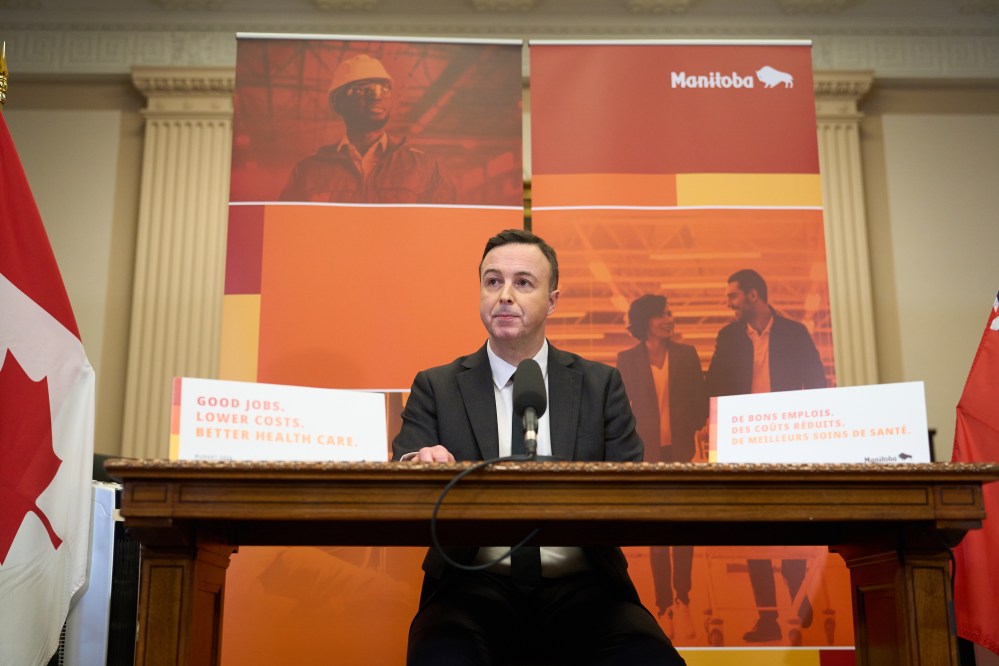
“This is about ensuring that Manitoba consumers can get as much information as they need,” he said.
The report from the province cited a previous study from the Competition Bureau of Canada that identified standardized unit pricing as a way to encourage greater competition among retailers.
It said legislation could make it easier to recognize when package sizes are reduced but the price is not.
Sala did not offer a timeline on when legislation could be introduced.
Similar laws were introduced in Quebec last year. The province requires grocery retailers to include more information on displays, such as the price per unit of measure. With the implementation of this in Quebec, many national grocers already have some form of unit-based pricing in their stores across Canada.
The Retail Council of Canada said legislative changes in Manitoba will likely only affect regional operators such as Save-On Foods, Red River Co-op or Food Fair.
The advocacy group expects these retailers will have to invest a significant amount of money and time to make unit-based pricing changes — costs that could potentially be passed on to shoppers.
“Any implementation of this in Manitoba would come at a cost,” said John Graham, the council’s regional director of government relations.
Another issue is lack of access to stores.
The government study said it appears between nine and 15 per cent of Winnipeg residents live in neighbourhoods that experience characteristics consistent with “food deserts.”
Sala said the province is looking at how it could support a grocery store in downtown Winnipeg, pointing to long-standing calls from community groups to open a full-scale grocery store in the area. Low downtown traffic, high capital costs and security concerns have made it challenging for retailers.
“It will be very difficult to make the math work unless there is some type of subsidy or arrangement that’s worked through the government,” said Graham.
The Downtown Winnipeg BIZ, which represents 1,300 businesses in the district, said more amenities are needed as several mixed-use development projects are erected.
Premier Wab Kinew’s government has taken other steps to reduce food costs.
It is removing the provincial sales tax from snacks, soft drinks and prepared meals in grocery and convenience stores as of July 1. It also brought in a law last year prohibiting the use of property controls in land sales that might prevent a grocery store from opening close to an existing one.
It has promised to crack down on “differential pricing,” a practice that sees customers charged different prices for the same grocery product from the same store based on their prior shopping patterns or personal information.
There is little evidence to suggest this type of pricing is being used in Manitoba, but Sala said the province is putting a stop to the practice before it becomes routine.
The government is also providing $2.5 million to help support the creation of a centre run by non-profit food bank Harvest Manitoba that will see donated food repurposed into meals.
This report by The Canadian Press was first published June 22, 2026.