
Bow Glacier Falls Trail, site of two deaths in 2025 rock slide, reopens to hikers
Advertisement
Read this article for free:
or
Already have an account? Log in here »
We need your support!
Local journalism needs your support!
As we navigate through unprecedented times, our journalists are working harder than ever to bring you the latest local updates to keep you safe and informed.
Now, more than ever, we need your support.
Starting at $15.99 plus taxes every four weeks you can access your Brandon Sun online and full access to all content as it appears on our website.
Subscribe Nowor call circulation directly at (204) 727-0527.
Your pledge helps to ensure we provide the news that matters most to your community!
To continue reading, please subscribe:
Add Brandon Sun access to your Free Press subscription for only an additional
$1 for the first 4 weeks*
- Enjoy unlimited reading on brandonsun.com
- Read the Brandon Sun E-Edition, our digital replica newspaper
*Your next Free Press subscription payment will increase by $1.00 and you will be charged $20.95 plus GST for four weeks. After four weeks, your payment will increase to $24.95 plus GST every four weeks.
Read unlimited articles for free today:
or
Already have an account? Log in here »
CALGARY – An Alberta mountain hiking trail where two people died in a rock slide last year has reopened, but with some cautions.
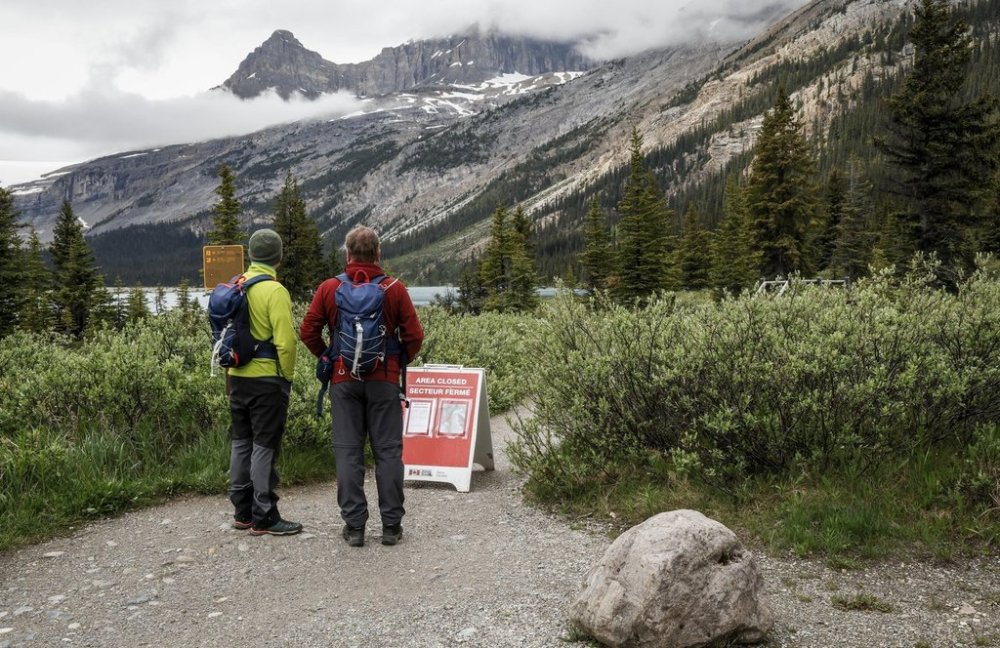
Parks Canada announced Thursday the Bow Glacier Falls Trail in Banff National Park now has warning signs steering hikers away from more hazardous areas at the end of the official trail.
In June 2025, the cliffside along Bow Glacier Falls Trail collapsed while several groups of hikers were in the area. Jutta Hinrichs, 70, and Hamza Benhilal, 33, were killed. Ten more were injured.
A geotechnical assessment prepared for Parks Canada examined rock slide hazards in the area and identified lower-risk zones and areas with higher exposure.
“It would be reasonable to expect further rockfalls both from the source area of the June 2025 event and from other parts of the rock face below the lake,” writes Dave Gauthier, the author of the report.
“While the bulk of the rock dislodged or destabilized during the June 2025 event has fallen, there is likely some additional material associated with that event which could still fall.”
The report said the fatal rock slide occurred in less than a minute.
“The latter stages of the rockfall were captured on video shared widely in the days following the event,” said Gauthier.
“It showed the rapid disaggregation of the falling rock (and) a significant dust cloud.”
The trailhead is located near the Icefields Parkway at Bow Lake and allows hikers access to within about 30 metres of the rockfall site.
The report did not look at a formal risk assessment but it suggests individual risk may be “tolerable for a short visit” to the falls.
Francois Masse, the superintendent of Parks Canada’s Lake Louise, Yoho and Kootenay Field Unit, said the 3.8-kilometre trail is a fairly easy hike for most visitors.
There will be signs at the end of it warning that going past that point puts them in a high-risk area, Masse said in an interview Thursday.
Other than the signs, he said there’s nothing to prevent people from going off trail.
“Anywhere in the mountains there are risks present. This is not a controlled environment. This is not a mall,” Masse said.
“In the mountains there’s always a certain level of risk, and one thing we’ve been saying for a long time is your safety is your responsibility.”
Gauthier said in the report that many visitors are not experienced backcountry travellers with expertise in managing geohazard exposure, so the initial closure of the area was a way to avoid risk.
“However, it comes at the cost of missed opportunities by park visitors to enjoy the trail and the falls.”
Masse said it’s a relief to reopen the trail, which until recently had still been under snow. But the rock slide isn’t something people will soon forget.
“I really want to spare a thought and give our condolences for the families of the victims,” he said.
“I know it’s never going to be fully behind them, but at the same time, it is a nice way to move forward, to be able to reopen the trail in a way that is safe.”
This report by The Canadian Press was first published July 16, 2026.