
Feds to spend $1.9B to replace Via Rail locomotive fleet, build plant
Advertisement
Read this article for free:
or
Already have an account? Log in here »
We need your support!
Local journalism needs your support!
As we navigate through unprecedented times, our journalists are working harder than ever to bring you the latest local updates to keep you safe and informed.
Now, more than ever, we need your support.
Starting at $15.99 plus taxes every four weeks you can access your Brandon Sun online and full access to all content as it appears on our website.
Subscribe Nowor call circulation directly at (204) 727-0527.
Your pledge helps to ensure we provide the news that matters most to your community!
To continue reading, please subscribe:
Add Brandon Sun access to your Free Press subscription for only an additional
$1 for the first 4 weeks*
- Enjoy unlimited reading on brandonsun.com
- Read the Brandon Sun E-Edition, our digital replica newspaper
*Your next Free Press subscription payment will increase by $1.00 and you will be charged $20.95 plus GST for four weeks. After four weeks, your payment will increase to $24.95 plus GST every four weeks.
Read unlimited articles for free today:
or
Already have an account? Log in here »
OTTAWA – The federal government says it plans to spend $1.6 billion to replace 45 of Via Rail’s aging locomotives and another $357 million to build a new assembly plant and maintenance facility.
“Locomotive assembly is returning to Canada,” Transport Minister Steven MacKinnon said Wednesday at a news conference in Montreal, where the plant will be built.
Ottawa says the trains will be built by Switzerland-based Stadler. The first nine are to be built in Spain, while the remaining 36 will be built in Canada after Canadian workers learn how to assemble them from their Spanish counterparts.
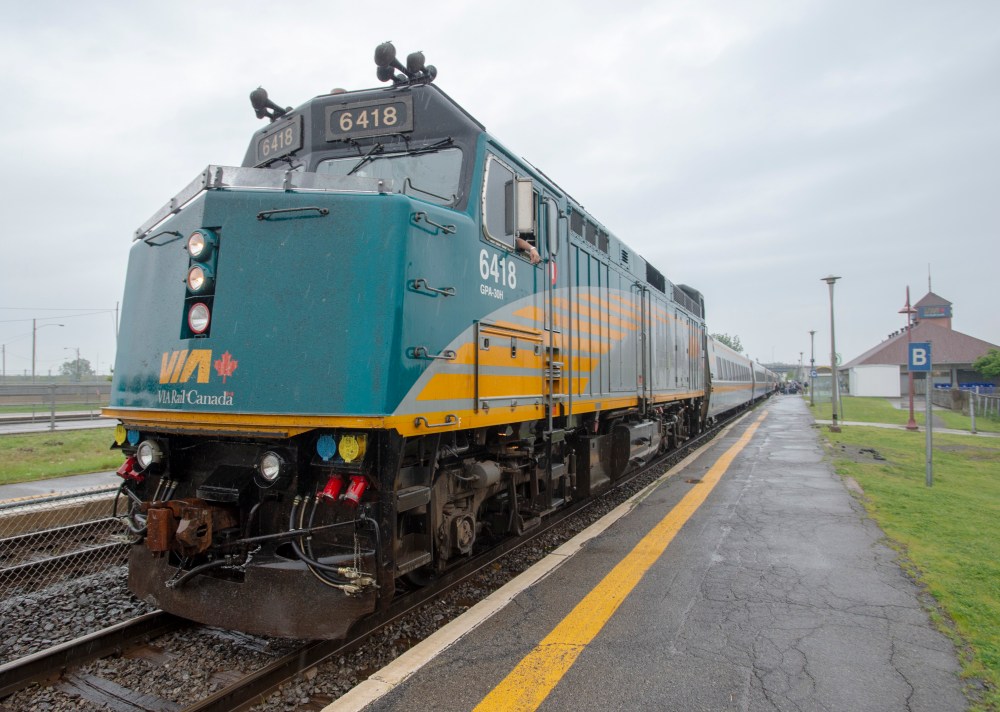
The locomotives are expected to be the first hybrid trains in North America.
“An aging fleet comes with challenges. Today’s announcement gives us the tools we need to do better by our passengers,” Via Rail CEO Mathieu Paquette said.
“The new hybrid locomotive offers us better performance, reliability, and will allow us to reduce our emissions and fuel use.”
The trains will replace Via Rail’s fleet across the country, except for the Windsor-Quebec City corridor, where the federal government is planning the Alto high-speed rail line. The trains along that corridor were replaced in 2018.
Officials at the news conference were asked how the new locomotives will improve Via Rail’s service.
Canada’s auditor general reported earlier this year that the Crown corporation needed to improve its service and noted that Via had failed over the past decade to improve its on-time performance, which sank to a dismal 30 per cent in the first three months of 2025.
“It’s true there are obstacles with respect to reliable operation of Via Rail in certain parts of the country, particularly where Via Rail shares its rail routes with cargo trains,” MacKinnon said in French.
“But we expect improvements in customer service, in terms of reliability. People should count on a reliable train service.”
Speaking to The Canadian Press later, MacKinnon said the new equipment will improve Via’s reliability.
“More broadly, we expect Via Rail to improve its customer service experience, and improve its reliability track record,” he said.
“Reliability is one of — if not the — essential ingredient in attracting riders. We have an interest as a country in attracting ridership on Via Rail, and to Alto when it is constructed. So all of the decisions we make are with a view to helping Via to improve their service, and we’ve set out a clear challenge to Via management to make sure the situation continues to improve.”
MacKinnon said the deal will create 1,200 new full-time jobs and the hybrid trains will be built with Canadian-made batteries.
The first trains are expected to enter service by 2031.
Paquette also said Via Rail will soon make an announcement on replacing its passenger cars.
“The process is still ongoing, so I can’t comment. But I can say that we’ll make an announcement,” Paquette said in French.
This report by The Canadian Press was first published July 29, 2026.
— With files from Chris Reynolds in Montreal