
Manitoba government to explore southern Winnipeg rail bypass route
Advertisement
Read this article for free:
or
Already have an account? Log in here »
We need your support!
Local journalism needs your support!
As we navigate through unprecedented times, our journalists are working harder than ever to bring you the latest local updates to keep you safe and informed.
Now, more than ever, we need your support.
Starting at $15.99 plus taxes every four weeks you can access your Brandon Sun online and full access to all content as it appears on our website.
Subscribe Nowor call circulation directly at (204) 727-0527.
Your pledge helps to ensure we provide the news that matters most to your community!
To continue reading, please subscribe:
Add Brandon Sun access to your Free Press subscription for only an additional
$1 for the first 4 weeks*
- Enjoy unlimited reading on brandonsun.com
- Read the Brandon Sun E-Edition, our digital replica newspaper
*Your next Free Press subscription payment will increase by $1.00 and you will be charged $20.95 plus GST for four weeks. After four weeks, your payment will increase to $24.95 plus GST every four weeks.
Read unlimited articles for free today:
or
Already have an account? Log in here »
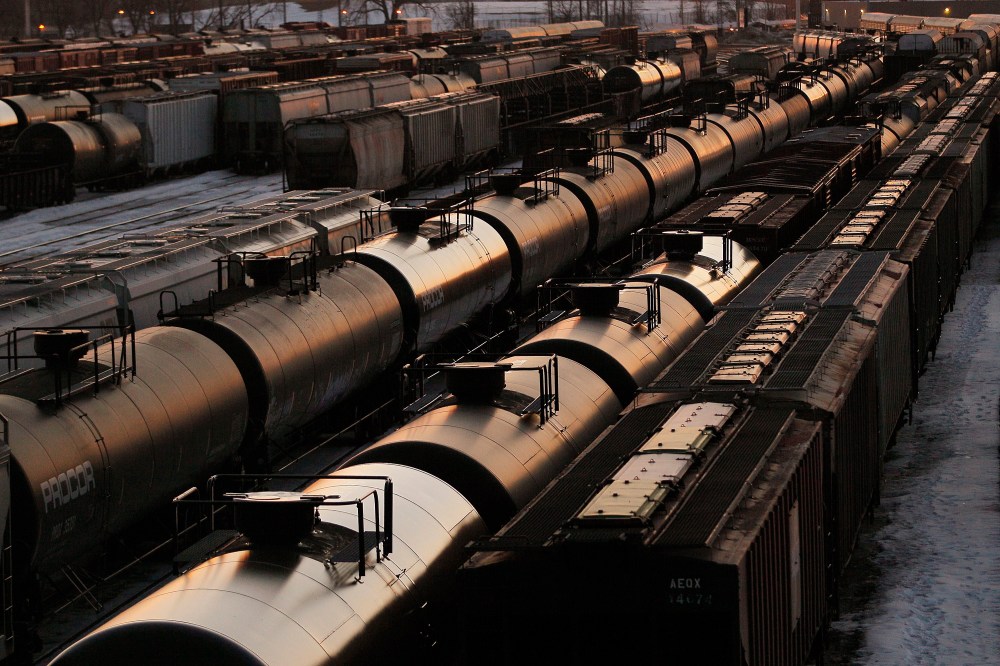
WINNIPEG – A group led by a former federal Liberal cabinet minister will be looking closer at the potential of shifting Winnipeg freight rail traffic to a route just south of the city.
It’s an effort some major railway companies caution will be a “sizeable undertaking.”
Lloyd Axworthy will spearhead a 90-day feasibility study and consultation to explore how realistic it is to try and move the traffic to a route that would follow a Manitoba Hydro corridor.
It will also examine whether moving more freight rail traffic out of the city’s urban core could improve goods transportation, reduce impacts on residential neighbourhoods and open up new opportunities for housing, green spaces, transportation and economic development.
The work builds on a broader rail relocation study that Axworthy was asked in 2024 to lead.
Premier Wab Kinew said Wednesday the difference is this study will be looking at the specific proposed route.
“After the work that they’ve put in, we’ve got something concrete they’ve identified, an actual route they’ve identified, the landowner they’ve identified.”
Axworthy said the proposal to relocate the line on Crown-owned land along the utility corridor would help avoid costly and lengthy land expropriations.
“We found that all of a sudden there was a place for co-dependence of two of the major utilities that drive the economic face and the social political face of this country,” he said.
“We can come to Winnipeggers with a very clear concept.”
Winnipeg has more than 240 kilometres of active rail lines, with an average of 50 trains passing through the city daily.
The idea of moving the lines has been brought up since the 1960s, and the cost has been estimated at well above $1 billion.
Kinew acknowledged any relocation would come with a high price tag, but said it’s about thinking longer term.
“The most important number for Manitobans to think about today is that this is a 20-year idea,” he said.
“Billions of dollars over a 20-year timeline — that’s an investment that we can afford, and that’s an investment in our future.”
In 2016, the NDP government of the day promised to spend $400,000 on a study to look at the cost and feasibility of moving rail lines. The province hired former Quebec premier Jean Charest to lead the effort.
Months later, the Progressive Conservatives took office and axed the plan.
Proponents of rail relocation say it would increase safety by no longer shipping hazardous materials through residential areas. They have also cited a desire to remove large rail yards that serve as barriers between neighbourhoods.
The government said the study would work with railway companies including Canadian National, Canadian Pacific Kansas City and Burlington Northern Santa Fe to make sure a business case exists for relocation.
Canadian National said the company continues to be part of discussions on rail relocation in Winnipeg but that the bypass concept proposed would be a “sizeable undertaking requiring considerable cost and co-ordination of several Class 1 railways.”
“A strong business case that benefits all parties will be essential to ensure a resilient supply chain, strong employment and continued economic growth,” said spokesperson Ashley Michnowski.
Canadian Pacific Kansas City, which has its continent-spanning rail network crossing through Winnipeg, called the relocating of railway infrastructure an “enormously complex matter.”
“The challenges inherent with any proposal to relocate railway infrastructure are vast, complex, and should not be underestimated,” said spokesperson Terry Cunha.
“In our experience across North America, these challenges are too often underestimated and eventually they prove insurmountable. Given the magnitude of the challenges and costs with any such proposal, we have generally cautioned governments against rail relocation.”
Burlington Northern Santa Fe said it appreciates the collaboration and will discuss the matter with the province.
This report by The Canadian Press was first published Aug. 12, 2026.