
Here are five issues to watch in the Quebec provincial election campaign
Advertisement
Read this article for free:
or
Already have an account? Log in here »
We need your support!
Local journalism needs your support!
As we navigate through unprecedented times, our journalists are working harder than ever to bring you the latest local updates to keep you safe and informed.
Now, more than ever, we need your support.
Starting at $15.99 plus taxes every four weeks you can access your Brandon Sun online and full access to all content as it appears on our website.
Subscribe Nowor call circulation directly at (204) 727-0527.
Your pledge helps to ensure we provide the news that matters most to your community!
To continue reading, please subscribe:
Add Brandon Sun access to your Free Press subscription for only an additional
$1 for the first 4 weeks*
- Enjoy unlimited reading on brandonsun.com
- Read the Brandon Sun E-Edition, our digital replica newspaper
*Your next Free Press subscription payment will increase by $1.00 and you will be charged $20.95 plus GST for four weeks. After four weeks, your payment will increase to $24.95 plus GST every four weeks.
Read unlimited articles for free today:
or
Already have an account? Log in here »
MONTREAL – Quebecers are heading to the polls in early October, after eight straight years of Coalition Avenir Québec governance. Here are some of the issues that could dominate the campaign.
1. Sovereignty
The Coalition Avenir Québec’s win in 2018 was seen as a new chapter for a province that was moving on from the federalist-sovereigntist binary that had dominated the province’s politics for decades. But this year, the Parti Québécois leads in the polls and its leader has promised a referendum by 2030 if his party forms government.
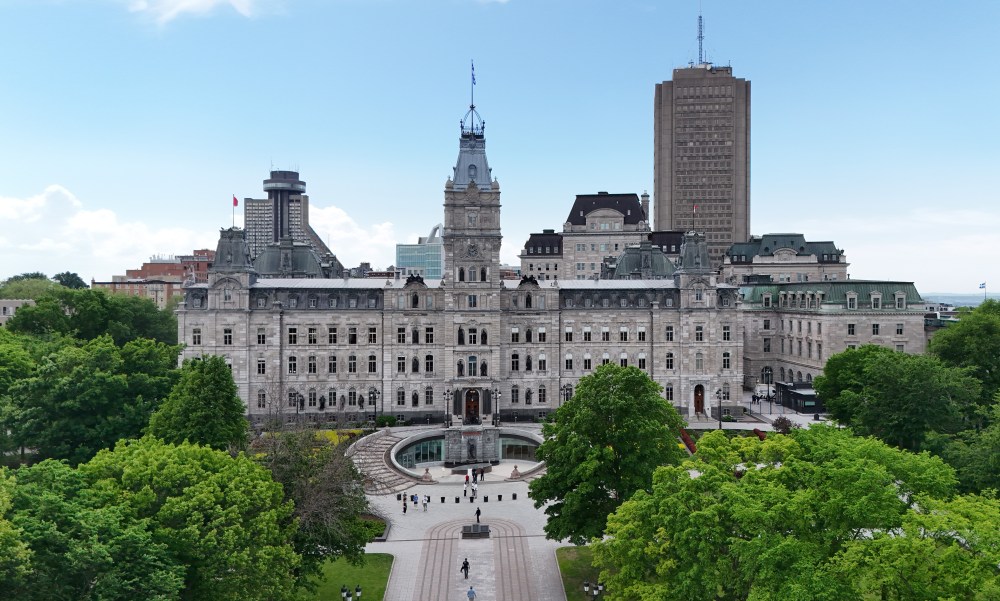
PQ Leader Paul St-Pierre Plamondon has since said no referendum will happen while Donald Trump remains in office. Polls have suggested Quebecers don’t want a referendum, which is something St-Pierre Plamondon’s opponents can be expected to seize on.
2. Energy and natural resources
The election campaign begins as Quebec and Newfoundland and Labrador have reached a new tentative multi-billion-dollar deal to divvy up power from the Churchill Falls generating station and launch new hydro, wind and transmission projects. However, the deal has yet to be finalized, and comes after Newfoundland and Labrador sent the sides back to the bargaining table after deciding an earlier agreement was not advantageous enough for the province.
At the same time, Quebec’s forest industry is being threatened by U.S. tariffs and forest fires, and the province is looking at how best to develop its critical mineral resources and secure enough energy to power the coming decades.
3. Housing, homelessness and cost of living
Cost-of-living issues have been high on Quebecers’ minds in 2026, and all the major parties have cited affordability as a priority. Fréchette ran for the CAQ leadership on a plan that included reimbursing first-time homebuyers for land transfer taxes and converting non-subsidized daycare spots to subsidized ones. Left-wing party Québec solidaire, which trails in the polls, has proposed including a ceiling on rent increases and raising the minimum wage to $20 an hour, while Conservative Leader Éric Duhaime has promised to slash taxes. The Liberal promise includes tools to boost homebuilding to 100,000 units a year, while the PQ has promised to make homelessness its “No. 1 social priority.”
4. U.S. trade
The U.S. introduced a new round of 50 per cent tariffs on Canadian exports on Saturday, targeting goods worth $28 billion. Coalition Avenir Québec Leader Christine Fréchette, the current premier, has said the tariffs could affect some $7.7 billion in Quebec exports, or more than nine per cent of what Quebec exports to the United States. Quebec is home to a number of industries that have been affected by U.S. tariffs including aluminum, steel, lumber, softwood, and manufacturing. Each of the candidates in the hard-hit province will need to convince voters that they are the right person to defend the province’s interests and protect workers whose jobs could be at risk.
5. Finance
Quebec’s Balanced Budget Act requires the government to eliminate the deficit by 2029—30, and the province’s auditor general warned on Aug. 17 that serious belt-tightening will be needed to meet that goal. McGill political science professor Éric Bélanger, for one, believes the budgetary situation will force all the parties to make tough decisions on how they’ll reach that goal, without being able to promise the same goodies that historically mark an election campaign. Auditor General Christine Roy projected the government is facing a multi-billion dollar deficit that will require cuts of at least $2 billion starting next year, and up to $5 billion for the following year.
This report by The Canadian Press was first published Aug. 27, 2026.