
Trump administration backs OpenAI in New York Times’ copyright case over training of chatbots
Advertisement
Read this article for free:
or
Already have an account? Log in here »
We need your support!
Local journalism needs your support!
As we navigate through unprecedented times, our journalists are working harder than ever to bring you the latest local updates to keep you safe and informed.
Now, more than ever, we need your support.
Starting at $15.99 plus taxes every four weeks you can access your Brandon Sun online and full access to all content as it appears on our website.
Subscribe Nowor call circulation directly at (204) 727-0527.
Your pledge helps to ensure we provide the news that matters most to your community!
To continue reading, please subscribe:
Add Brandon Sun access to your Free Press subscription for only an additional
$1 for the first 4 weeks*
- Enjoy unlimited reading on brandonsun.com
- Read the Brandon Sun E-Edition, our digital replica newspaper
*Your next Free Press subscription payment will increase by $1.00 and you will be charged $20.95 plus GST for four weeks. After four weeks, your payment will increase to $24.95 plus GST every four weeks.
Read unlimited articles for free today:
or
Already have an account? Log in here »
WASHINGTON (AP) — The Trump administration is wading into a legal fight between OpenAI and the New York Times, backing the ChatGPT-maker’s argument in a closely watched case over how it builds its AI technology by ingesting and processing millions of news articles.
In court papers filed Tuesday, the Justice Department supported OpenAI’s argument that training its models on troves of writings found on the internet is protected by the “fair use” doctrine of copyright law.
The Justice Department wrote that “the creative possibilities and public benefits” of training large language models on such content “far outweigh any competitive harm.”
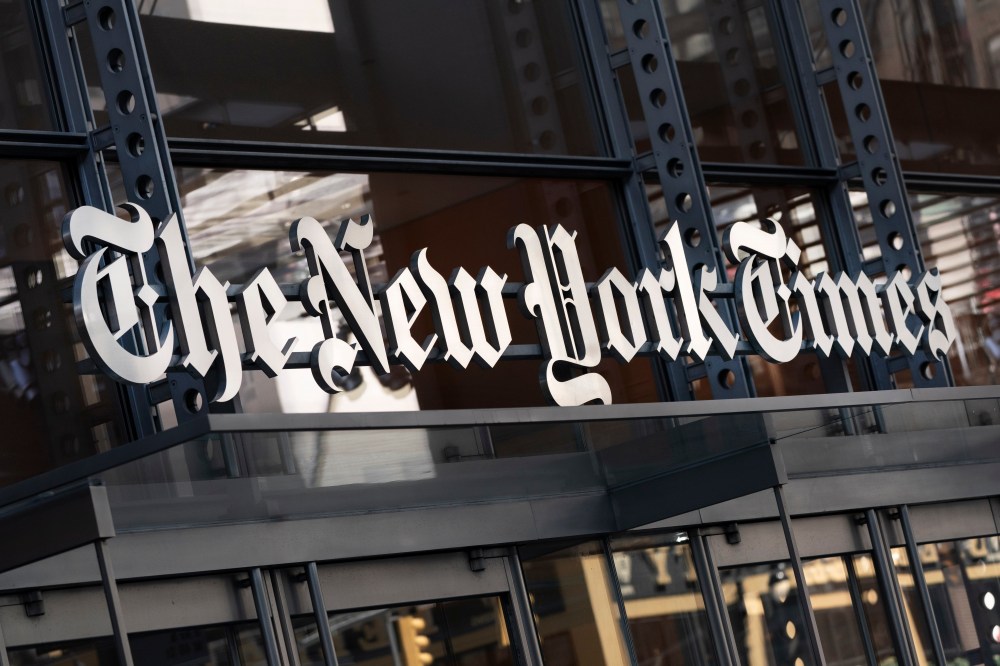
It told the court that siding with The New York Times and other publishers who argue OpenAI’s practice violates copyright law would thwart “creative and scientific progress while hindering American prosperity and economic mobility.”
“The entire reason that AI models are rapidly reshaping the economy and national security is that they help people, including those working in creative fields, make things and get things done,” Justice Department attorneys wrote. The “creative benefits often overlap with national security interests,” the department added, because AI models can “help national security officials analyze and draw inferences from (unprotected) real-world facts such as those conveyed in New York Times articles.”
The Times criticizes the government’s position
The lawsuit, and the government’s involvement in it, are symptoms of something happening all over the world, particularly in recent months: the rush to keep up with the rapid rise of AI tools over the past five years. In many cases, disputes about AI and its practices are winding their way through courts that still lack precedents — and in some cases language — to match the subject matter.
The New York Times said Wednesday that the administration “is siding with a handful of trillion-dollar AI companies at the expense of the countless American creators whose work they stole.”
“Both AI and creators can thrive — AI companies simply need to pay fairly for the content that makes their products possible, as copyright law requires,” Graham James, a spokesperson for the paper, said in an emailed statement. “The Administration’s proposal to let companies take that content without permission or compensation would undermine the sustainability of the human-created content that a healthy society depends on, and which AI needs to function.”
The New York Times says OpenAI threatens its financial livelihood
The Times sued OpenAI in 2023, arguing that the company was threatening its journalists’ livelihoods by effectively stealing billions of dollars’ worth of their work, in some cases spitting out The Times’ material verbatim to people seeking answers from generative artificial intelligence like ChatGPT. The threat to news publications became even more apparent when, in 2024, Google introduced AI-generated summaries at the top of online search results, cutting off the advertising dollars that come when people click a link to the information’s original source.
The Times has since been joined by other news organizations, including MediaNews Group-owned newspapers the New York Daily News and the Chicago Tribune, digital media publisher Ziff Davis and the nonprofit Center for Investigative Reporting. The company has been sued by several writers — including comedian Sarah Silverman — who say their books were ingested to train OpenAI’s AI models without their permission.
The Times’ arguments differ from those brought by book authors. In its original lawsuit and an amended complaint filed earlier this year, it focused on the unfair competition of companies that “seek to free-ride on The Times’s massive investment in its journalism by using it to build substitutive products without permission or payment.”