
Manitoba government records $832-million deficit in last year’s budget
Advertisement
Read this article for free:
or
Already have an account? Log in here »
We need your support!
Local journalism needs your support!
As we navigate through unprecedented times, our journalists are working harder than ever to bring you the latest local updates to keep you safe and informed.
Now, more than ever, we need your support.
Starting at $15.99 plus taxes every four weeks you can access your Brandon Sun online and full access to all content as it appears on our website.
Subscribe Nowor call circulation directly at (204) 727-0527.
Your pledge helps to ensure we provide the news that matters most to your community!
To continue reading, please subscribe:
Add Brandon Sun access to your Free Press subscription for only an additional
$1 for the first 4 weeks*
- Enjoy unlimited reading on brandonsun.com
- Read the Brandon Sun E-Edition, our digital replica newspaper
*Your next Free Press subscription payment will increase by $1.00 and you will be charged $20.95 plus GST for four weeks. After four weeks, your payment will increase to $24.95 plus GST every four weeks.
Read unlimited articles for free today:
or
Already have an account? Log in here »
WINNIPEG – Manitoba Premier Wab Kinew says the province remains on track to balance the budget next year after reporting that last year’s finances came roughly in line with expectations.
The province, in its audited accounts, said Monday it had an $832-million deficit last year.
That’s not far off from the $794-million deficit it originally forecast, though far better than the $1.67-billion deficit it warned about in a December update.
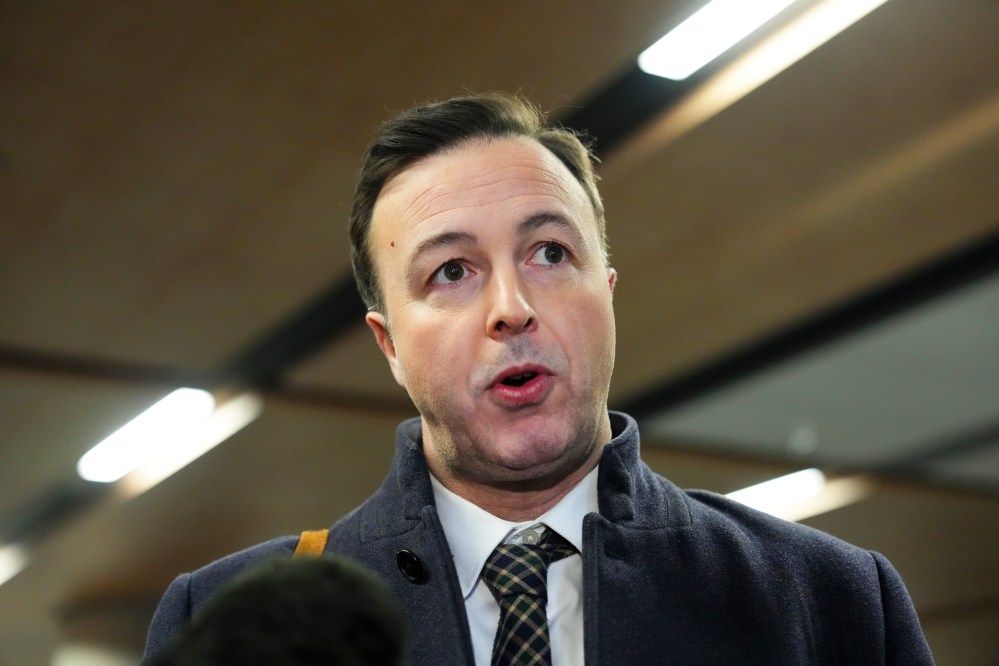
Finance Minister Adrien Sala said the turnaround happened largely because the trade war with the United States did not affect the economy as much as feared.
“The single biggest driver of our improved revenue position was a strong economy, which managed to withstand the Trump tariffs,” he said at a press conference.
The result meant a boost to income tax, reflecting better wages and more economic growth than expected, he said.
His government now says individual, corporate and other taxes ended up $558 million above budget.
Those gains helped offset lower federal transfers and lower-than-expected profits from Manitoba Hydro.
The Crown corporation reported a $446-million deficit because of drought conditions — a massive swing from the $220 million in profit the government originally budgeted.
While the government ran a deficit, it said it had also added $600 million to the province’s rainy day fund, because of the improved economic growth.
Kinew said the results show U.S. President Donald Trump is weaker than he thinks he is and the trade war hasn’t been as bad as feared.
“What we see in the public accounts is that our economy is actually much stronger.”
The government did not provide an update on how this year’s finances are going, but Kinew said that didn’t mean things are looking worse.
The accounts also show the province’s rising dependency on federal transfers, working out to almost 35 per cent of total revenue, compared with a 15-year average of 28.6 per cent.
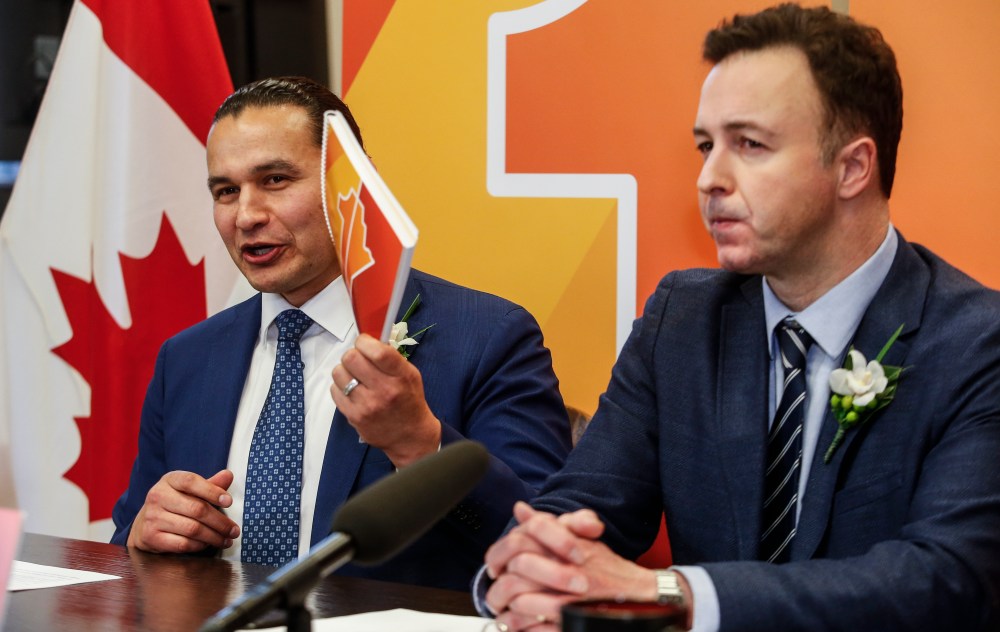
Opposition Progressive Conservative Leader Obby Khan said that despite a record $9 billion in federal transfer payments, the province is still running deficits and Manitobans are worse off.
“Every Manitoban I’ve spoken to says they are struggling with affordability, they’re struggling with paying the bills, they’re struggling with putting food on the table,” Khan said.
He said if the PCs were in power, he would nearly double the threshold before residents pay income tax, but did not provide an estimate of how much that would cost.
Khan said the tax savings would make life more affordable and the money would go back into the local economy.
Kinew said he knows Manitobans are not feeling great about inflation, but the government has tried to balance immediate relief in things such as the gas tax with preparing for what could come.
“We’re taking a bunch of actions, but at the same time, we also need to build up our fiscal firepower,” he said.
“That’s what this rainy day fund contribution is all about, the $600 million, because we don’t know what Trump’s going to do next.”
This report by The Canadian Press was first published Sept. 21, 2026.