
Employer groups encouraged by Ottawa’s labour law changes but some want bigger steps
Advertisement
Read this article for free:
or
Already have an account? Log in here »
We need your support!
Local journalism needs your support!
As we navigate through unprecedented times, our journalists are working harder than ever to bring you the latest local updates to keep you safe and informed.
Now, more than ever, we need your support.
Starting at $15.99 plus taxes every four weeks you can access your Brandon Sun online and full access to all content as it appears on our website.
Subscribe Nowor call circulation directly at (204) 727-0527.
Your pledge helps to ensure we provide the news that matters most to your community!
To continue reading, please subscribe:
Add Brandon Sun access to your Free Press subscription for only an additional
$1 for the first 4 weeks*
- Enjoy unlimited reading on brandonsun.com
- Read the Brandon Sun E-Edition, our digital replica newspaper
*Your next Free Press subscription payment will increase by $1.00 and you will be charged $20.95 plus GST for four weeks. After four weeks, your payment will increase to $24.95 plus GST every four weeks.
Read unlimited articles for free today:
or
Already have an account? Log in here »
OTTAWA – Employer groups say Ottawa’s proposed labour law changes are encouraging but some want the Liberal government to go even further to ensure industrial peace.
Unions are already describing the measures in Bill C-39, tabled earlier this week, as an attack on workers’ rights.
The proposed legislation, if passed, would pave the way for streamlined project approvals across the country and make changes to the Canada Labour Code.
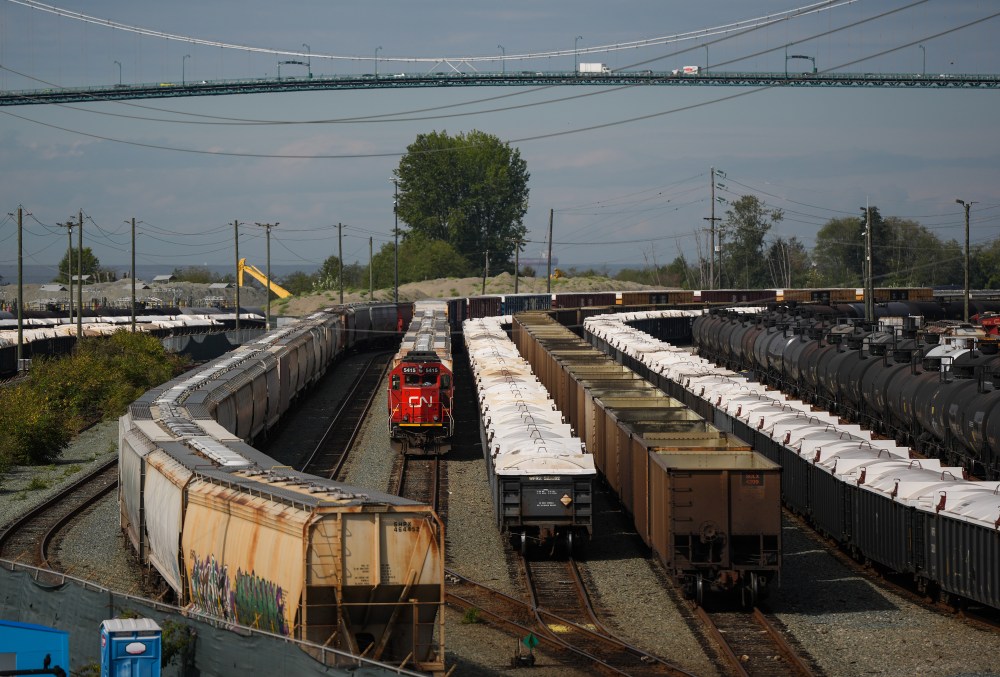
The amendments include new tools to encourage unions and employers to get a deal when there’s been a history of fraught negotiations. Some changes could give the labour minister more power to end strikes affecting critical sectors of the economy.
Most employer associations weighing in on Bill C-39 this week broadly welcomed the proposals.
Derrick Hynes is the CEO of the Federally Regulated Employers — Transportation and Communications, or FETCO. He represents employers in Canada’s railway, port and airline sectors which would be subject to the proposed regulations.
“At a high level, I would say there are some positive changes in this bill that will improve and stabilize collective bargaining,” Hynes said in an interview.
A new special mediator position proposed by the legislation could help to bridge gaps between deadlocked parties, Hynes said. He also praised Ottawa’s promises to give more resources to government bodies tasked with resolving grievances and evaluating workplace safety.
Some of the most consequential proposals in the bill involve Section 107 of the labour code, which the Liberal government has triggered in recent years to end work stoppages in federally regulated industries.
Whether Section 107 actually gives the government that authority to intervene is still the subject of debate and ongoing court challenges.
New language in C-39 would explicitly allow the minister to direct union members back to work in the event of a strike or lockout if the work stoppage is deemed to be affecting the “national interest.”
That broad term weighs economic impacts and social disruption against the right to free association — workers’ right to strike.
Hynes said the provisions for special mediation and the national interest test are positive steps toward promoting stability in Canada’s critical industries. He said the bar for establishing a national interest should be set high.
But Hynes also said he believes the government should have gone further by allowing the minister to step in before workers take to the picket line.
“We would’ve given the minister, in extraordinary circumstances, the ability to act proactively before a work stoppage … in these rare circumstances where the risk to the public is so high,” he said.
The Liberals have presented many of the proposed changes in C-39 as critical to shoring up Canada’s economy against U.S. trade aggression and improving the country’s global reputation as a reliable place to invest and do business.
Walter Spracklin, co-head of Global Industrials Research at RBC Capital Markets, said in a note to clients Wednesday that C-39 would set up a framework for “a structured, transparent process for government intervention.”
The proposals would be good for the country’s freight and logistics industries and reduce operational risks at CN Rail and Canadian Pacific Kansas City, Spracklin said.
“This provides greater certainty around the resolution of disputes that could otherwise disrupt critical supply chains,” he said.
Dan Kelly, president of the Canadian Federation of Independent Business, said in a media statement Tuesday that work stoppages in federally regulated sectors have cascading effects on small- and medium-sized businesses. He said the Canada Post labour disputes in 2024 and 2025 were especially costly for independent businesses.
Kelly said the federal government should be prepared to table legislation to designate some sectors as essential services if the latest proposals fail to yield labour peace.
“While the proposed changes are promising, none of this has been tested in the real world. I worry these changes may not be enough, or that they may be simply ignored by unions who want to test the government’s resolve,” he said.
The national executive board of the Canadian Union of Public Employees passed a unanimous resolution this week to defy C-39’s proposed limits on the right to strike if it’s passed unamended by Parliament.
Bea Bruske, president of the Canadian Labour Congress, told reporters Tuesday that the proposals are already a non-starter for unions. She argued the changes to Section 107 would hold employers back from meaningful bargaining at the table.
Jobs Minster Patty Hajdu said this week that C-39 is intended to reduce the number of times collective bargaining ends in a strike or lockout, in part through earlier engagement and mandated relationship repair work.
Adam King, assistant professor in the labour program at the University of Manitoba, said having fewer strikes shouldn’t be the government’s goal.
The threat of a strike is what creates pressure to get a deal at the table, he said, so weakening that right for workers won’t necessarily bring the parties together.
“I think that they’re really shooting themselves in the foot in some ways here,” King said.
“They’re trying to get to an outcome, and they think that removing the strike option is the way to get there, when it may in fact cause even more acrimonious negotiation processes.”
Hynes said he understands why labour leaders worry about the bill watering down workers’ rights, but he fundamentally disagrees with the idea that the right to strike should be “absolute.”
“We believe when the national public interest is at risk — and again, a very high threshold that would have to be achieved — this is a situation where a reasonable limit could be imposed,” he said.
The federal government attempted to use Section 107 to order striking Air Canada flight attendants back to work last year, but unions defied that order. The parties reached a tentative deal at the table after thousands of flights were cancelled in the busy summer travel season.
Jeff Morrison, president of the National Airlines Council of Canada, said in a media statement Wednesday that when a dispute in air transportation threatens widespread disruption, “the federal government must have practical tools readily available to help the parties reach a resolution to protect passengers, communities and the national interest.”
The airlines council says it supports efforts to “enhance ministerial powers” to order operations to resume, subject to “defined conditions.”
This report by The Canadian Press was first published Sept. 24, 2026.