
Stalled July growth reflects the economy’s ‘broader volatility’: economist
Advertisement
Read this article for free:
or
Already have an account? Log in here »
We need your support!
Local journalism needs your support!
As we navigate through unprecedented times, our journalists are working harder than ever to bring you the latest local updates to keep you safe and informed.
Now, more than ever, we need your support.
Starting at $15.99 plus taxes every four weeks you can access your Brandon Sun online and full access to all content as it appears on our website.
Subscribe Nowor call circulation directly at (204) 727-0527.
Your pledge helps to ensure we provide the news that matters most to your community!
To continue reading, please subscribe:
Add Brandon Sun access to your Free Press subscription for only an additional
$1 for the first 4 weeks*
- Enjoy unlimited reading on brandonsun.com
- Read the Brandon Sun E-Edition, our digital replica newspaper
*Your next Free Press subscription payment will increase by $1.00 and you will be charged $20.95 plus GST for four weeks. After four weeks, your payment will increase to $24.95 plus GST every four weeks.
Read unlimited articles for free today:
or
Already have an account? Log in here »
OTTAWA – Economic growth cooled off ahead of the latest U.S. tariff volley this summer, Statistics Canada said Tuesday.
The agency said real gross domestic product was essentially unchanged in July. Strength in construction and utilities that month was offset by declines elsewhere in the economy.
TD Bank economist Marc Ercolao said stalled growth in July isn’t alarming. Some of the month’s declines in manufacturing and the mining and quarrying sector were attributed to one-off factors like production disruptions, he noted.
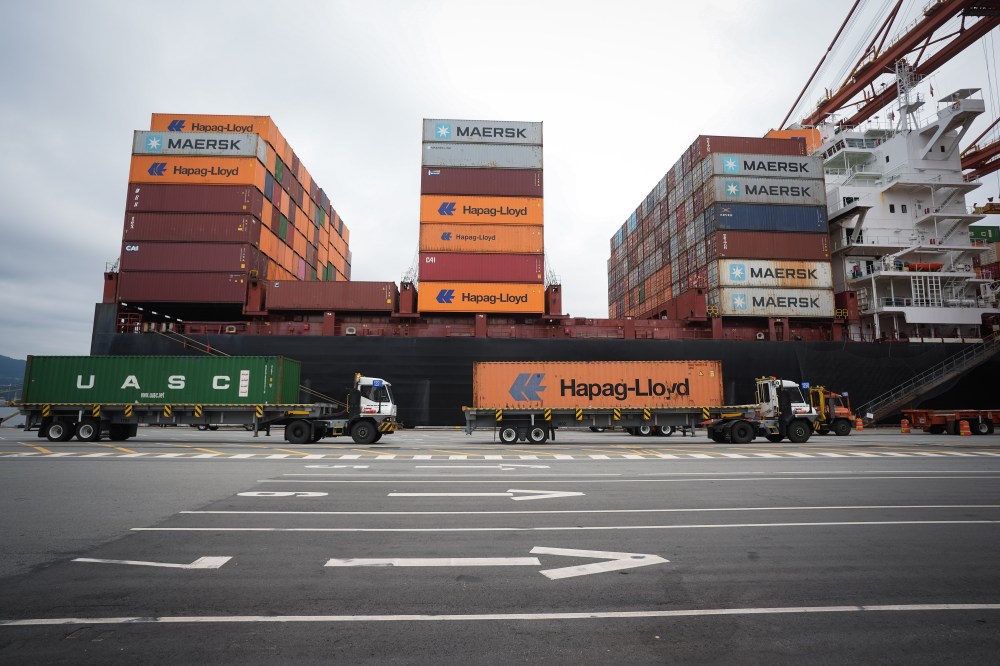
“It’s part of the broader volatility that we’ve seen in Canadian growth,” Ercolao said.
Offsetting the weakness in July was a 1.3 per cent gain for the construction sector, which marked its fourth consecutive month of growth after declines in late 2025 and early 2026.
StatCan also said a 1.7 per cent surge in electricity generation, transmission and distribution powered the utilities sector to its strongest month of growth all year. A July heat wave across many parts of the country drove up power demands for cooling, the agency said.
On the other side, declines in July were spread across manufacturing, mining, quarrying and oil and gas extraction, as well as retail and wholesale trade.
Estimates for flat growth to start the third quarter come after StatCan projected an annualized growth rate of 3.3 per cent in the second quarter.
Newly revised data showed GDP was actually up 0.4 per cent in June, compared with earlier estimates of 0.3 per cent.
StatCan expects the economy picked back up with a gain of 0.2 per cent in August, but those early figures will be revised next month.
The August GDP figures will partially capture the impact of new 50 per cent U.S. tariffs applied on a range of Canadian goods starting Aug. 22.
“The August pickup reinforces our view that the Canadian economy was enjoying a decent mid-year recovery before the latest U.S. tariffs took effect,” said Peter Shannon, senior economist at KPMG, in a note.
Shannon said he expects the bite from the new U.S. duties to meaningfully hit in September and take full effect in the fourth quarter. KPMG projects GDP will be about half a percentage point lower over the course of a year should the tariffs remain in effect.
Tuesday also marks the beginning of new retaliatory U.S. bans on Canadian products such as alcohol, dairy products and motorcycles.
Ercolao said the up-and-down nature of Canadian growth reflects that the economy has settled into a “sawtooth” pattern since the start of last year.
He said he expects August’s GDP figures will also get a boost from the latest trade swings. Some U.S. importers were likely rushing to get ahead of new tariffs on Canadian goods early in the month, but that lift will reverse come September.
Hits to manufacturing and wholesale trade in July also suggest the trade dispute continues to weigh heavily on vulnerable sectors, Ercolao said.
“You take it all together and the biggest takeaway is that Canada appears to be (settling) into a more moderate growth pattern after a quite robust second quarter,” he said.
Benjamin Reitzes, BMO’s managing director of Canadian rates and macro strategist, said in a note to clients Tuesday that the August advance has him tracking GDP growth of 1.5 to two per cent in the third quarter of the year. That’s roughly in line with the Bank of Canada’s forecast for 1.5 per cent in the quarter, he noted.
The Bank of Canada will get a look at new jobs and inflation data for September, as well as a read of its own quarterly surveys of businesses and consumers, before making its next interest rate announcement on Oct. 28.
Reitzes suggested these data prints will be more impactful for the central bank’s decision than the July GDP release.
The Bank of Canada has held its benchmark interest rate steady at 2.25 per cent for nearly a year.
Monetary policymakers are trying to support the economy through tariff impacts but have signalled they’re prepared to raise the policy rate if there are signs inflationary pressures are spreading beyond the gas pumps.
Bank of Canada deputy governor Toni Gravelle said during a fireside chat at a Bloomberg event in New York City on Tuesday that the central bank finds itself in a “true dilemma” trying to balance the energy price shock against the recent escalation of the U.S. trade dispute.
Gravelle said one of the things the bank’s governing council would be evaluating heading into the October rate decision is how “sustained” the second-quarter recovery has been. General inflation risks will also increase the longer oil prices stay high, he added.
Ercolao said he doesn’t see Tuesday’s release as moving the needle for the Bank of Canada, which he expects will remain on pause for the rest of the year before starting to raise the policy rate in 2027.
Financial markets are increasingly pricing in Bank of Canada rate hikes as persistently high oil prices stoke fears of stubborn inflation. Odds of a hike at the end of next month stood at 53 per cent as of Tuesday afternoon, according to LSEG Data & Analytics.
Ercolao said he doesn’t think monetary policymakers will be in a rush to raise rates as they navigate a soft economy and inflationary risks.
“In balancing these two factors, we do think that they have a little bit more time afforded to sit on the sidelines, see how the recent or the upcoming data evolves, and then make policy decisions based on that,” he said.
This report by The Canadian Press was first published Sept. 29, 2026.