
LNG Canada to double output from B.C. terminal as world clamours for energy
Advertisement
Read this article for free:
or
Already have an account? Log in here »
We need your support!
Local journalism needs your support!
As we navigate through unprecedented times, our journalists are working harder than ever to bring you the latest local updates to keep you safe and informed.
Now, more than ever, we need your support.
Starting at $15.99 plus taxes every four weeks you can access your Brandon Sun online and full access to all content as it appears on our website.
Subscribe Nowor call circulation directly at (204) 727-0527.
Your pledge helps to ensure we provide the news that matters most to your community!
To continue reading, please subscribe:
Add Brandon Sun access to your Free Press subscription for only an additional
$1 for the first 4 weeks*
- Enjoy unlimited reading on brandonsun.com
- Read the Brandon Sun E-Edition, our digital replica newspaper
*Your next Free Press subscription payment will increase by $1.00 and you will be charged $20.95 plus GST for four weeks. After four weeks, your payment will increase to $24.95 plus GST every four weeks.
Read unlimited articles for free today:
or
Already have an account? Log in here »
The partners behind Canada’s first liquefied natural gas export terminal are proceeding with a project that would double its capacity as countries around the globe clamour for reliable sources of energy.
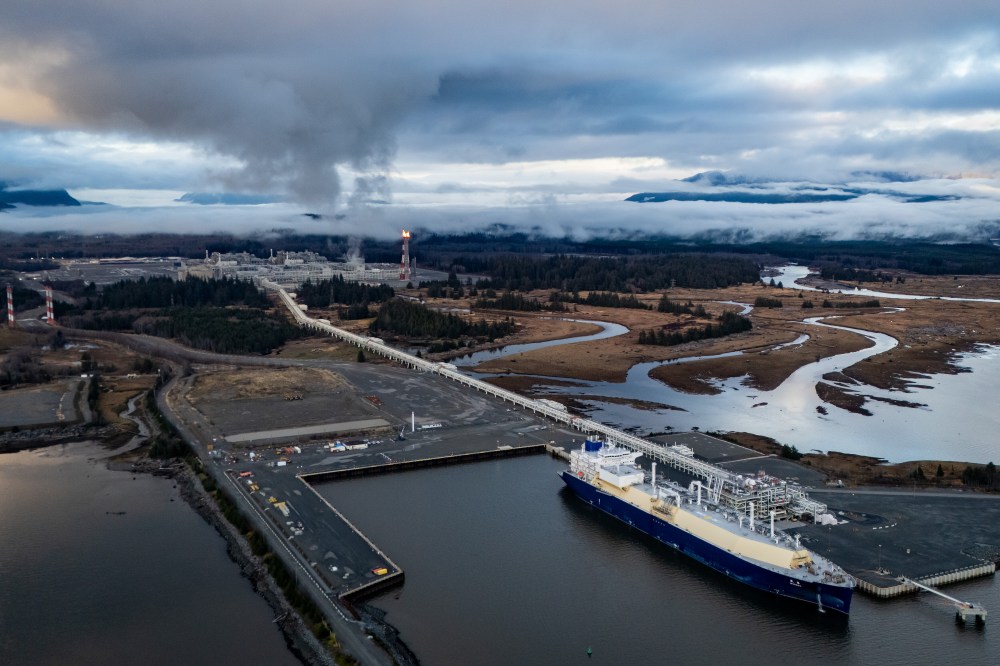
LNG Canada announced Tuesday that it has made a final investment decision to go ahead with the Phase 2 expansion of its facility in Kitimat, B.C., which would bring its capacity to 28 million tonnes per year.
“This will make LNG Canada one of the largest LNG facilities in the world and it will help move Canada towards becoming one of the world’s Top 5 LNG exporting nations,” Chris Cooper, chief executive of LNG Canada, told a news conference in Vancouver.
“But Phase 2 is much more than just tonnes. It means thousands more jobs and even more opportunities for local businesses, First Nations and communities.”
It is one of the five initial proposals referred to Ottawa’s major projects office last year.
“Twelve months from referral to final investment decision is the pace that this pivotal moment in Canada’s history demands,” Prime Minister Mark Carney told the news conference.
“We’re a country of high standards, but high standards don’t require slow decisions.”
Tim Hodgson, the federal natural resources minister, said the office handled “co-ordination around all of the different myriad things” the project partners needed to build the megaproject, which Ottawa has said represents private sector investment of $32 billion.
“We gave them one point of contact … and we provided the solutions they needed to make that investment,” he said in an interview.
The green-light comes as ongoing fighting in the Middle East disrupts LNG shipments from one of the world’s biggest producers, Qatar. Another major LNG player, Russia, has seen intensifying bombardment from Ukraine. Meanwhile, Canada has been looking to diversify its export customer base amid tensions with its one-stalwart trading partner, the United States.
“It is the perfect example of us giving ourselves more than anyone can take away. It’s the perfect example of us putting the best cards in our hand when the world is getting more volatile and dangerous. And it’s the perfect example of showing Canadians and the world that we know how to build the right way,” Hodgson said.
LNG Canada is a joint venture between Shell and PetroChina, Malaysia’s Petronas, Japan’s Mitsubishi Corp. and South Korea’s KOGAS.
The company exports natural gas that is piped from northwestern Alberta and northeastern British Columbia to the plant in Kitimat, where it is chilled into a liquid state and then loaded onto specialized tankers bound for Asian markets. The expansion will build on the footprint from the first phase of the project, which began shipping liquefied natural gas last year.
“Recent global events have shown that reliable, diverse sources of energy cannot be taken for granted. LNG Canada has already demonstrated its strategic value by supporting customers in Asia when supplies from the Middle East were disrupted,” Shell Plc CEO Wael Sawan told the news conference.
“Phase 2 will create further opportunities to meet rising demand for global LNG, which is expected to grow by around 65 per cent by 2050 as customers seek the versatility, flexibility, and reliability that LNG can provide.”
Lance Mortlock, managing partner at EY Canada, said the LNG Canada partners had to weigh three main factors before making a final go-ahead decision. First, they had to determine customer demand in Asia is sufficient, and to that, Mortlock says, the answer was a resounding “yes.”
Ditto to questions around whether Canada has plentiful gas reserves in the ground to feed the plant for decades.
Partners also had to feel comfortable with Canadian public policy, to which Mortlock said the momentum has been notable with the Carney government’s major-projects push and enhanced investment tax incentives.
“That has got to play a role in the corporate boardrooms of Europe where they’re making decisions around whether to allocate capital to something as big as Phase 2 for LNG Canada. They’ve got government support, there is the policy support, so ‘Let’s go for it.'”
B.C. Premier David Eby told the news conference that he’s grateful Carney and his government saw the importance of the project.
“There was a step change in the approach of the federal government to this project when this prime minister came on board. There was a marked departure, an understanding of the importance of this project for British Columbia and Canada.”
In a separate announcement, TC Energy said it would nearly double the existing capacity of the 670-kilometre Coastal GasLink pipeline, which feeds gas to LNG Canada, by adding new compressor stations and upgrading facilities.
LNG Canada will lead the expansion project construction, while Coastal GasLink will remain the owner, operator and permit holder of the pipeline and associated facilities.
The first phase of LNG Canada has been beset by equipment issues that have resulted in flaring in excess of what’s allowed under its permits. Flaring is the controlled burning of natural gas for safety reasons.
The LNG Canada partners have said it’s a normal part of project startup, but environmental and community groups have raised concerns about the health and safety impacts.
“Expanding malfunctioning LNG Canada is like betting on a concrete canoe at a sailing regatta. As the rest of the world rapidly scales up clean energy infrastructure, global gas demand destruction is underway. It’s happening regardless of the desires of the Carney government or foreign gas giants,” said Richard Brooks, climate finance director at Stand.earth.
Nichole Dusyk, who leads the Canada energy transition team at the International Institute for Sustainable Development, questioned why Ottawa is lending its support to fossil fuel projects.
“LNG Canada Phase 2 is putting Canada’s climate goals on the back burner for little public benefit and substantial taxpayer risk.”
This report by The Canadian Press was first published Sept. 29, 2026.
Companies in this story: (TSX:TRP)