
Carney heads to Turkey for 1st bilateral visit to deepen ties with NATO ally
Advertisement
Read this article for free:
or
Already have an account? Log in here »
We need your support!
Local journalism needs your support!
As we navigate through unprecedented times, our journalists are working harder than ever to bring you the latest local updates to keep you safe and informed.
Now, more than ever, we need your support.
Starting at $15.99 plus taxes every four weeks you can access your Brandon Sun online and full access to all content as it appears on our website.
Subscribe Nowor call circulation directly at (204) 727-0527.
Your pledge helps to ensure we provide the news that matters most to your community!
To continue reading, please subscribe:
Add Brandon Sun access to your Free Press subscription for only an additional
$1 for the first 4 weeks*
- Enjoy unlimited reading on brandonsun.com
- Read the Brandon Sun E-Edition, our digital replica newspaper
*Your next Free Press subscription payment will increase by $1.00 and you will be charged $20.95 plus GST for four weeks. After four weeks, your payment will increase to $24.95 plus GST every four weeks.
Read unlimited articles for free today:
or
Already have an account? Log in here »
OTTAWA – Prime Minister Mark Carney is travelling to Turkey on Wednesday for a three-day trip that experts say should show how his approach to international diplomacy differs from that of the previous Liberal government.
Carney’s office says this is the first official bilateral visit by a Canadian prime minister to Turkey. Carney met with Turkish President Recep Tayyip Erdogan in Turkey earlier this year as part of the NATO summit.
The prime minister will land in Ankara early Thursday for a meeting with Erdogan before heading to Istanbul to meet with Turkish business leaders on Friday.
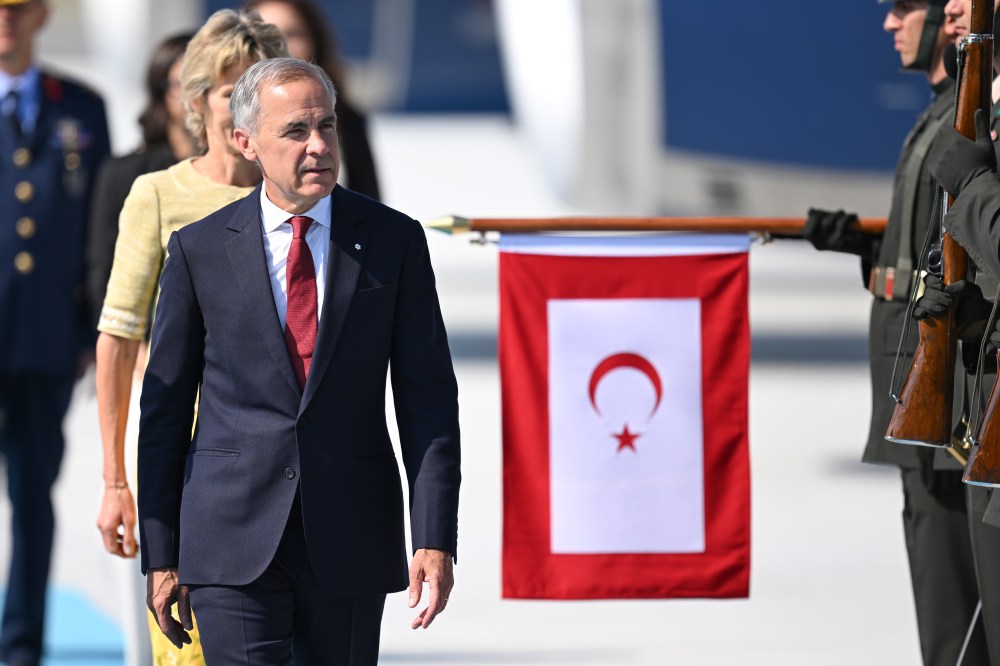
Foreign Affairs Minister Anita Anand and Natural Resources Minister Tim Hodgson will join Carney on the trip.
Senior government officials providing a background briefing to reporters ahead of the trip said Canada is seeking deeper political, economic and security ties with Turkey.
Carney’s bid to diversify trade beyond the United States and find new global investors for Canadian infrastructure projects is well-suited to deeper ties with Turkey, said Kerim Uras, the former Turkish ambassador to Canada.
Both the Canadian and Turkish economies need alternatives to the increasingly protectionist U.S. market, Uras said in an interview. While neither country can replace the United States with any one partner, forging connections between middle powers should be part of the path forward, he said.
“One can summarize it like the Carney doctrine meets Turkish pragmatism,” said Uras, now a senior fellow at Carleton University’s Centre in Modern Turkish Studies.
Turkish contractors are used to doing work in periods of geopolitical turmoil, Uras said. The country sits at the crossroads between Europe and the Middle East, with the Russia-Ukraine conflict across the Black Sea to its north and southern and eastern borders with Syria, Iraq and Iran.
“I would describe Turkey as an island of stability today in a very troublesome neighbourhood,” Uras said.
After Russia’s 2022 full-scale invasion of Ukraine, Turkey brokered a deal with both nations to allow for grain exports, as the war threatened crucial food supplies for numerous developing countries.
Canada and Turkey have had formal diplomatic ties since 1944. The federal government estimates there are 76,000 members of the Turkish diaspora living in Canada.
Technical talks are underway on a Canada-Turkey free-trade agreement. Two-way trade between the nations totalled $4.3 billion in 2025, with Turkish exports to Canada accounting for the bulk of that.
Uras called that trade volume “peanuts” compared to the size of the two economies.
“With a little work, we could quadruple this very fast and I’m sure there is a mutual desire to do that,” he said.
Senior government officials said Carney and Erdogan will highlight free trade and progress on other key files during the visit. They would not say whether there will be any formal announcements of any new deals from the leaders’ meetings in Ankara.
Bessma Momani is a politics professor at the University of Waterloo and senior fellow at the Centre for International Governance Innovation. She said in an interview that Canada’s relationship with Turkey has been “low stakes” to date, but there are reasons for Canada to pursue closer ties now.
While Turkey is an “industrial and consumer powerhouse,” Momani said the country’s reliance on Russia and Iran for energy is a source of weakness.
“I think their Achilles heel for them has always been energy. And that’s something that Canada has something to potentially offer,” she said.
When Anand hosted Turkish Foreign Affairs Minister Hakan Fidan in Canada in June, they toured the Darlington Nuclear Generating Station near Bowmanville, Ont.
Uras said Canadian engineering firm AtkinsRéalis — maker of the CANDU reactor in operation at Darlington — is one of the leading contenders to supply two planned nuclear power plants in Turkey.
A senior government official briefing reporters said Hodgson’s presence on the trip speaks to the importance of energy projects in discussions with Turkey.
Beyond nuclear, Uras said Turkish contractors are keen on a variety of projects across Canada in industries such as critical minerals, shipping and construction. As NATO allies, Canada and Turkey also have opportunities to collaborate on defence spending, the former ambassador suggested.
Uras, who was Turkey’s ambassador to Canada from 2018 to 2023, noted his time as envoy was characterized more by what couldn’t be traded between the nations.
In 2019, Canada banned arms exports to Turkey in response to the country’s military incursion into Syria. It expanded the ban after subsequent conflicts in the region showed Canadian-made technology, specifically drone parts, had been diverted to Azerbaijan. Canada lifted that ban in 2024 in the face of criticism from Armenian diaspora groups.
Uras said he doesn’t expect any lingering issues around the arms embargo. Canada and Turkey “hit the reset button” when Carney came to power, he said.
The Erdogan government is under heavy scrutiny internationally right now over reports of official persecution of LGBTQ+ organizers in the country.
Human Rights Watch and independent experts at the United Nations have condemned co-ordinated police raids on LGBTQ+ advocacy organizations in Turkey in recent months.
Canada did not join Germany, France and others in a joint statement last month condemning the country’s LGBTQ+ raids.
Government officials would not tell reporters whether Carney plans to raise the issue in private conversations with Erdogan.
One senior official called Canada’s approach to international affairs principled and pragmatic and said Canada recognizes not all partners will share Canada’s values.
Momani said as awful as Erdogan’s LGBTQ+ raids are, Turkey is not the only country in the world sliding back from liberal values. She said she expects Carney will take an approach different from that of his predecessor Justin Trudeau.
“I just don’t think the Carney government wants to make that a priority in the way that perhaps the Trudeau government was a little more willing to see foreign policy as a tool for moralizing their preferred social values,” Momani said.
Carney has argued closed-door conversations on rights issues are more productive than “lecturing countries from afar.”
Uras agreed that “megaphone diplomacy” does not help bridge values between allies, but he said it could be a topic of conversation between the leaders.
“Instead of walking away from the table, talking about these behind closed doors at the table is a much healthier approach. I’m sure we can discuss anything together and we will listen to each other,” he said.
This report by The Canadian Press was first published Oct. 21, 2026.
— with files from Dylan Robertson