
Youths tell trial of climate change toll, from anxiety to flood and heat impacts
Advertisement
Read this article for free:
or
Already have an account? Log in here »
We need your support!
Local journalism needs your support!
As we navigate through unprecedented times, our journalists are working harder than ever to bring you the latest local updates to keep you safe and informed.
Now, more than ever, we need your support.
Starting at $15.99 plus taxes every four weeks you can access your Brandon Sun online and full access to all content as it appears on our website.
Subscribe Nowor call circulation directly at (204) 727-0527.
Your pledge helps to ensure we provide the news that matters most to your community!
To continue reading, please subscribe:
Add Brandon Sun access to your Free Press subscription for only an additional
$1 for the first 4 weeks*
- Enjoy unlimited reading on brandonsun.com
- Read the Brandon Sun E-Edition, our digital replica newspaper
*Your next Free Press subscription payment will increase by $1.00 and you will be charged $20.95 plus GST for four weeks. After four weeks, your payment will increase to $24.95 plus GST every four weeks.
Read unlimited articles for free today:
or
Already have an account? Log in here »
VANCOUVER – Sadie Vipond says she was just seven years old when she began noticing the impacts of climate change.
Now a 20-year-old plaintiff in Canada’s first youth-led climate trial, Vipond described experiencing catastrophic floods in Calgary in 2013, that the city says resulted in mass evacuations, one death and $6 billion in financial losses.
“I was beginning to see different actions in my community around the climate crisis, and so I was also feeling very anxious about my future,” she told the Federal Court in Vancouver.
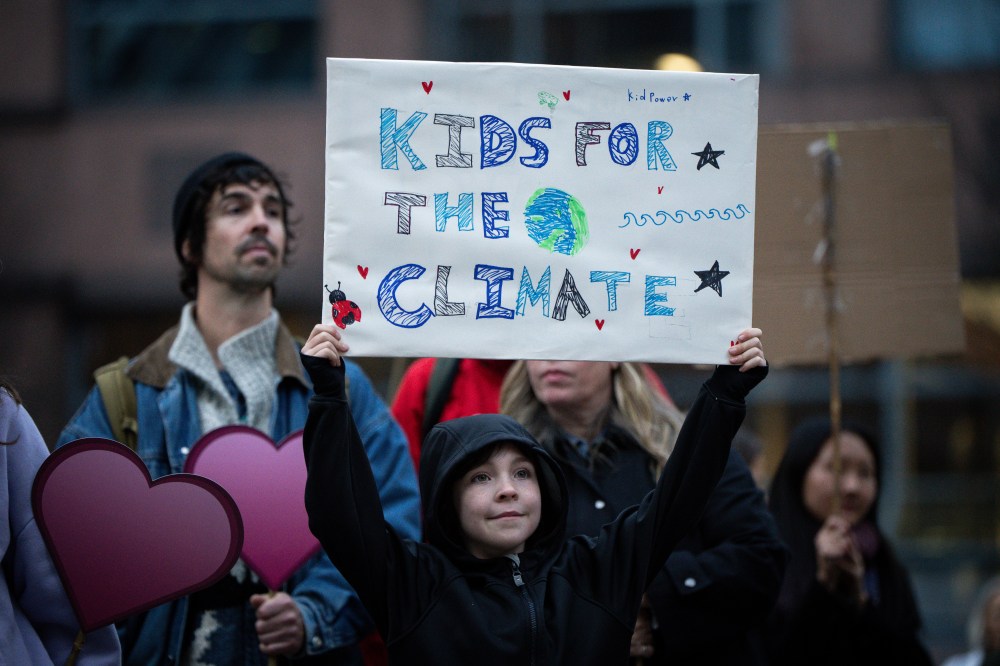
Vipond is one of 15 plaintiffs who are arguing that federal legislation violates their constitutional rights by continuing the trajectory of greenhouse gas emissions.
The trial that began Monday heard in an opening statement from the youths’ lawyer, Catherine Boies Parker, that the case is not about the existence of climate change but rather whether the government is “constitutionally required to stop making it worse.”
She said the Charter must protect youth from their own government’s actions.
Vipond told the court on Tuesday that she had experienced several climate change events since the floods, including wildfire smoke and intense heat.
“I’ve been seeing these impacts all my life, and I’ve been seeing how these impacts are getting worse,” she said, adding that they had taken a toll on her mental health.
“I am very nervous for these one-in-a-century events to become more frequent and more and more impactful.”
Vipond testified that she joined the case when she was 13 years old, after appealing to Calgary City council to adopt a climate recovery plan. Now, she’s looking for a more national response.
“I want to see the creation of a plan for my country because I’m scared for what my future is going to look like and what the future for future generations will look like,” she said.
“I want the courts to know we are doing this for our future and we are all, at the end of the day, kids wanting to hold our governments accountable to be able to make our future safer and better for everyone to come after us.”
Sophia Sidarous of the Metepenagiag First Nation in New Brunswick told the court on Tuesday that climate change has had an impact on Indigenous cultural practices, including the cancellation of sacred fires and sweat lodges for safety reasons due to intense heat or to comply with provincial fire bans.
She said it took away their ability “to be cleansed” and to “learn from the elders while they’re still here.”
She described removing herself from powwows to sit in air-conditioning with her young son, and the decline in availability of traditional foods, including salmon and moose.
Traditional plants such as chaga, a type of medicinal fungus that grows on birch trees, have started disappearing, she said.
“Due to the rising temperatures and unprecedented wildfires in the Atlantic, a lot of the birch bark trees are being impacted by that, and so the chaga that grows on those birchbark trees are burning or dying because the tree isn’t healthy,” she said.
She described moving to Halifax and reflected on experiencing the record-breaking hurricane Fiona in 2022, then preparing for possible evacuations caused by flooding and wildfires in 2023 and 2025.
“It’s just very depressing to have to deal with constant crises all the time and a constant survival mode to be in,” she told the court.
When asked why she decided to join the case seven years ago, she said she felt it was important to represent her First Nation.
“Indigenous peoples are experiencing a very specific type of impact that deals with their way of life and a very severe way of moving forward with a lot of these things disappearing in front of our eyes, and I also wanted to make sure that the future generations knew that we tried.”
Others among the 15 youth plaintiffs from seven provinces and two territories are expected to testify about how they have suffered what their lawyers call “specific harms connected directly to the government’s conduct.”
The court has heard these include respiratory illness worsened by wildfire smoke, displacement due to extreme weather, mental health impacts, such as climate anxiety, and loss of cultural connections to the land that has been lost due to climate disasters.
Earlier Tuesday, climate science professor Kirsten Zickfeld from Simon Fraser University testified that while science can inform the emission reductions needed to meet targets, how that is achieved is a matter of policy.
She said models suggest Canada has “exceeded its fair share” of its “carbon budget.”
Zickfeld explained the concept of a carbon budget, the maximum amount of carbon dioxide emissions that can be released while keeping global warming “around 1.5 degrees” and “well below” two degrees Celsius, was part of targets set in the binding 2015 Paris Agreement that includes Canada.
She said that to stabilize global temperatures, there’s a need for “net zero” emissions, in which man-made emissions and man-made removals of carbon dioxide from the atmosphere even each other out.
Zickfeld told the court that carbon budgets around the world are calculated based on principles of “equity, capability and responsibility” and the calculations suggest “Canada’s carbon budget is essentially zero or negative,” indicating that it has already surpassed its fair share of emissions.
Canada, she said, was among the 10 largest emitters of greenhouse gases annually and historically.
“To stabilize global average temperature, global carbon dioxide emissions need to be reduced to at least net zero and the emission of other greenhouse gases such as methane and nitrous oxide need to be strongly reduced,” she said.
But Zickfeld said under cross-examination that while science helped determine the targets, it “doesn’t provide the path” to meeting them.
The trial comes about seven years after the case was first filed in 2019. It is expected to continue into late November, with closing arguments scheduled for February.
More plaintiffs are expected to testify on Wednesday.
This report by The Canadian Press was first published Oct. 27, 2026.