
Canada could transition to full renewables by 2050, expert tells youth climate trial
Advertisement
Read this article for free:
or
Already have an account? Log in here »
We need your support!
Local journalism needs your support!
As we navigate through unprecedented times, our journalists are working harder than ever to bring you the latest local updates to keep you safe and informed.
Now, more than ever, we need your support.
Starting at $15.99 plus taxes every four weeks you can access your Brandon Sun online and full access to all content as it appears on our website.
Subscribe Nowor call circulation directly at (204) 727-0527.
Your pledge helps to ensure we provide the news that matters most to your community!
To continue reading, please subscribe:
Add Brandon Sun access to your Free Press subscription for only an additional
$1 for the first 4 weeks*
- Enjoy unlimited reading on brandonsun.com
- Read the Brandon Sun E-Edition, our digital replica newspaper
*Your next Free Press subscription payment will increase by $1.00 and you will be charged $20.95 plus GST for four weeks. After four weeks, your payment will increase to $24.95 plus GST every four weeks.
Read unlimited articles for free today:
or
Already have an account? Log in here »
VANCOUVER – It is “definitely” possible for Canada to transition to full renewable energy by 2050, an expert in environmental engineering and atmospheric science has told the country’s first youth-led climate trial in Vancouver.
Stanford University professor Mark Jacobson said the shift is technically and economically feasible — but there are social and political obstacles.
Jacobson has developed sophisticated models and road maps to help cities, states and countries, including Canada, make the shift to renewable energy.
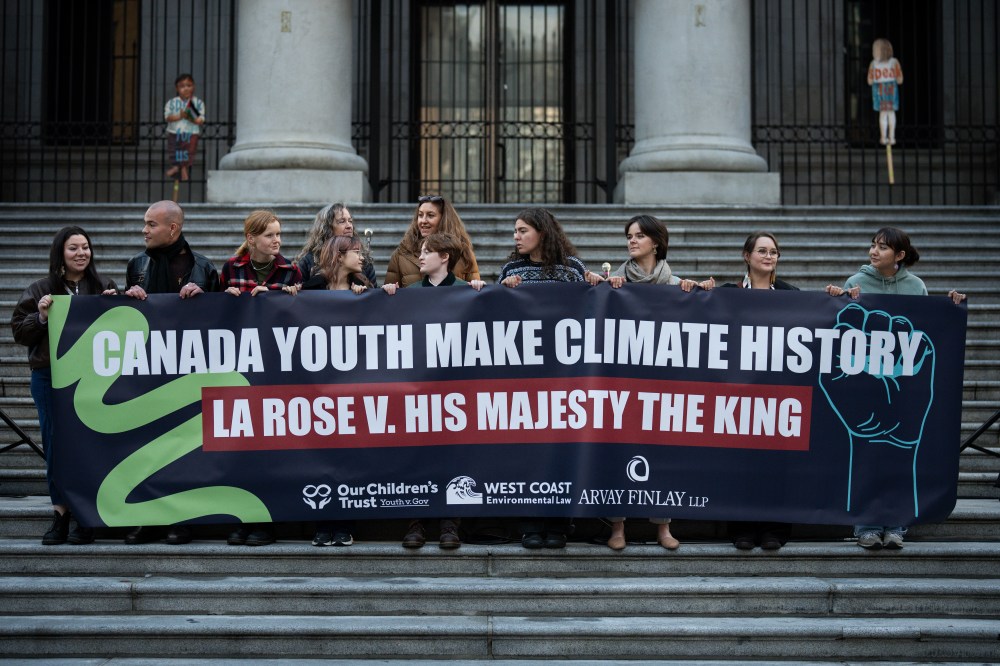
Canada does not need to rely on fossil fuels, he testified Thursday, as he outlined how the country could meet its energy demands by tapping “humongous” resources and opportunities in wind, solar and geothermal, along with pre-existing hydroelectric capacity.
Combine that with the electrification of energy and transportation and “Canada can do it,” Jacobson said of transitioning to renewables.
“Whether it actually does it by 2050 is more of a social and political question.”
Jacobson is a witness for 15 young plaintiffs in the trial underway in Federal Court in Vancouver, where they are arguing that federal legislation violates their constitutional rights by continuing Canada’s trajectory of greenhouse gas emissions.
Electricity is significantly more efficient than combustion, Jacobson said.
“By electrifying everything and providing that electricity from renewables, you use a huge amount less energy. In Canada, it’s like 60 per cent less energy,” he said.
“There’s no more combustion, so you eliminate the air pollutants, you eliminate the global warming emissions.”
Shifting to renewable energy would help avert deaths and cut the health costs associated with fossil fuels, Jacobson told the hearing.
He said an estimated 6,900 people die each year from air pollution in Canada.
The plaintiffs’ lawyer, Catherine Boies Parker, told the court in her opening statement the case was not about the existence of climate change.
Rather, it hinges on whether the government is “constitutionally required to stop making it worse,” she said.
“The plaintiffs are asking this court to hold Canada legally accountable for its role in continuing and worsening the climate crisis that is causing harm.”
This report by The Canadian Press was first published Oct. 29, 2026.