
More Canadians report skipping meals because they can’t afford groceries: survey
Advertisement
Read this article for free:
or
Already have an account? Log in here »
We need your support!
Local journalism needs your support!
As we navigate through unprecedented times, our journalists are working harder than ever to bring you the latest local updates to keep you safe and informed.
Now, more than ever, we need your support.
Starting at $15.99 plus taxes every four weeks you can access your Brandon Sun online and full access to all content as it appears on our website.
Subscribe Nowor call circulation directly at (204) 727-0527.
Your pledge helps to ensure we provide the news that matters most to your community!
To continue reading, please subscribe:
Add Brandon Sun access to your Free Press subscription for only an additional
$1 for the first 4 weeks*
- Enjoy unlimited reading on brandonsun.com
- Read the Brandon Sun E-Edition, our digital replica newspaper
*Your next Free Press subscription payment will increase by $1.00 and you will be charged $20.95 plus GST for four weeks. After four weeks, your payment will increase to $24.95 plus GST every four weeks.
Read unlimited articles for free today:
or
Already have an account? Log in here »
Results from an annual national poverty survey paint a worsening picture of food affordability in Canada, especially for young people, as tariffs imposed by the United States continue to shake up the Canadian economy.
The Salvation Army’s 2026 Poverty and Socioeconomic Analysis, released today, polled more than 1,500 Canadians and found that 31 per cent skipped meals or reduced their meal sizes because they couldn’t afford groceries, up from 27 per cent one year ago.
The number of people who reported using community supports such as food banks was also up — 15 per cent of those surveyed this year, compared with 11 per cent last year.
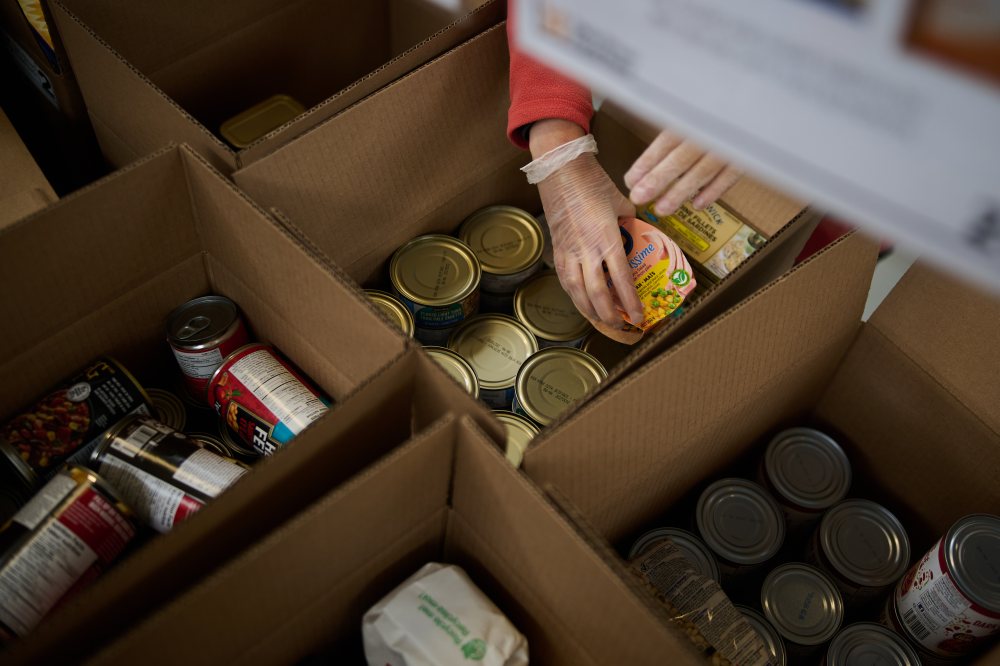
Young people report an even worse situation, according to the research conducted by Edelman Data and Intelligence on behalf of the Salvation Army.
Forty-one per cent of respondents aged 18-34 said they skipped meals, 10 percentage points higher than the average, and 23 per cent said they accessed food supports.
The survey also suggests that Canadians are more concerned about U.S. tariffs and their effect on the economy than last year, with nearly nine in 10 saying they were worried the trade war would spike prices for everyday goods.
Three in five surveyed reported their household was already feeling the pinch from U.S. tariffs.
The survey was conducted over several days in September among a nationally representative sample of Canadians, including some current and past users of Salvation Army services, who are members of the online Angus Reid Forum. Residents of Canada’s territories were not included in the survey and a margin of error cannot be calculated for a non-probability sample, the report noted.
On the housing front, half of respondents said they aren’t confident they could find another home in their area that was both affordable and met their household needs, while 24 per cent said they spend at least half their after-tax income on housing costs.
To cover basic needs, 50 per cent of Canadians polled said they dipped into savings while 40 per cent reported taking on debt or using credit.
Glenn van Gulik, a strategic engagement director for the Salvation Army, called the results “deeply concerning.”
“For many families, making ends meet is no longer about cutting back on extras. It’s about making difficult choices between food, housing and other basic necessities,” van Gulik wrote in a statement.
This report by The Canadian Press was first published Nov. 3, 2026.