
Carney says Canada will only sign a U.S. trade deal that includes viable auto sector
Advertisement
Read this article for free:
or
Already have an account? Log in here »
We need your support!
Local journalism needs your support!
As we navigate through unprecedented times, our journalists are working harder than ever to bring you the latest local updates to keep you safe and informed.
Now, more than ever, we need your support.
Starting at $15.99 plus taxes every four weeks you can access your Brandon Sun online and full access to all content as it appears on our website.
Subscribe Nowor call circulation directly at (204) 727-0527.
Your pledge helps to ensure we provide the news that matters most to your community!
To continue reading, please subscribe:
Add Brandon Sun access to your Free Press subscription for only an additional
$1 for the first 4 weeks*
- Enjoy unlimited reading on brandonsun.com
- Read the Brandon Sun E-Edition, our digital replica newspaper
*Your next Free Press subscription payment will increase by $1.00 and you will be charged $20.95 plus GST for four weeks. After four weeks, your payment will increase to $24.95 plus GST every four weeks.
Read unlimited articles for free today:
or
Already have an account? Log in here »
MANILA – Prime Minister Mark Carney says trade talks with the U.S. are making progress, but Ottawa won’t accept a deal that doesn’t allow for a viable auto sector.
“Lots of people think that we should just go and take whatever deal,” Carney said Saturday in Manila. “This government will not settle for a deal with the United States that is not consistent with a viable Canadian auto sector.”
Carney was speaking at a news conference, three months after Canada pulled out of trade talks with the U.S., saying there had been last-minute demands from Washington that included a hit to Canada’s auto sector.
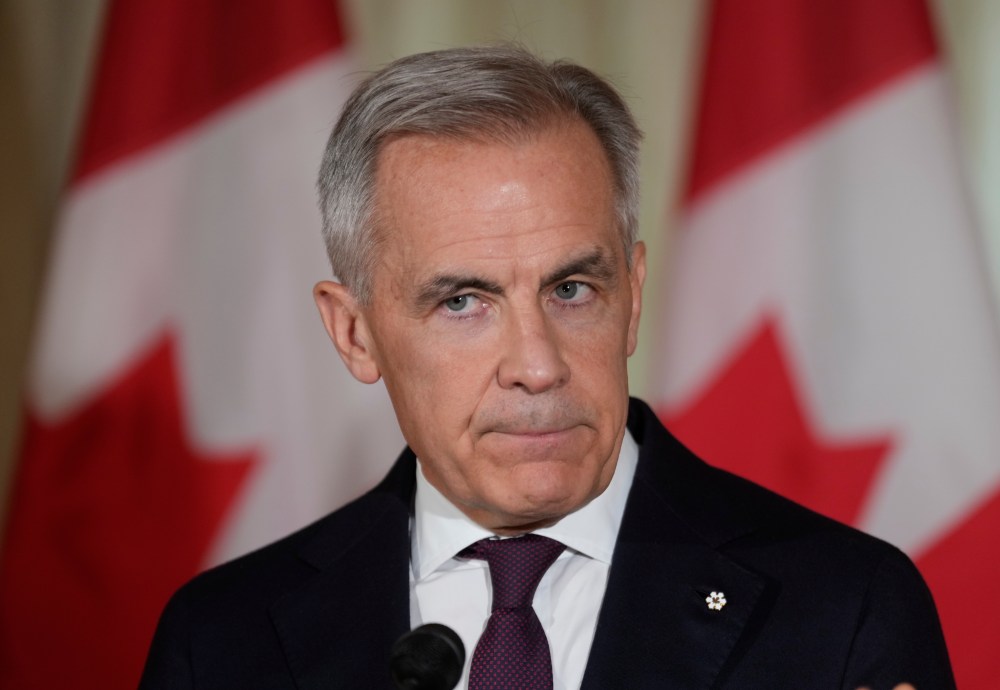
“This is one of the fundamental issues in our trade negotiation, and we are making progress toward that,” he said of the auto sector, adding it was also “one of the most challenging issues” in the talks.
Carney revealed he had “quite a long, substantive conversation” this week with U.S. President Donald Trump, in which both U.S. Trade Representative Jamieson Greer and Trump’s chief of staff Stephen Miller were on the line.
Carney said the American automotive market relies in part on Canadian manufacturing, and the continental industry is challenges by speed of production and by electrification.
“The sooner that we can to a stable trading relationship under the new trade policy of the United States for the auto sector, it’s absolutely in the interest of course of Canadian workers, Canadian auto sector, but very much the U.S. as well,” he said.
Carney also said that Chinese investment in Canada’s auto sector is restricted to a set timeline and amount of vehicles, and will be reassessed based on multiple factors including the state of Canada’s integration into the U.S. automotive sector.
Carney also reiterated that Ottawa feels automaker Stellantis has not met obligations it took when accepting federal funds as it signed a deal to sell its Brampton, Ont. assembly plant to defence contractor Roshel.
“We’re not satisfied with in any way with the current situation and the partial approach that Stellantis has taken here,” Carney said.
“The expectation is that Stellantis fully respects its engagements to the workers and to Canada.”
This report by The Canadian Press was first published Nov. 14, 2026.