
What Canadians should know about their air passenger rights amid U.S. travel chaos
Advertisement
Read this article for free:
or
Already have an account? Log in here »
We need your support!
Local journalism needs your support!
As we navigate through unprecedented times, our journalists are working harder than ever to bring you the latest local updates to keep you safe and informed.
Now, more than ever, we need your support.
Starting at $15.99 plus taxes every four weeks you can access your Brandon Sun online and full access to all content as it appears on our website.
Subscribe Nowor call circulation directly at (204) 727-0527.
Your pledge helps to ensure we provide the news that matters most to your community!
To continue reading, please subscribe:
Add Brandon Sun access to your Free Press subscription for only an additional
$1 for the first 4 weeks*
- Enjoy unlimited reading on brandonsun.com
- Read the Brandon Sun E-Edition, our digital replica newspaper
*Your next Free Press subscription payment will increase by $1.00 and you will be charged $20.95 plus GST for four weeks. After four weeks, your payment will increase to $24.95 plus GST every four weeks.
Read unlimited articles for free today:
or
Already have an account? Log in here »
As Canadian airlines and airports continue to deal with the aftershocks of the Friday grounding of U.S. air traffic, some travellers are facing cancellations and delays to their plans.
Under Canada’s Air Passenger Protection Regulations, passengers have the right to be rebooked if their flight is cancelled or subject to a lengthy delay.
Airlines must rebook travellers on the next available flight operated by them or a partner airline that departs within 48 hours of the passenger’s original departure time.
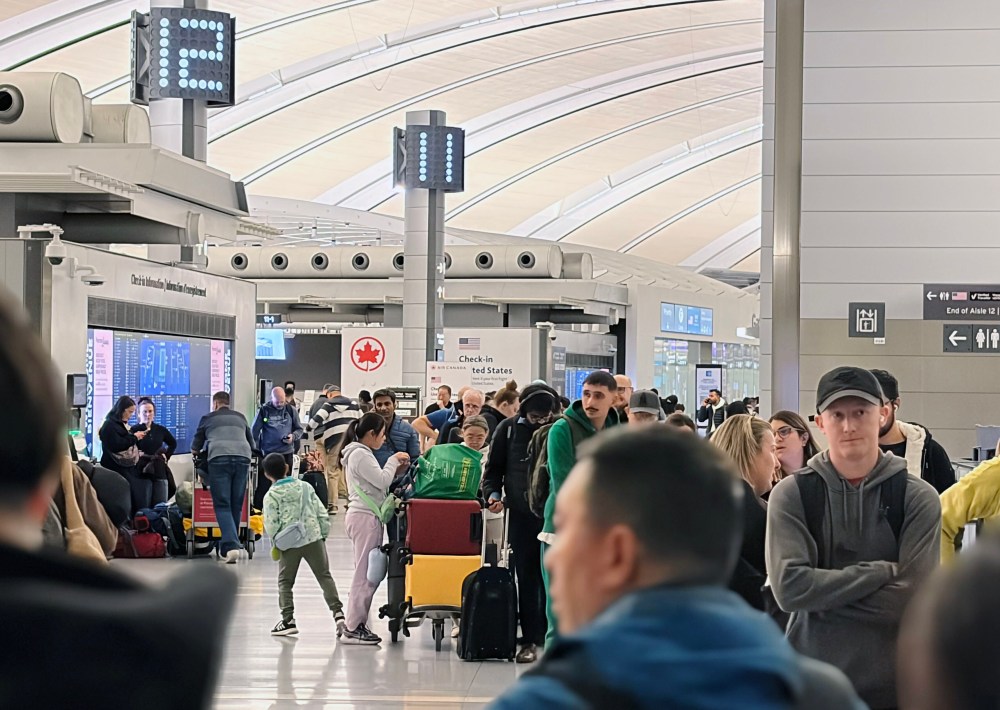
Gabor Lukacs, an air passenger rights advocate, says for international travel, like to and from the U.S., if airlines can’t find a flight within that 48-hour period, they are required to rebook passengers on a competing airline.
When disruptions are within an airline’s control, passengers are guaranteed more protections and can claim compensation, but Lukacs says that isn’t the case here.
The nationwide grounding of U.S. air traffic is an “extraordinary circumstance” that is out of the airline’s control, Lukacs says.
Air Canada says it cancelled about 250 flights, affecting some 27,000 passengers after the U.S. Federal Aviation Administration issued the ground stop order on Friday, halting all U.S. flights for more than four hours.
Meanwhile, Porter Airlines and WestJet say it will likely take the whole weekend for flights to return to normal schedules.
Lukacs notes that travellers flying between Canada and the U.S. are protected under both countries’ air passenger regulations, but Canada’s protections are stronger.
For Canadians stuck in the U.S. who may have had to book hotels and cover the cost of additional meals because of travel delays, Lukacs says airlines are not required to pay travellers back.
“In Europe, passengers would still be getting meals and accommodation,” Lukacs says, even for disruptions outside the airline’s control. “In Canada, that’s not an obligation.”
Lukacs says if Canadians feel airlines have not met their obligations under the law, they should document their communications with the airline and take them to small claims court.
The U.S. government says the ground stop order was issued on Friday after new technology was added to the nation’s air traffic control system, overloading antiquated equipment and causing intermittent communications and radar gaps.
The matter is under investigation.
This report by The Canadian Press was first published Nov. 14, 2026.