
Get rich quick, or lose it all: The shared fun and frustration of Monopoly’s capitalist world
Advertisement
Read this article for free:
or
Already have an account? Log in here »
We need your support!
Local journalism needs your support!
As we navigate through unprecedented times, our journalists are working harder than ever to bring you the latest local updates to keep you safe and informed.
Now, more than ever, we need your support.
Starting at $15.99 plus taxes every four weeks you can access your Brandon Sun online and full access to all content as it appears on our website.
Subscribe Nowor call circulation directly at (204) 727-0527.
Your pledge helps to ensure we provide the news that matters most to your community!
To continue reading, please subscribe:
Add Brandon Sun access to your Free Press subscription for only an additional
$1 for the first 4 weeks*
- Enjoy unlimited reading on brandonsun.com
- Read the Brandon Sun E-Edition, our digital replica newspaper
*Your next Free Press subscription payment will increase by $1.00 and you will be charged $20.95 plus GST for four weeks. After four weeks, your payment will increase to $24.95 plus GST every four weeks.
Read unlimited articles for free today:
or
Already have an account? Log in here »
NASHVILLE, Tenn. (AP) — Buy Marvin Gardens. Draw a Get Out of Jail Free card. Put a hotel on Boardwalk or Baltic Avenue. And when you pass Go, collect $200.
It’s easy to name the game being played. With its iconic colorful paper money and metal playing tokens, Monopoly has entertained and frustrated countless players as they vie to win it all or go “bankrupt” trying.
Even with its reputation for long and cutthroat gameplay, the property-trading, rags-to-riches board game has become entrenched in the American experience and part of a global lexicon. It’s both a game-night staple and a cultural symbol that draws parallels to — and to some extent lampoons — the highs and lows of capitalism and the American dream.
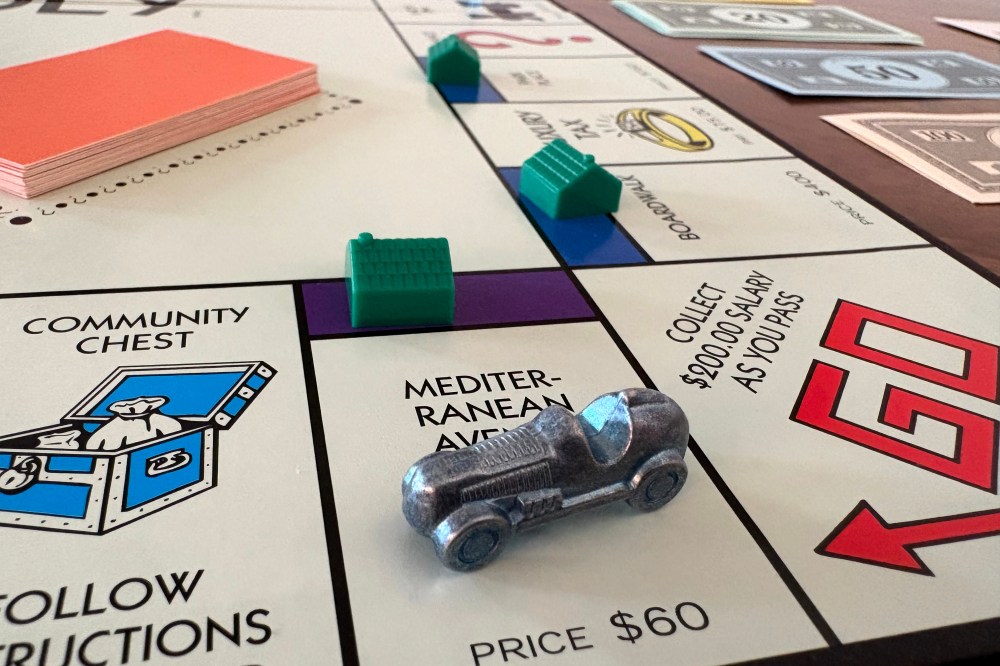
Parker Brothers launched its Monopoly in 1935 while America was still in the throes of the Great Depression. In “Monopoly: The World’s Most Famous Game and How It Got That Way,” Philip Orbanes, a former Parker Brothers executive, explains that the board game quickly became “a common language, a shared reservoir of enjoyment and experience that players from the four corners of the Earth could share with equanimity.”
He gives Parker Brothers a lot of the credit for that. The American game maker didn’t invent Monopoly, though it bought the rights to Charles Darrow’s version and to its predecessor, Landlord’s Game by Elizabeth Magie. Monopoly evolved over time through various adaptations of Magie’s game.
But according to Orbanes, Parker Brothers standardized Monopoly, including rewriting the rules. He explains that this “meant that consumers in every part of the country played Monopoly the same way,” personal house rules aside. A British game maker helped ensure that standardization carried over to international versions as well.
The game’s standard rules continue to give players a shared starting point. But whether you know all the official rules or not, breaking them — or coming up with new ones — is also a Monopoly tradition. The instructions for several Monopoly editions advise against using personal house rules in order “to keep your game short and sweet.”
But Hasbro, which owns Monopoly, recognizes that fan-created rules are part of gameplay for many. Some house rules have even inspired official Monopoly variations. In a news release about the game’s 90th anniversary, Hasbro executive Brian Baker explained: “It’s a cultural phenomenon that has transcended generations and resonates deeply with players across the globe. … We’re celebrating the elements our players have loved for nearly a century.”
___
Part of a recurring series, “American Objects,” marking the 250th anniversary of the United States. For more American objects, click here. For more stories on the anniversary, click here.