
Shanghai COVID outbreak shows signs of waning as cases fall
Advertisement
Read this article for free:
or
Already have an account? Log in here »
We need your support!
Local journalism needs your support!
As we navigate through unprecedented times, our journalists are working harder than ever to bring you the latest local updates to keep you safe and informed.
Now, more than ever, we need your support.
Starting at $15.99 plus taxes every four weeks you can access your Brandon Sun online and full access to all content as it appears on our website.
Subscribe Nowor call circulation directly at (204) 727-0527.
Your pledge helps to ensure we provide the news that matters most to your community!
To continue reading, please subscribe:
Add Brandon Sun access to your Free Press subscription for only an additional
$1 for the first 4 weeks*
*Your next subscription payment will increase by $1.00 and you will be charged $20.00 plus GST for four weeks. After four weeks, your payment will increase to $24.00 plus GST every four weeks.
Read unlimited articles for free today:
or
Already have an account? Log in here »
Hey there, time traveller!
This article was published 02/05/2022 (1403 days ago), so information in it may no longer be current.
BEIJING (AP) — The COVID-19 outbreak that has shut down most of Shanghai appears to be waning, with the number of new cases falling below 10,000 a day over the weekend.
Authorities have begun a limited easing of a citywide lockdown that has disrupted the lives of millions of residents and dealt at least a temporary blow to China’s economy. Many have been confined to their apartments for three weeks or more. They reported difficulty ordering food deliveries in the early days of the lockdown and higher prices for what they could get.
China’s largest city recorded about 7,000 cases a day on Saturday and Sunday, down from a peak of 27,605 nearly three weeks ago on April 13. Shanghai reported 32 deaths, raising the death toll to 454. Most of the victims have been elderly and many were unvaccinated.
Even as many other countries relax pandemic restrictions, the Chinese government has stuck to a “zero-COVID” approach that restricts travel, mass tests entire cities and sets up sprawling temporary facilities to try to isolate every infected person. Lockdowns start with buildings and neighborhoods but become citywide if the virus is spreading widely.
Many outside experts say it’s time for China to change course. Lockdowns helped buy critical time at the start of the pandemic but zero-COVID no longer makes sense from a public health perspective and imposes socioeconomic costs, said Richard Reithinger, the vice president for global health at RTI International in Washington, D.C.
“Continuing to enforce a zero-COVID-19 policy now, including a lockdown approach and restricting travel, is almost like pretending we have learned nothing over the past two years, now that effective treatment options and various vaccines are available,” he said.
But Chinese officials worry that a major outbreak could overwhelm the health care system and lead to more deaths, particularly among the unvaccinated elderly.
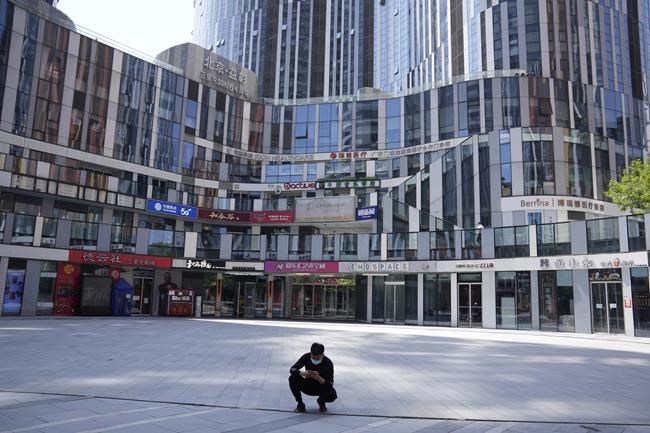
Authorities in Beijing have closed schools, carried out mass testing of more than 20 million people and imposed targeted lockdowns of buildings and neighborhoods to try to prevent what is still a small outbreak from reaching Shanghai proportions and necessitating a citywide lockdown.
The Chinese capital reported 50 new cases, bringing the total to 400 in the 11-day-old outbreak. Restaurants and gyms have been ordered shut for the May Day national holiday that runs through Wednesday. Major tourist sites in the city, including the Forbidden City and the Beijing Zoo, will close their indoor exhibition halls starting Tuesday.
Shanghai has recorded about 400,000 cases in China’s largest outbreak since the start of the pandemic.
Reithinger said a zero-COVID policy is a blanket strategy rather than one driven by epidemiological data. Rather than citywide lockdowns, China should focus on areas where there are clusters of cases, enforce social distancing and other prevention measures and redouble its vaccination efforts, particularly among the elderly, he said.