
Dispatchers short-staffed in rural Manitoba, union claims
Advertisement
Read this article for free:
or
Already have an account? Log in here »
We need your support!
Local journalism needs your support!
As we navigate through unprecedented times, our journalists are working harder than ever to bring you the latest local updates to keep you safe and informed.
Now, more than ever, we need your support.
Starting at $15.99 plus taxes every four weeks you can access your Brandon Sun online and full access to all content as it appears on our website.
Subscribe Nowor call circulation directly at (204) 727-0527.
Your pledge helps to ensure we provide the news that matters most to your community!
To continue reading, please subscribe:
Add Brandon Sun access to your Free Press subscription for only an additional
$1 for the first 4 weeks*
- Enjoy unlimited reading on brandonsun.com
- Read the Brandon Sun E-Edition, our digital replica newspaper
*Your next Free Press subscription payment will increase by $1.00 and you will be charged $20.95 plus GST for four weeks. After four weeks, your payment will increase to $24.95 plus GST every four weeks.
Read unlimited articles for free today:
or
Already have an account? Log in here »
Hey there, time traveller!
This article was published 21/01/2022 (1624 days ago), so information in it may no longer be current.
An organization that represents health-care professionals in Manitoba is calling on the province to address ambulance dispatcher shortages and a workplace experiencing flatlining morale.
Emergency medical dispatchers at Brandon’s Manitoba Transport Coordination Centre (MTCC) are currently struggling to keep up with increasing call volumes and complexity, according to the Manitoba Association of Health Care Professionals, the union that represents them.
“In rural Manitoba, these are the folks who pick up the phone when you dial 911 for your emergencies,” said Bob Moroz, the president of the Manitoba Associated of Health Care Professionals. “You can imagine just on that description alone the amount of work and critical nature of the work that these folks do.”
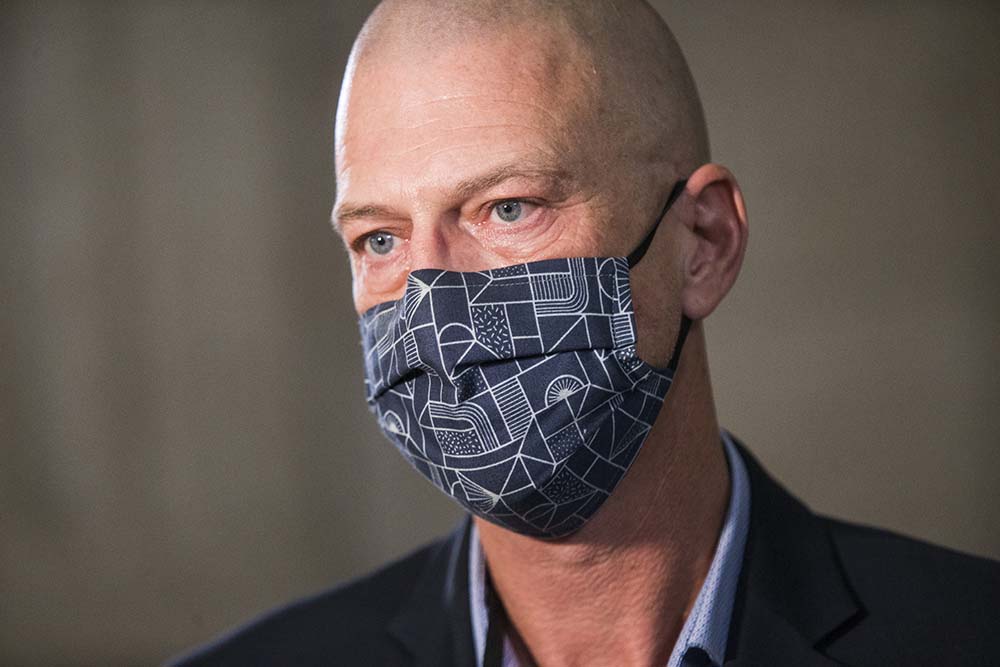
Rural ambulance coverage has thinned out over time and this issue is only compounded by dispatcher staffing shortages at the MTCC, Moroz said.
“There are staffing shortages … One of the things that often is forgotten and is among the most stressful parts of their job is when someone calls, that emergency medical dispatcher stays on the line and they are helping manage those emergencies until that help can arrive,” Moroz said. “It’s a stressful job on a good day and now with the struggle with the call volumes, the complexity, the lack of available ambulances across the province, it’s just having an enormous toll on these folks.”
Staff, who feel hidden behind the phone, are looking for some recognition from their employer and the province in regard to the critical role they play in health care. Members are working overtime hours to ensure there is coverage in the province when someone calls 911 in an emergency, Moroz said.
The issue swells when a dispatcher starts their shift knowing there are no ambulances available, or the closest unit is three or four hours away, he added.
A typical shift at the MTCC should have around nine medical dispatchers, Moroz said, but members have reported they have worked shifts where they are down to only two staff.
“Not only are we short on paramedics and ambulances, but the people who answer your calls are continuing to be asked to do so much more with so much less,” Moroz said. “They’re feeling a lot like Shared Health just ignores their needs because they’re situated in Brandon as opposed to Winnipeg.”
Some shifts at the MTCC are staffed at 60 per cent capacity, Moroz said, as a result of people booking time off and burnout.
“We just don’t have a robust enough staff in the MTCC to be able to manage that, and that’s being ignored,” Moroz said.
Dispatchers stay on the line with callers until paramedics arrive on the scene. This could be for up to 30 minutes at a time, he said.
“The longer it takes for that ambulance to arrive on the scene when our dispatchers are still talking to them, they have to be able to manage … not only what they physically need that person to do, but manage the mental and psychological anguish that is going on,” Moroz said. “That’s a high-stress environment.”
These emergency calls come on top of organizing inter-facility transfers for patients via ambulance while working to find available ambulances for the movement of patients and working with STARS and Lifelight.
“It is enormously complicated right now, and they are feeling the pinch because they are short-staffed,” Moroz said. “Where is the support?”
Moroz said the province needs to post more permanent positions for the MTCC. The union estimates the facility needs to hire at least six permanent positions to ensure the unit is fully staffed each day. This would be just enough to get the MTCC back to a baseline of worker coverage. Posting casual positions will not do the trick, Moroz added.
“On the ground, we are hurting.”
Staffing at the MTCC has been a pressing issue for a number of years, pre-dating the COVID-19 pandemic.
“There’s very little incentive for people to be there [other than] a love of what they do,” Moroz said. “Even that has a limit.”
He noted one of the things MTCC staff pushed for was a workplace assessment to help their employer better understand the conditions they work in. A third party was brought in for the review, Moroz said, but so far the results have yet to be shared with members from MTCC.
“It has to be factual. It has to be actual. It has to be truthful. It has to have tangible results to deal with why we were having it in the first place,” Moroz said. “Everything we’ve heard from our members is it has been essentially the exact opposite.”
Real and immediate investments in terms of recruitment are essential, he said.
A spokesperson with Shared Health provided a written statement to the Sun regarding staffing at the MTCC.
“Claims made about current vacancy rates at the MTCC are factually inaccurate and should be treated as such,” said the statement. According to Shared Health, the MTTC has the equivalent of 35 full-time positions, with 34 currently filled. The statement noted the open position is the result of resignation and is in the process of being filled.
The MTCC is in the middle of its annual winter recruitment drive to fill a handful of casual, not full-time, positions.
“Like other workforces, the MTCC is seeing a higher than normal absentee rate in recent weeks due to high levels of COVID activity being seen throughout the province … even if including sick rates, staffing levels at the MTCC have not been close to approaching what’s being alleged.”
Shared Health noted overtime and call-outs to casual staff have been offered when unplanned absences have occurred. Management has also helped cover shifts when multiple sick calls are received.
Even after the Sun received this response from Shared Health to clarify the union’s claims, Moroz maintained his previous assertions about the staffing situation at the MTCC.
» ckemp@brandonsun.com
» Twitter: @The_ChelseaKemp