
David Bezmozgis on why he insisted on Russian dialogue for ‘Natasha’
Advertisement
Read this article for free:
or
Already have an account? Log in here »
We need your support!
Local journalism needs your support!
As we navigate through unprecedented times, our journalists are working harder than ever to bring you the latest local updates to keep you safe and informed.
Now, more than ever, we need your support.
Starting at $15.99 plus taxes every four weeks you can access your Brandon Sun online and full access to all content as it appears on our website.
Subscribe Nowor call circulation directly at (204) 727-0527.
Your pledge helps to ensure we provide the news that matters most to your community!
To continue reading, please subscribe:
Add Brandon Sun access to your Free Press subscription for only an additional
$1 for the first 4 weeks*
- Enjoy unlimited reading on brandonsun.com
- Read the Brandon Sun E-Edition, our digital replica newspaper
*Your next Free Press subscription payment will increase by $1.00 and you will be charged $20.95 plus GST for four weeks. After four weeks, your payment will increase to $24.95 plus GST every four weeks.
Read unlimited articles for free today:
or
Already have an account? Log in here »
Hey there, time traveller!
This article was published 04/05/2016 (3773 days ago), so information in it may no longer be current.
TORONTO – Writer-director David Bezmozgis says he was approached several times over the past 12 years about adapting the eponymous short story from his acclaimed 2004 collection “Natasha and Other Stories” into a film.
But he initially didn’t think it could get done “because it needed all this Russian-speaking material in it.”
In telling the story of a teenaged son of Russian immigrants in Toronto who bonds with a newly arrived girl from Moscow, Bezmozgis was insistent that his characters actually speak in their native tongue.
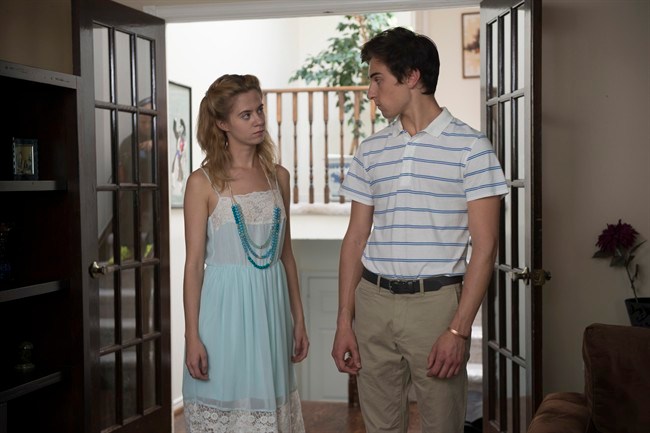
Their dialogue is translated in subtitles in the film, which opens Friday in Toronto and Vancouver.
“That decision to have everybody speak Russian was fundamental to making the film,” says Bezmozgis, who’s twice been shortlisted for the prestigious Scotiabank Giller Prize.
“I wouldn’t have made it otherwise. In part, I think it’s anybody from a certain ethnic community who’s seen people play you, people play your community, and they’re just not authentic to it, people putting on accents, et cetera.
“Sometimes you can kind of understand why and other times you think, ‘You should have just cast normal Russians to play Russians’ or ‘You should have cast Arabic speakers to play Arabs.’ Also, the story demanded it.”
“Natasha” is Bezmozgis’s second film after 2009’s “Victoria Day.”
He adapted it himself from his short story collection that won a slew of honours and praise, including the Commonwealth Writers’ Prize for best first book.
Russian-born, Toronto-based Alex Ozerov stars as 16-year-old Mark, who’s facing pressure from his Russian-Jewish family to get a summer job. When his uncle enters into an arranged marriage with a younger woman from Moscow, Mark becomes close with her troubled 14-year-old daughter Natasha, played by Sasha K. Gordon.
“Finding Natasha was very difficult,” says Bezmozgis, who looked for his cast in Canada and Israel.
“The woman who plays her, Sasha Gordon, it’s her first time on a real film set. She’s from New York and it was pure luck and circumstance and coincidence that we found her and she found us.”
Bezmozgis, who was born in Riga, Latvia, says the story isn’t autobiographical, but the context of it reflects his own childhood and upbringing in Toronto, where he and his parents moved in 1980.
“That community of Bathurst and Steeles … that Russian-Jewish immigrant family, all of that is where I come from.”
Bezmozgis updated the original story, which was set in the ’90s, in part because of a pornography plotline involving Natasha.
The Internet played “into the storyline in a way that it wouldn’t have in the early ’90s,” he says.
He enjoyed fleshing out the story, including some scenes that don’t exist or were only alluded to in the book.
“I came back to it 10 years later as a different person, a more mature writer,” he says.
“I feel like the film is actually better than the original story. I think it’s richer, I think there’s more there.”