
Review: Is Springsteen’s ‘Letter to You’ a goodbye note?
Advertisement
Read this article for free:
or
Already have an account? Log in here »
We need your support!
Local journalism needs your support!
As we navigate through unprecedented times, our journalists are working harder than ever to bring you the latest local updates to keep you safe and informed.
Now, more than ever, we need your support.
Starting at $15.99 plus taxes every four weeks you can access your Brandon Sun online and full access to all content as it appears on our website.
Subscribe Nowor call circulation directly at (204) 727-0527.
Your pledge helps to ensure we provide the news that matters most to your community!
To continue reading, please subscribe:
Add Brandon Sun access to your Free Press subscription for only an additional
$1 for the first 4 weeks*
*Your next subscription payment will increase by $1.00 and you will be charged $20.00 plus GST for four weeks. After four weeks, your payment will increase to $24.00 plus GST every four weeks.
Read unlimited articles for free today:
or
Already have an account? Log in here »
Hey there, time traveller!
This article was published 15/10/2020 (1902 days ago), so information in it may no longer be current.
Bruce Springsteen, “Letter to You” (Columbia)
Has Bruce Springsteen written a “Letter to You” to say goodbye?
The Boss turned 71 just last month. Although his fitness, spirit and the actuarial tables would suggest he has plenty of music left in him, it’s hard to miss the valedictory feel and sense of loss that pervades this new album.
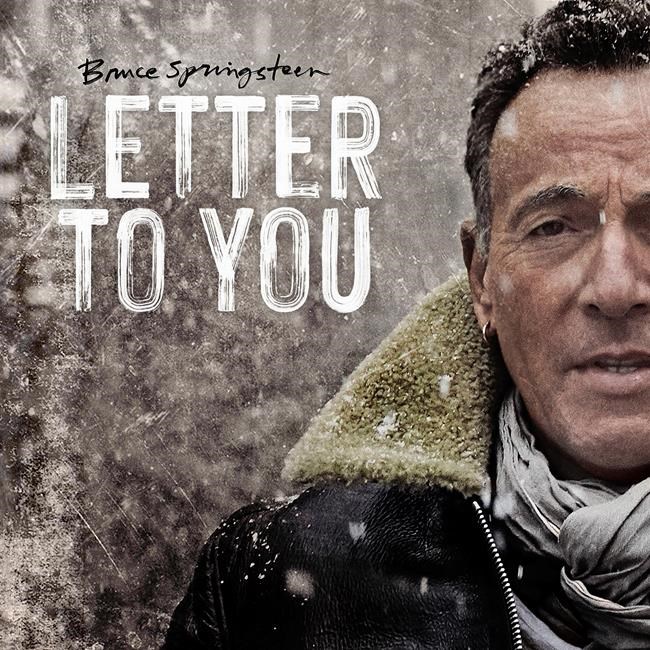
Its centerpiece is “Last Man Standing,” which Springsteen has explained was inspired by George Theiss, one of his mates in the teenage Jersey band the Castiles. Theiss’ recent death left Springsteen as the lone survivor of his first band.
He’s seen colleagues in the E Street Band fall, too, onstage foil Clarence Clemons most prominently, along with organist Danny Federici. He surely sees all of them by his side in the song “Ghosts,” where he sings, “Meet you brother and sister on the other side.”
Similarly, in the album’s concluding song, Springsteen sings that “death is not the end and I’ll see you in my dreams.”
For a man who once sang “Glory Days” to mock someone stuck in high school, Springsteen is now looking back himself. The difference is that instead of bragging of exploits, he’s reminiscing about the warmth and companionship a lifetime in music has brought him. There’s an undertone of precious time lost to the pandemic when you listen to “House of a Thousand Guitars.”
In that song, he yearns to “go where the music never ends,” and he’ll no doubt be joined there by the E Street Band. His old friends back him on “Letter to You,” doing something they’d never done before with a famed perfectionist as frontman: cutting the music essentially live in the studio in five days.
They can still make a mighty roar and that’s something to be appreciated, too. They’re not to be taken for granted. As Steve Van Zandt mentioned recently, who knows how many more of these albums are left in them, if any?
Three of the 12 songs here date back to the 1970s and almost seem written by another man, a youthful, ambitious Springsteen with Dylan-like imagery flowing out of him. Each of these rediscovered compositions stretch past six minutes.
The newer songs are more professional than inspired. Occasionally, they even slip into cliché; the “crown of thorns” phrase usually suggests a need to try harder.
He is not, by any means, a nostalgia act. Yet his well-received Broadway show and “Letter to You” suggest Springsteen now is less about pulling out of here to win than pulling back in to appreciate what he has.