
Briton leaves Iraq after antiquities conviction quashed
Advertisement
Read this article for free:
or
Already have an account? Log in here »
We need your support!
Local journalism needs your support!
As we navigate through unprecedented times, our journalists are working harder than ever to bring you the latest local updates to keep you safe and informed.
Now, more than ever, we need your support.
Starting at $15.99 plus taxes every four weeks you can access your Brandon Sun online and full access to all content as it appears on our website.
Subscribe Nowor call circulation directly at (204) 727-0527.
Your pledge helps to ensure we provide the news that matters most to your community!
To continue reading, please subscribe:
Add Brandon Sun access to your Free Press subscription for only an additional
$1 for the first 4 weeks*
*Your next subscription payment will increase by $1.00 and you will be charged $20.00 plus GST for four weeks. After four weeks, your payment will increase to $24.00 plus GST every four weeks.
Read unlimited articles for free today:
or
Already have an account? Log in here »
Hey there, time traveller!
This article was published 31/07/2022 (1303 days ago), so information in it may no longer be current.
LONDON (AP) — A retired British geologist jailed in Iraq for antiquities smuggling has been freed and has left the country, his family said Sunday.
Jim Fitton, 66, was sentenced in June to 15 years in an Iraqi prison. A Baghdad appeals court overturned the conviction and last week ordered his release.
Fitton has now been reunited with family in Malaysia, where he lives. Son-in-law Sam Tasker said Fitton arrived at Kuala Lumpur airport on Friday, and the family was “absolutely over the moon.” Fitton missed wedding for his daughter Leila and Tasker in May while he was imprisoned.
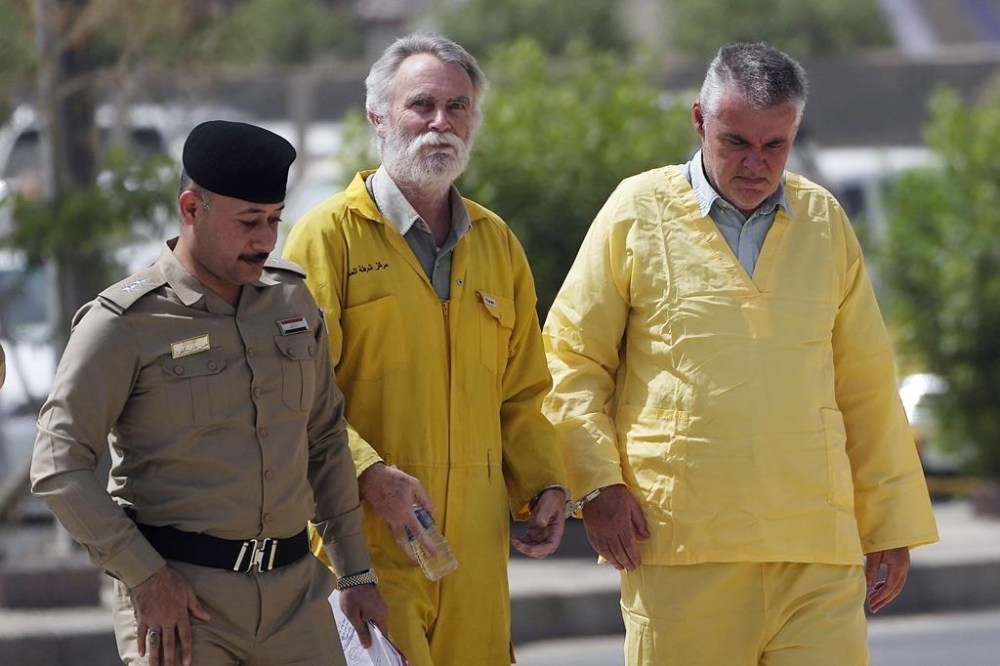
Fitton was arrested in March at Baghdad Airport and charged under antiquities laws that carried the possibility of a death sentence.
His case drew international attention after he was convicted of picking up shards of pottery and other fragments from an ancient site in southern Iraq while on an organized geology and archaeology tour. Fitton told the court that he had no criminal intent, and some of the pieces he picked up from an unguarded site were no larger than a fingernail.
Many feared the incident would deter tourists from visiting Iraq, where the government hopes to grow the nascent tourism sector.
Frustrated by perceived inaction on the part of the British government, Fitton’s family started a petition that garnered more than 350,000 signatures.
Tasker said the public support was “evidence that the actions of the many can move the needle in situations like this, you spurred us on when we were struggling to find hope.”
“We as a family will never again doubt the kindness of strangers,” he said.