
With eye on British Museum, Greece welcomes back ancient art
Advertisement
Read this article for free:
or
Already have an account? Log in here »
We need your support!
Local journalism needs your support!
As we navigate through unprecedented times, our journalists are working harder than ever to bring you the latest local updates to keep you safe and informed.
Now, more than ever, we need your support.
Starting at $15.99 plus taxes every four weeks you can access your Brandon Sun online and full access to all content as it appears on our website.
Subscribe Nowor call circulation directly at (204) 727-0527.
Your pledge helps to ensure we provide the news that matters most to your community!
To continue reading, please subscribe:
Add Brandon Sun access to your Free Press subscription for only an additional
$1 for the first 4 weeks*
- Enjoy unlimited reading on brandonsun.com
- Read the Brandon Sun E-Edition, our digital replica newspaper
*Your next Free Press subscription payment will increase by $1.00 and you will be charged $20.95 plus GST for four weeks. After four weeks, your payment will increase to $24.95 plus GST every four weeks.
Read unlimited articles for free today:
or
Already have an account? Log in here »
Hey there, time traveller!
This article was published 24/03/2023 (1270 days ago), so information in it may no longer be current.
ATHENS, Greece (AP) — Greece on Friday welcomed the return of ancient artifacts from the Acropolis, furthering a campaign to press the British Museum to hand back a collection of sculptures taken from the ancient site in Athens more than 200 years ago.
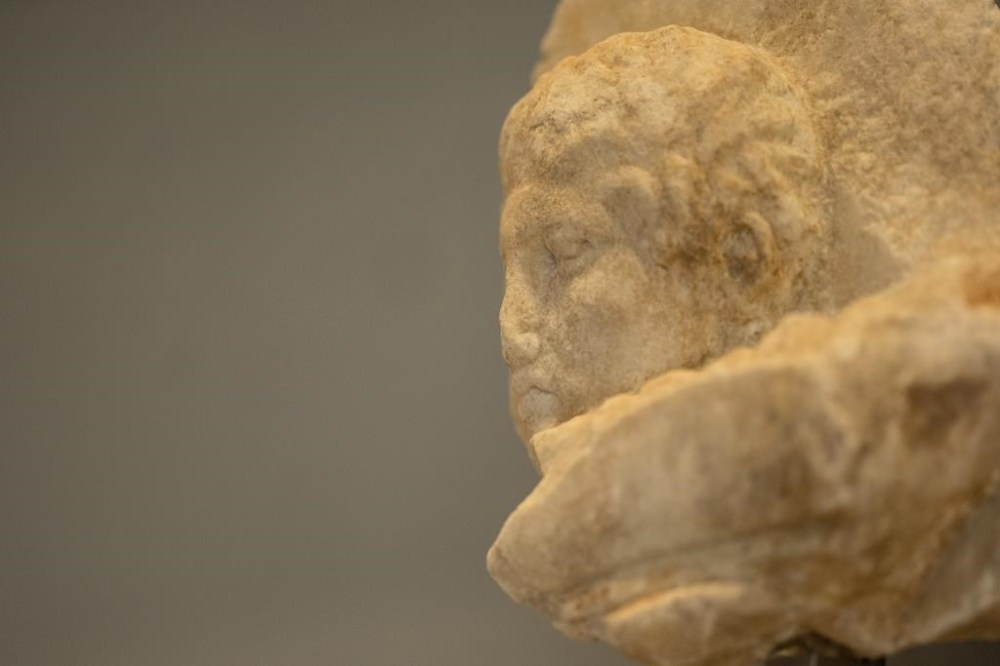
Culture Minister Lina Mendoni led a ceremony Friday for the repatriation of three sculpture fragments — representing a horse and two male heads — from the Parthenon temple on the Acropolis which had been kept at the Vatican Museums.
“Initiatives like these show the way, how the pieces of the Parthenon can be reunited, healing the wounds caused by barbaric hands so many years ago,” Mendoni said.
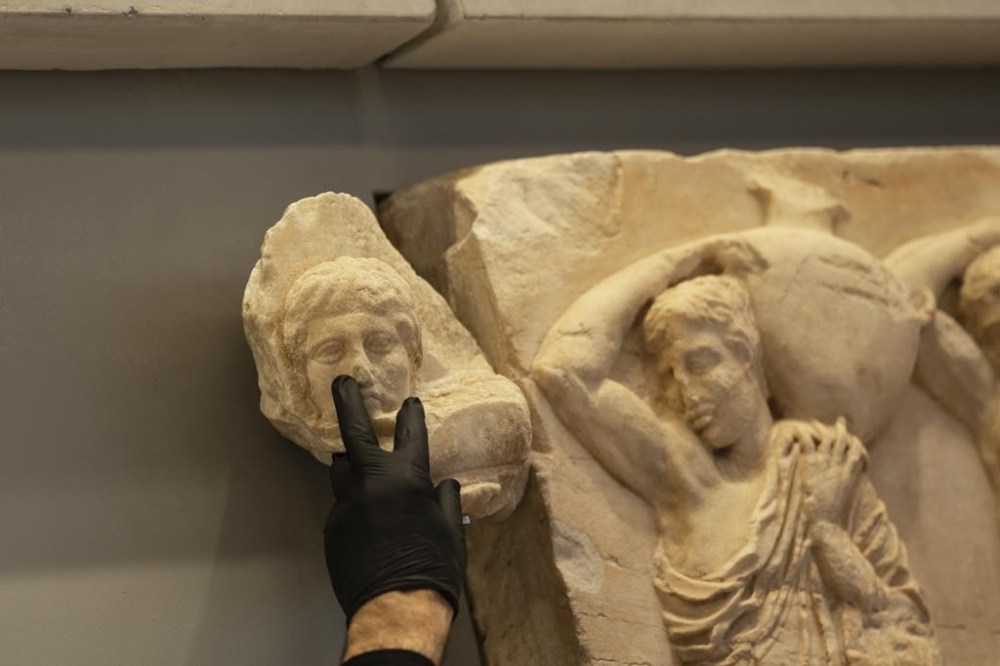
“This takes us to the just and moral demand of the entire Greek people, and of this government and its prime minister, for the final return of all the sculptures of the Parthenon.” The fragments will be added to the collection at the Acropolis Museum, which opened in 2009 at the foot of the ancient site in the center of the Greek capital.
Mendoni said Greece would be willing to lend the British museum ancient Greek artifacts for exhibition to “fill the gap” if the marbles were returned.
“Greece cannot recognize possession and ownership by the British Museum because it considers the sculptures to be there as a product of theft,” she said.
The Vatican called the return an ecumenical “donation” to Greece’s Orthodox Church, but the gesture added pressure on the London museum to reach a settlement with Greece following a campaign launched by Athens 40 years ago.
“This act by Pope Francis is of historical significance and has a positive impact on all levels … We hope it sets an example for others,” the leader of Greece’s Orthodox Church, Archbishop Ieronymos II, said.
Greece argues that the Parthenon sculptures are at the core of its ancient heritage, while supporters of the British Museum maintain that their return could undermine museum collections and cultural diversity globally.
Carved in the 5th century BC, the sculptures from the Parthenon were taken in the early 19th century by British diplomat Lord Elgin before Greece won independence from the Ottoman Empire.
Culture Ministry officials in Greece have played down remarks made last month by British Museum chair George Osborne that the U.K. and Greece were working on an arrangement to display the Parthenon Marbles in both London and Athens.
Last year another marble sculptural fragment from the Parthenon temple — depicting a foot of the ancient Greek goddess Artemis — was returned to Athens from a museum in Palermo, Sicily.
Bishop Brian Farrell, a Vatican secretary for promoting Christian unity, headed the visiting delegation to Athens and said the return of the three fragments from the Vatican had been discussed during a visit to Athens by Pope Francis in 2021.
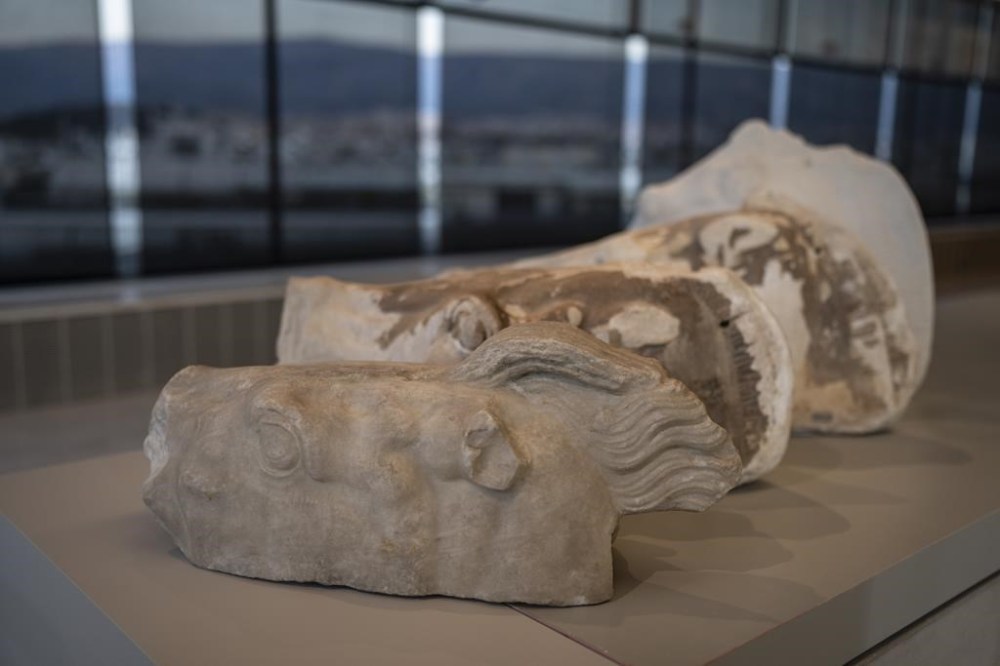
“The gifting of the fragments of the Parthenon which had been held in the Vatican Museums for more than two centuries, shows itself as cultural and social gesture of friendship and solidarity with the people of Greece,” Farrell said.
“We assure you of our intimate joy at the realization of your legitimate wish to have the … fragments at home in their place of origin,” he added.