
Review: Vietnam vets try to help nation they once attacked
Advertisement
Read this article for free:
or
Already have an account? Log in here »
We need your support!
Local journalism needs your support!
As we navigate through unprecedented times, our journalists are working harder than ever to bring you the latest local updates to keep you safe and informed.
Now, more than ever, we need your support.
Starting at $15.99 plus taxes every four weeks you can access your Brandon Sun online and full access to all content as it appears on our website.
Subscribe Nowor call circulation directly at (204) 727-0527.
Your pledge helps to ensure we provide the news that matters most to your community!
To continue reading, please subscribe:
Add Brandon Sun access to your Free Press subscription for only an additional
$1 for the first 4 weeks*
- Enjoy unlimited reading on brandonsun.com
- Read the Brandon Sun E-Edition, our digital replica newspaper
*Your next Free Press subscription payment will increase by $1.00 and you will be charged $20.95 plus GST for four weeks. After four weeks, your payment will increase to $24.95 plus GST every four weeks.
Read unlimited articles for free today:
or
Already have an account? Log in here »
Hey there, time traveller!
This article was published 27/03/2023 (1283 days ago), so information in it may no longer be current.
“The Long Reckoning: A Story of War, Peace and Redemption in Vietnam,” by George Black (Knopf)
In the U.S., we’ve mostly moved on from our military engagements in Vietnam, Iraq and Afghanistan. It’s the American way — not dwelling on our mistakes or engaging in a national discussion about what went wrong.
And atonement? We don’t do that.
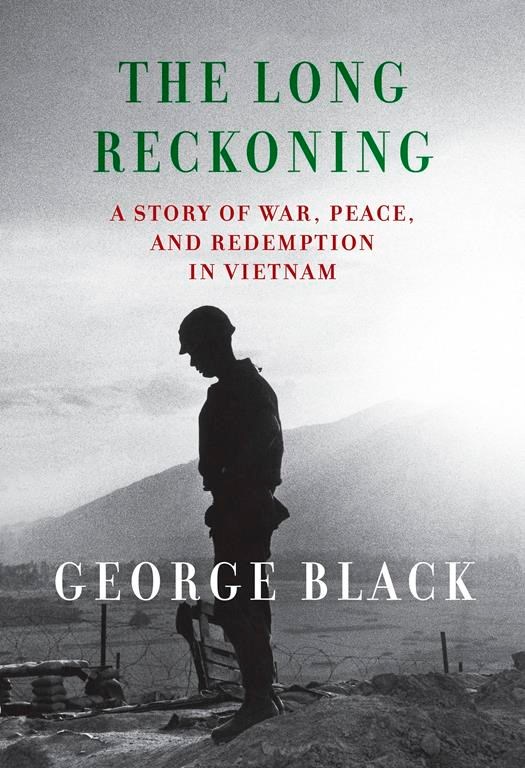
But two American Vietnam vets thought differently and became our national conscience, our moral center and our agents of redemption in dealing with the fearsome toll that herbicide spraying and unexploded bombs inflicted on tens of thousands of Vietnamese.
Manus Campbell, a Marine from New Jersey, and Chuck Searcy, an Army intelligence analyst from Georgia, have spent the past few decades in Vietnam leading efforts to heal the hundreds of thousands of Vietnamese still suffering from war wounds or diseases linked to herbicide exposure.
Thanks to Campbell, Searcy and a small group of scientists and others, the U.S. and others are providing the resources to help find unexploded bombs and treat Vietnamese struggling with diseases likely linked to herbicide exposure.
George Black’s reporting for “The Long Reckoning” is deep and wide — he made nine trips to Vietnam and the result is a meticulously reported, extraordinary account of efforts, mostly Searcy’s and Campbell’s, to bring medical care in an area most severely affected by herbicides the U.S. military used in Vietnam in an effort to expose the maze of roads and trails the North Vietnamese used to move weapons and supplies to the south.
Goodreads counts 323 books written on the Vietnam War. In these books, the stages and characters are different, but the end remains mostly the same. America clung to the belief that its overwhelming military power could bend a people to its will.
It could not and in the silence when the shooting and bombing finally ended, Vietnamese confronted a nation in ruins. Millions had been killed or wounded, cities and towns were wrecked and hundreds of square miles had been defoliated by herbicide spray that polluted water supplies and likely caused severe and lingering health problems.
This book, however, offers an inspiring epilog to the Vietnam tragedy.
“I thought we had a moral obligation to help,” said Searcy. “I wanted to participate in the rebuilding.”
So did Campbell; both men have spent most of the past few decades in Vietnam, focusing on getting assistance for the millions of Vietnamese still suffering from the war’s chemical and explosive legacy.
Searcy says he has been overwhelmed by the graciousness of the Vietnamese, and particularly former combatants, which has given him a revelation on America today. “If the veterans can come together and make peace, why can’t we all?”