
Canada developing new immigration policy to attract French-speaking people, teachers
Advertisement
Read this article for free:
or
Already have an account? Log in here »
We need your support!
Local journalism needs your support!
As we navigate through unprecedented times, our journalists are working harder than ever to bring you the latest local updates to keep you safe and informed.
Now, more than ever, we need your support.
Starting at $15.99 plus taxes every four weeks you can access your Brandon Sun online and full access to all content as it appears on our website.
Subscribe Nowor call circulation directly at (204) 727-0527.
Your pledge helps to ensure we provide the news that matters most to your community!
To continue reading, please subscribe:
Add Brandon Sun access to your Free Press subscription for only an additional
$1 for the first 4 weeks*
- Enjoy unlimited reading on brandonsun.com
- Read the Brandon Sun E-Edition, our digital replica newspaper
*Your next Free Press subscription payment will increase by $1.00 and you will be charged $20.95 plus GST for four weeks. After four weeks, your payment will increase to $24.95 plus GST every four weeks.
Read unlimited articles for free today:
or
Already have an account? Log in here »
Hey there, time traveller!
This article was published 26/04/2023 (1296 days ago), so information in it may no longer be current.
OTTAWA – The Liberal government is seeking to increase francophone immigration in what it says is a way to grow the French language in Canada and protect the country’s cultural identity.
The new policy was laid out in a five-year action plan for official languages the government released Wednesday. The plan comes as the Liberals’ update to the Official Languages Act is debated in the House of Commons.
“If we address the decline in French, we really have to make sure … that we recruit francophone immigrants,” Official Languages Minister Ginette Petitpas Taylor said Wednesday.
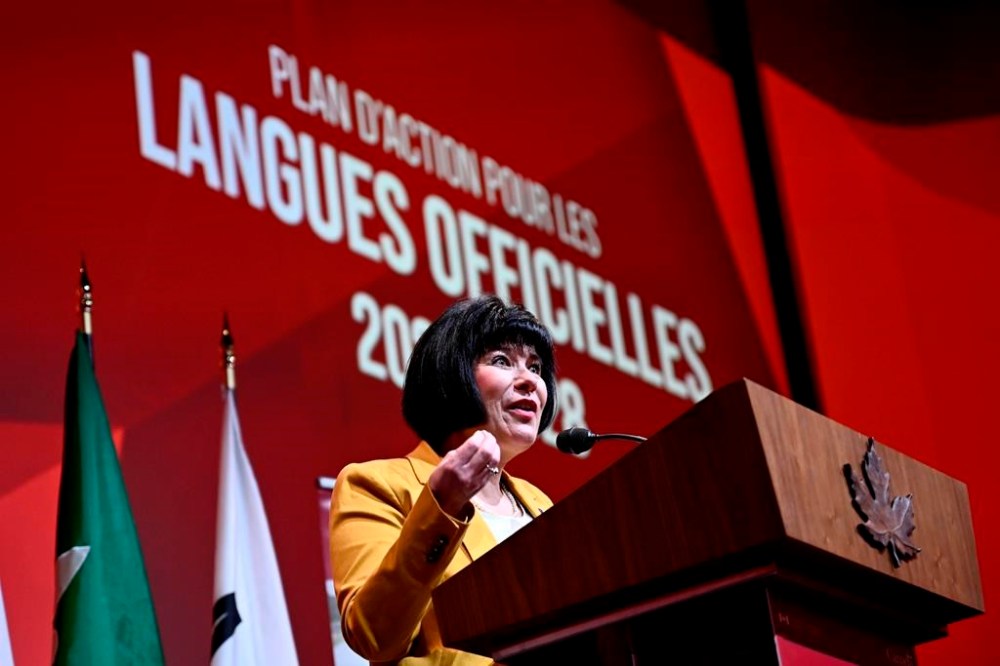
“We recognize that there’s a labour force shortage when it comes to bilingual workers.”
The plan says Canada aims to recruit French-speaking people from Africa, Europe, the Middle East and the Americas and settle them in francophone minority communities in Canada. That doesn’t include Quebec, which has control over its own immigration program.
The government is also looking to attract francophone teachers so that communities have good access to French-language education, including French immersion programs, early childhood programs and post-secondary learning.
“I’ve heard parents tell me that they get up at midnight because they want to be the first in line to enrol their kids in French immersion,” Petitpas Taylor said.
“So there is a thirst that people want to make sure that their children can speak both official languages.”
Earlier this year, the Immigration, Refugees and Citizenship Canada reached a target to ensure that at least 4.4 per cent of immigrants settling outside of Quebec are French speakers.
The government has yet to set a new target, but Immigration Minister Sean Fraser said it’s important for francophone minority communities to experience the benefits of immigration.
“They don’t care simply about more people speaking French. They care about the ability … to raise their families in the language of their choice,” Fraser said Wednesday.
That includes giving people the option to go to the grocery store, put their kids in daycare centers and access education — all in French.
“This is about protecting the cultural identity of Canada and making sure that francophones see themselves in the cultural identity of this country — not just today, but for generations to come,” he said.
The proportion of francophones in the population outside Quebec fell from 6.1 per cent in 1971 to 3.5 per cent in 2021, according to Statistics Canada data from the 2021 census.
The share of the population that says French was the first official language they learned at home has fallen, too — from 27.5 per cent in 1971 to 22 per cent in 2021, data show.
Those numbers are fueling a shared sense of concern among Canada’s francophones and francophiles, both in minority settings and in Quebec, the government said in its action plan.
Prime Minister Justin Trudeau said he recognizes the government’s plan is “ambitious” but said on Wednesday that it “recognizes the important economic, social and cultural value of official languages” while also “focusing on results.”
Other initiatives under the plan include expanding internships for youth in language minority communities that are facing labour shortages, providing access to justice in both languages, increasing bilingual health workers and supporting the creation and dissemination of scientific information in French.
The plan also lays out money for provinces and territories to increase their educational offerings, as well as money for arts and culture, including for English-speaking minority communities in Quebec.
“This new action plan will ensure continued growth of English and French across our country,” Trudeau said.
This report by The Canadian Press was first published April 26, 2023.