
Book Review: Reality stranger than fiction as ‘Girls and Their Monsters’ probes mental health in US
Advertisement
Read this article for free:
or
Already have an account? Log in here »
We need your support!
Local journalism needs your support!
As we navigate through unprecedented times, our journalists are working harder than ever to bring you the latest local updates to keep you safe and informed.
Now, more than ever, we need your support.
Starting at $15.99 plus taxes every four weeks you can access your Brandon Sun online and full access to all content as it appears on our website.
Subscribe Nowor call circulation directly at (204) 727-0527.
Your pledge helps to ensure we provide the news that matters most to your community!
To continue reading, please subscribe:
Add Brandon Sun access to your Free Press subscription for only an additional
$1 for the first 4 weeks*
- Enjoy unlimited reading on brandonsun.com
- Read the Brandon Sun E-Edition, our digital replica newspaper
*Your next Free Press subscription payment will increase by $1.00 and you will be charged $20.95 plus GST for four weeks. After four weeks, your payment will increase to $24.95 plus GST every four weeks.
Read unlimited articles for free today:
or
Already have an account? Log in here »
Hey there, time traveller!
This article was published 13/06/2023 (1223 days ago), so information in it may no longer be current.
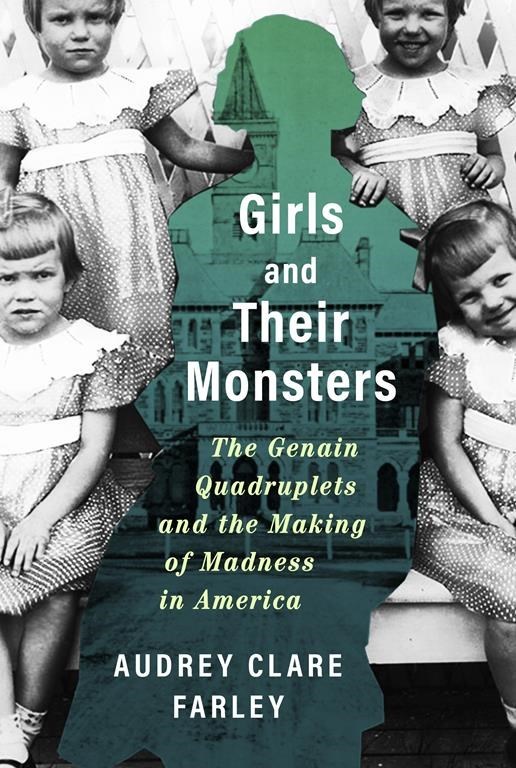
“Girls and Their Monsters: The Genain Quadruplets and the Making of Madness in America” by Audrey Clare Farley (Grand Central)
When Sadie Morlok gave birth to quadruplets in 1930, it made the papers in their town of Lansing, Michigan. Under the spotlight since birth, the legacy of the Morlok Quadruplets became intertwined with the history of mental health science in the United States after all four women were diagnosed with schizophrenia in their 20s.
Scholar Audrey Clare Farley’s second book, “Girls and Their Monsters,” examines America’s complicated relationship with mental illness through the four sisters who would become known as the Genain Quadruplets under research done by the National Institute of Mental Health. The resulting findings under David Rosenthal’s direction left Edna, Sarah, Wilma and Helen at the center of a nature-nurture debate as the country shifted from an emphasis on Freudian psychology and talk therapy to inherited illness, chemical imbalances and treatment through medication.
Although the story is about a white, Christian, American nuclear family, Farley examines the intersections of race, class, gender and religion with mental health and highlights the way politics sway science by controlling which departments and what types of research get funding.
Mysticism about multiples and America’s affair with eugenics are just some of the intriguing background Farley presents for context. From the Dionne quintuplets — born in Canada shortly after the Morloks and who were used like a baby zoo to attract tourists — to a surprising link between the Morloks and Malcolm X, “Girls and Their Monsters” includes a fascinating swath of information.
The first half of “Girls and Their Monsters” reads like a documentary, lingering on the most interesting details and matter-of-factly hyping up the drama. Pulling on diaries, letters and interviews, Farley starts back at Sadie’s and Carl Morlok’s childhoods, going through their tumultuous marriage even before the added stress of the sudden addition of four mouths to feed.
It only gets more dicey from there. Farley takes readers through the beatings, genital mutilation, social isolation and molestation the quadruplets suffered, their struggles with mental health as well as their personal wins and rebellions, all the way until the present day.
This wide view, covering decades and generations, shows the cyclical nature of abuse and examines the quadruplets in relation to each prevailing medical theory along the way.
The second half is more clinical, focusing on the research that came from NIMH and the way politics, society and science amalgamate. Farley shines a 1,000-watt beam of hindsight on this history, illuminating shortcomings, double standards and tragically self-deceptive beliefs that directly impacted an untold number of people.
Farley’s book is truly a case of reality being stranger than fiction, a highly researched yet readable account of a shocking piece of U.S. history that doesn’t show up in textbooks.