
Filmmaker James Cameron calls Titan submersible implosion ‘extreme outlier’
Advertisement
Read this article for free:
or
Already have an account? Log in here »
We need your support!
Local journalism needs your support!
As we navigate through unprecedented times, our journalists are working harder than ever to bring you the latest local updates to keep you safe and informed.
Now, more than ever, we need your support.
Starting at $15.99 plus taxes every four weeks you can access your Brandon Sun online and full access to all content as it appears on our website.
Subscribe Nowor call circulation directly at (204) 727-0527.
Your pledge helps to ensure we provide the news that matters most to your community!
To continue reading, please subscribe:
Add Brandon Sun access to your Free Press subscription for only an additional
$1 for the first 4 weeks*
- Enjoy unlimited reading on brandonsun.com
- Read the Brandon Sun E-Edition, our digital replica newspaper
*Your next Free Press subscription payment will increase by $1.00 and you will be charged $20.95 plus GST for four weeks. After four weeks, your payment will increase to $24.95 plus GST every four weeks.
Read unlimited articles for free today:
or
Already have an account? Log in here »
Hey there, time traveller!
This article was published 18/07/2023 (1212 days ago), so information in it may no longer be current.
Canadian filmmaker and deepsea explorer James Cameron said Tuesday that the implosion of the Titan submersible that killed five people last month was an extreme outlier in decades of safe exploration.
The “Titanic” director told reporters in Ottawa that faulty engineering was to blame for the incident, which happened as the submersible was on its way to visit the site of the ship’s wreckage in the Atlantic Ocean.
“The ocean can be a very unforgiving environment,” said Cameron.
The Titan’s owner, OceanGate, has now ceased commercial and exploration operations.
Remotely operated vehicles have retrieved parts of the Titan from the ocean floor, as well as what are believed to be human remains.
The submersible broke apart as it neared the Titanic wreckage on June 18, killing all five people aboard, including OceanGate CEO Stockton Rush. Also killed in the implosion were two members of a prominent Pakistani family, Shahzada Dawood and his son Suleman Dawood, British adventurer Hamish Harding and Titanic expert Paul-Henri Nargeolet.
Cameron said Nargeolet was a good friend and the pair had a friendly competition over who had the most experience deepsea diving.
“It’s an emotional shock.”
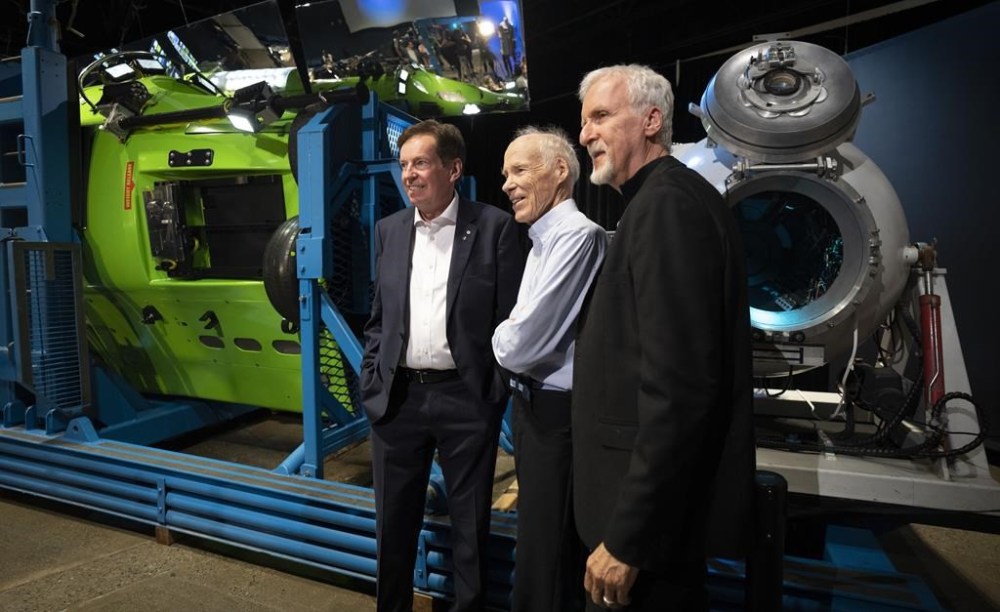
Cameron was in Ottawa Tuesday for the opening of a new exhibition about his own submersible, the Deepsea Challenger.
In 2012, he descended to the deepest part of the ocean in the Challenger, diving 11,000 metres into the Mariana’s Trench in the Pacific Ocean.
He called the green-and-blue submersible, now on display at the Royal Canadian Geographic Society, an example of proper engineering and preparation before entering an underwater expedition.
“I’m a screenwriter. I can create lots of nasty scenarios in my mind, and then we can engineer against them,” Cameron said.
He said engineers have to account for the many possible risks that can lead to failures with submersible designs. Over a seven-year period before the journey, he said, “We had tested everything.”
“That’s how it should be,” he said.
Cameron said he did 10- to 12-hour simulations in the Deepsea Challenger, preparing for a range of situations including a fire on board.
“We did it like NASA,” he said. “I entered this vehicle with great confidence in the vehicle.”
Cameron said submersibles have a proven track record of safety.
“I think it’s really important for people to remember that we have over a half-century of (a) perfect safety record as the deep submergence community,” he said.
Cameron also said he wouldn’t be surprised to see new regulatory efforts in response to the Titan implosion.
He said those regulations should be specific to vessels that are carrying passengers, and should be treated the same way as existing measures for boats or ships.
This report by The Canadian Press was first published July 18, 2023.
— With files from The Associated Press