
Seiichi Morimura, who exposed the atrocities committed by the Japanese army’s Unit 731, dies at 90
Advertisement
Read this article for free:
or
Already have an account? Log in here »
We need your support!
Local journalism needs your support!
As we navigate through unprecedented times, our journalists are working harder than ever to bring you the latest local updates to keep you safe and informed.
Now, more than ever, we need your support.
Starting at $15.99 plus taxes every four weeks you can access your Brandon Sun online and full access to all content as it appears on our website.
Subscribe Nowor call circulation directly at (204) 727-0527.
Your pledge helps to ensure we provide the news that matters most to your community!
To continue reading, please subscribe:
Add Brandon Sun access to your Free Press subscription for only an additional
$1 for the first 4 weeks*
- Enjoy unlimited reading on brandonsun.com
- Read the Brandon Sun E-Edition, our digital replica newspaper
*Your next Free Press subscription payment will increase by $1.00 and you will be charged $20.95 plus GST for four weeks. After four weeks, your payment will increase to $24.95 plus GST every four weeks.
Read unlimited articles for free today:
or
Already have an account? Log in here »
Hey there, time traveller!
This article was published 24/07/2023 (1221 days ago), so information in it may no longer be current.
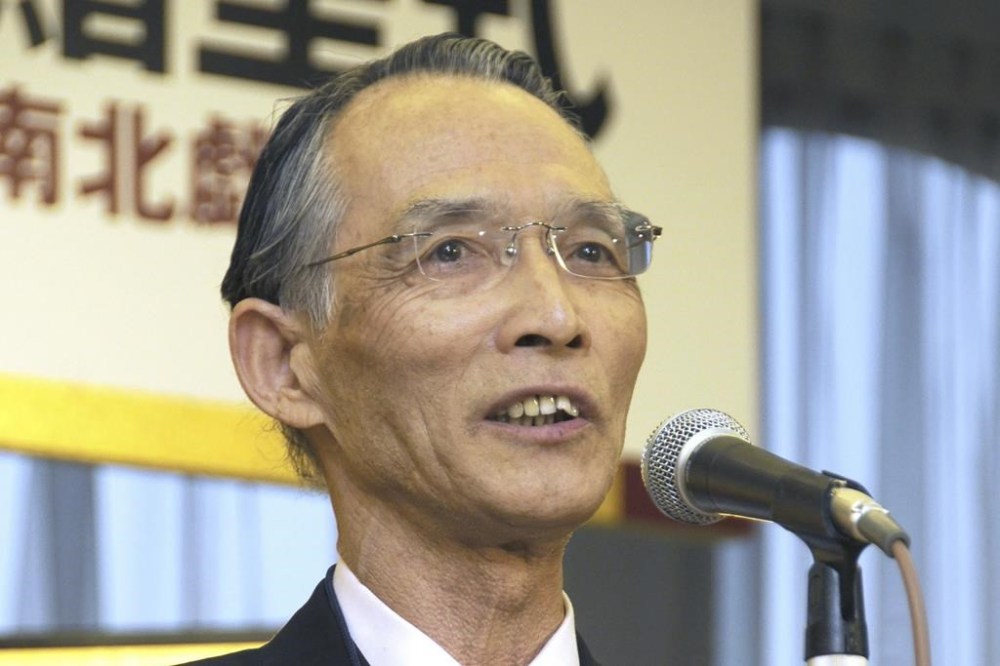
TOKYO (AP) — Renowned Japanese mystery writer Seiichi Morimura, whose nonfiction trilogy “The Devil’s Gluttony” exposed human medical experiments conducted by a secret Japanese army unit during World War II, died Monday. He was 90.
His official website and publisher, Kadokawa, said Morimura died of pneumonia at a Tokyo hospital.
“Akuma no Hoshoku,” or “The Devil’s Gluttony,” which began as a newspaper series in 1981, became a bestseller and created a sensation across the country over atrocities committed by Japanese Imperial Army Unit 731 in China.
From its base in Japanese-controlled Harbin in China, Unit 731 and related units injected war prisoners with typhus, cholera and other diseases as research into germ warfare, according to historians and former unit members. Unit 731 is also believed to have performed vivisections and frozen prisoners to death in tests of endurance.
Morimura began contributing articles to magazines while working in hotels. He won the prestigious Edogawa Rampo Prize for his mystery fiction in 1969 and the Mystery Writers of Japan Award in 1973.
Born in 1933 in Saitama, just north of Tokyo, Morimura survived harsh U.S. bombings of the Tokyo region toward the end of World War II and developed pacifist principles. He wrote a book about his commitment to defending Japan’s postwar pacifist Constitution and opposing nuclear weapons. He joined protests against a 2015 reinterpretation of the constitution by then-Prime Minister Shinzo Abe allowing greater military activity.
His 1976 novel “Ningen no Shomei” (“Proof of the Man”), a mystery about a young Black man who is murdered, revealed the dark side of postwar Japan and was made into a movie.
Another popular novel, “Yasei no Shomei” (“Proof of the Wild”), published a year later depicts a conspiracy over genocide in a remote village.