
Kuwait and Lebanon move to ban ‘Barbie’ ahead of film’s Mideast release
Advertisement
Read this article for free:
or
Already have an account? Log in here »
We need your support!
Local journalism needs your support!
As we navigate through unprecedented times, our journalists are working harder than ever to bring you the latest local updates to keep you safe and informed.
Now, more than ever, we need your support.
Starting at $15.99 plus taxes every four weeks you can access your Brandon Sun online and full access to all content as it appears on our website.
Subscribe Nowor call circulation directly at (204) 727-0527.
Your pledge helps to ensure we provide the news that matters most to your community!
To continue reading, please subscribe:
Add Brandon Sun access to your Free Press subscription for only an additional
$1 for the first 4 weeks*
- Enjoy unlimited reading on brandonsun.com
- Read the Brandon Sun E-Edition, our digital replica newspaper
*Your next Free Press subscription payment will increase by $1.00 and you will be charged $20.95 plus GST for four weeks. After four weeks, your payment will increase to $24.95 plus GST every four weeks.
Read unlimited articles for free today:
or
Already have an account? Log in here »
Hey there, time traveller!
This article was published 10/08/2023 (1131 days ago), so information in it may no longer be current.
DUBAI, United Arab Emirates (AP) — “Barbie” is set to open across the Middle East on Thursday, but moves by Kuwait and Lebanon to ban the film for allegedly threatening conservative values have raised questions over how widely it will be released.
The film centered upon the anatomically improbable American dolls contains no overt sexuality or references to LGBTQ+ rights. But it seems to have drawn fire because of its sheer flamboyance and broad message of inclusion and gender equality in a region where homosexuality is widely seen as taboo.
Kuwait announced its ban late Wednesday, saying the film promotes “ideas and beliefs that are alien to the Kuwaiti society and public order,” without elaborating, according to a statement published by the state-run KUNA news agency.
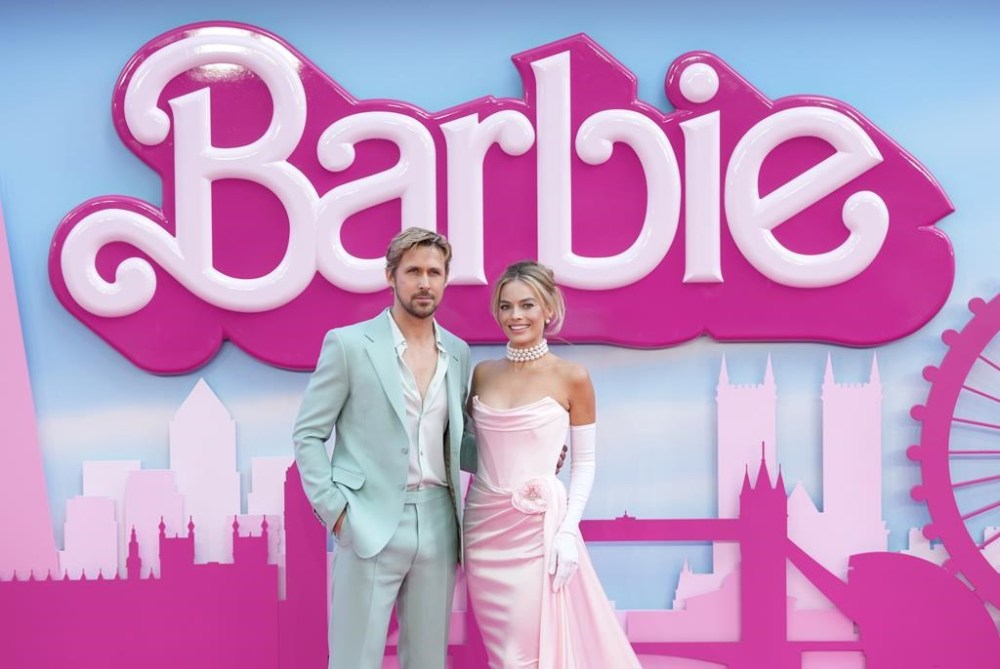
In Lebanon, Culture Minister Mohammad Mortada said the film was found to “contradict values of faith and morality” and to “promote homosexuality and sexual transformation.” His request to ban the film was forwarded to Lebanon’s General Security agency, which falls under the Interior Ministry and traditionally handles censorship decisions.
The move sparked an uproar in Lebanon, which long was an island of relative tolerance for gay men and lesbians. The LGBTQ+ community there has come under growing pressure in recent years as powerful Islamist and far-right Christian groups have gained influence amid a severe economic crisis.
Across the Middle East, many Muslims, Christians and Jews consider same-sex relations to be sinful. In some parts of the Arab world, members of the LGBTQ+ community have been arrested and sentenced to prison.
In Iraq, regulators banned media from using the word “homosexuality,” instead ordering outlets to refer to it as “sexual deviance.” A similar order issued by the country’s education minister banned the word from universities.
On Thursday, Muslim-majority Malaysia banned all Swatch products that contain LGBTQ+ elements, including watches, wrappers and boxes, with possession punishable by up to three years in prison.
The all-star cast of “Barbie” includes Kate McKinnon, who is gay, and trangender actor Hari Nef. Many in the LGBTQ+ community have embraced the film, even as some have criticized it as pushing a heteronormative narrative.
The Warner Bros. movie has grossed over $1 billion in less than a month since opening in other markets. The film — led and produced by Margot Robbie, directed and co-written by Greta Gerwig — crossed $400 million domestic and $500 million internationally faster than any other movie at the studio, including the Harry Potter films.
It is set to open in the United Arab Emirates, Saudi Arabia and Bahrain on Thursday evening.
Both the UAE and Saudi Arabia have invested billions of dollars in sports, entertainment and tourism in recent years. But like much of the rest of the Middle East, they criminalize homosexuality and view LGBTQ+ advocacy as a threat to their societies that must be quashed.
The film’s release in the region was initially planned for Aug. 31 but was recently brought forward, indicating that any censorship issues had been resolved. Films are often delayed for release in the region to allow time for production companies to censor them or for committees to review them.
Vietnam banned distribution of “Barbie” last month because it includes a view of a map showing disputed Chinese territorial claims in the South China Sea.
Another summer blockbuster, “Spider-Man: Across the Spider-Verse,” was abruptly pulled from cinema listings across the Middle East in June, apparently over a scene in which a transgender poster briefly appears in the background.
That film was not screened in Lebanon, but there was no official comment regarding a ban and the decision was widely attributed to regional distributors not sourcing it.
Marvel’s “Doctor Strange in the Multiverse of Madness,” which was released last year and features a lesbian couple, was screened in Lebanon despite being banned across much of the Arab World. The 2021 film “Eternals,” which featured the first gay kiss in the Marvel film universe, was censored but still shown in Lebanon, while it faced outright bans in the UAE, Saudi Arabia and Kuwait.
Warner Bros. did not respond to requests for comments about whether or not the movie was censored for release in the region.
___
Associated Press writers Bassem Mroue and Kareem Chehayeb in Beirut and Qassim Abdul-Zahra in Baghdad contributed to this report.