
Novelist Murakami hosts Japanese ghost story reading ahead of Nobel Prize announcements
Advertisement
Read this article for free:
or
Already have an account? Log in here »
We need your support!
Local journalism needs your support!
As we navigate through unprecedented times, our journalists are working harder than ever to bring you the latest local updates to keep you safe and informed.
Now, more than ever, we need your support.
Starting at $15.99 plus taxes every four weeks you can access your Brandon Sun online and full access to all content as it appears on our website.
Subscribe Nowor call circulation directly at (204) 727-0527.
Your pledge helps to ensure we provide the news that matters most to your community!
To continue reading, please subscribe:
Add Brandon Sun access to your Free Press subscription for only an additional
$1 for the first 4 weeks*
- Enjoy unlimited reading on brandonsun.com
- Read the Brandon Sun E-Edition, our digital replica newspaper
*Your next Free Press subscription payment will increase by $1.00 and you will be charged $20.95 plus GST for four weeks. After four weeks, your payment will increase to $24.95 plus GST every four weeks.
Read unlimited articles for free today:
or
Already have an account? Log in here »
Hey there, time traveller!
This article was published 29/09/2023 (1080 days ago), so information in it may no longer be current.
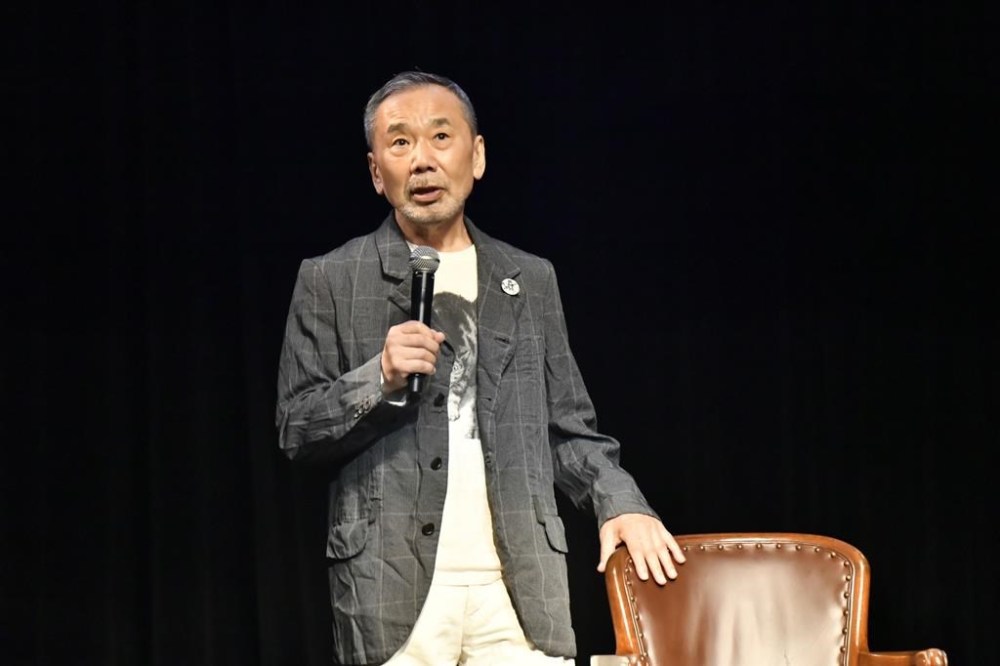
TOKYO (AP) — Japanese novelist Haruki Murakami hosted a ghost story reading event in Tokyo amid growing attention before the announcement of this year’s Nobel Prize in literature, an award he is a perennial favorite to win.
Murakami said at Thursday’s reading that he enjoys scary stories and wanted to write more of them. The event featured one from the 18-century collection “Tales of Moonlight and Rain,” which intrigued Murakami since his childhood and is known to have inspired his work.
The classic collection written by Akinari Ueda and called “Ugetsu Monogatari” in Japanese explores a blurry borderline between the real and surreal, which Murakami said in a guide he contributed to a 2021 magazine made him wonder which side he was on.
Borders and walls are important motifs in Murakami’s writing. Protagonists in his stories often travel through walls or between two worlds and encounter mysterious, exotic characters. While Murakami has said he grew up mostly reading Western novels, some experts have also noted the influence of Ueda’s stories in some of Murakami’s work.
Murakami has been a candidate for the Nobel Prize in literature for more than a decade, and the winner of the 2023 prize is scheduled to be announced on Oct. 5. If he wins, he would will be first Japanese writer since Kenzaburo Oe in 1994 to be named a Nobel laureate.
Japanese media also have mentioned novelists Yoko Ogawa and Yoko Tawada as possible contenders in recent years, and international media also have put Chinese fiction writer Can Xue and American novelist Thomas Pynchon on the list of this year’s potential winners.
The pending Nobel Prize did not come up at Thursday’s ghost story event. Kayoko Shiraishi, a veteran actress known for ghost tale monologues, performed Ugetsu’s “The Kibitsu Cauldron,” a story of an imprudent man who marries a priest’s good daughter despite a cauldron’s fortunetelling revealing a bad omen. The protagonist meets a horrendous end after betraying his wife, who becomes a vengeful spirit.
Murakami said he enjoyed Shiraishi’s “scary” performance of multiple roles and said he would like her to try “The Mirror,” one of the short horror stories he wrote in 1983.
Murakami wrote his first published novel, 1979’s “Hear the Wind Sing,” after being inspired to write fiction while watching a baseball game at Meiji Jingu Stadium, which is now part of a controversial redevelopment of Tokyo’s historic Jingu Gaien park area, to which opposition is growing.
Murakami, who voiced opposition to the project in his radio show last month, repeated his concern at the story reading event, noting the plan involves removing about 1,000 trees. An avid runner, Murakami also noted that the area is part of his running course, and that the stadium is home to his favorite team, the Yakult Swallows.
“Jingu Gaien is a very important place for me,” Murakami said. “I will continue to raise my voice of opposition to this redevelopment, and any of you who agree with me, please support.” The audience applauded his statement.