
Director of new Godzilla film pursuing ‘Japanese spirituality’ of 1954 original
Advertisement
Read this article for free:
or
Already have an account? Log in here »
We need your support!
Local journalism needs your support!
As we navigate through unprecedented times, our journalists are working harder than ever to bring you the latest local updates to keep you safe and informed.
Now, more than ever, we need your support.
Starting at $15.99 plus taxes every four weeks you can access your Brandon Sun online and full access to all content as it appears on our website.
Subscribe Nowor call circulation directly at (204) 727-0527.
Your pledge helps to ensure we provide the news that matters most to your community!
To continue reading, please subscribe:
Add Brandon Sun access to your Free Press subscription for only an additional
$1 for the first 4 weeks*
- Enjoy unlimited reading on brandonsun.com
- Read the Brandon Sun E-Edition, our digital replica newspaper
*Your next Free Press subscription payment will increase by $1.00 and you will be charged $20.95 plus GST for four weeks. After four weeks, your payment will increase to $24.95 plus GST every four weeks.
Read unlimited articles for free today:
or
Already have an account? Log in here »
Hey there, time traveller!
This article was published 02/11/2023 (1058 days ago), so information in it may no longer be current.
TOKYO (AP) — Godzilla, the nightmarish radiation spewing monster born out of nuclear weapons, has stomped through many movies, including several Hollywood remakes.
Takashi Yamazaki, the director behind the latest Godzilla movie, set for U.S. theatrical release later this year, was determined to bring out what he believes is the essentially Japanese spirituality that characterizes the 1954 original.
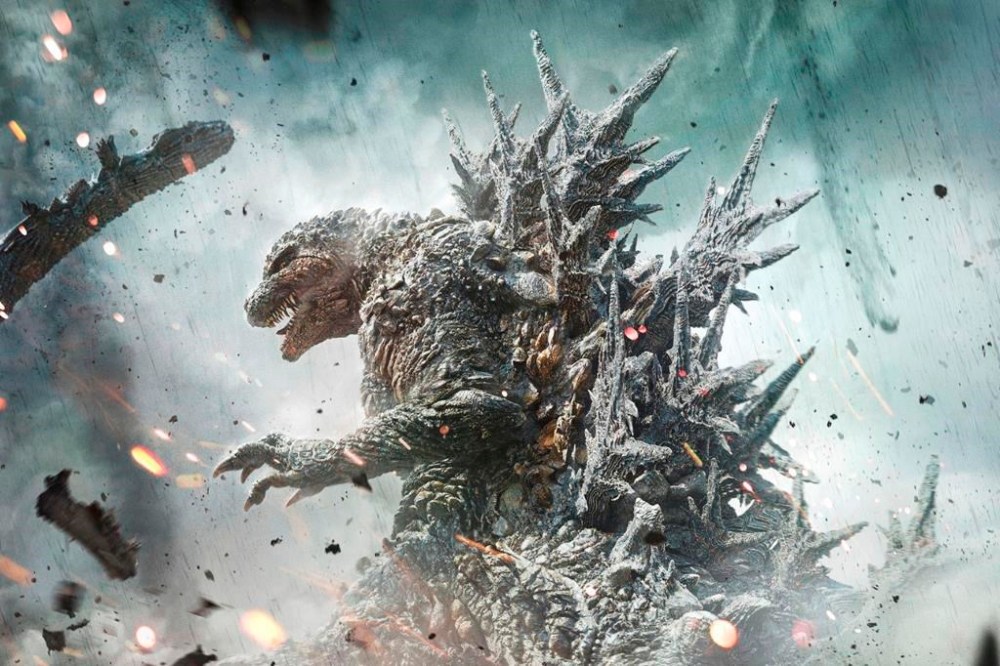
In that classic, directed by Ishiro Honda, a man sweated inside a rubber suit and trampled over cityscape miniatures to tell the story of a prehistoric creature mistakenly brought to life by radiation from nuclear testing in the Pacific. The monster in “Godzilla Minus One” is all computer graphics.
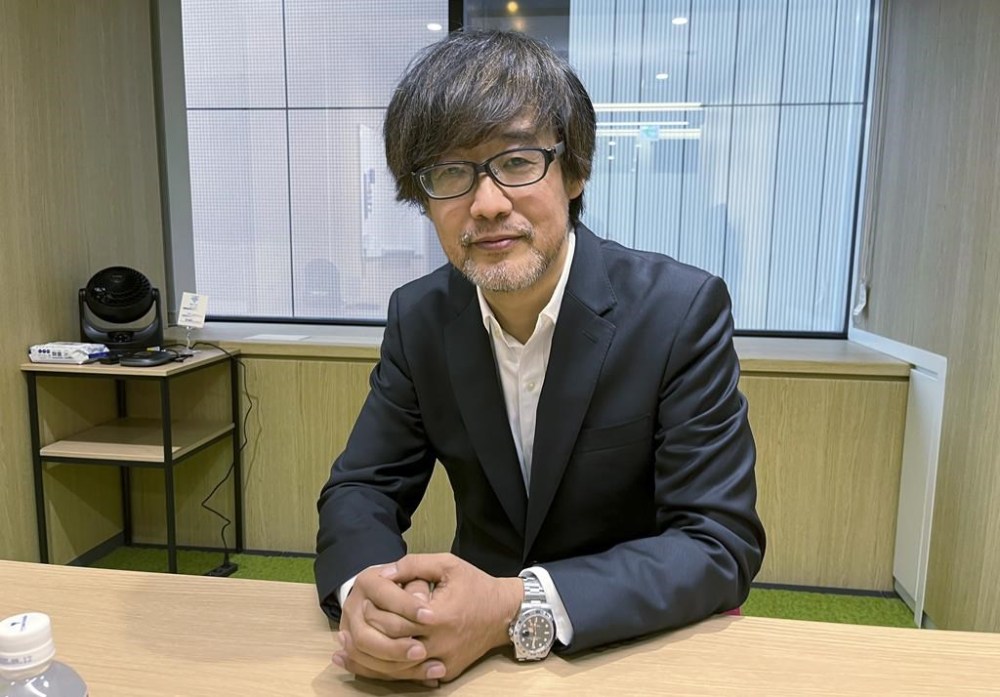
“I love the original Godzilla, and I felt I should stay true to that spirit, addressing the issues of war and nuclear weapons,” said Yamazaki, who also wrote the screenplay and oversaw the computerized special effects.
“There is a concept in Japan called ‘tatarigami.’ There are good gods, and there are bad gods. Godzilla is half-monster, but it’s also half-god.”
The world has been recently thrust into a period of uncertainty, with the war in Ukraine and the coronavirus pandemic. It was a mood that fit his supernatural “very Japanese” Godzilla, Yamazaki said at the Tokyo International Film Festival, where “Godzilla Minus One” is the closing film. It opens in Japanese theaters Friday.
“You have to quiet it down,” he told The Associated Press of Godzilla, as if only a prayer can calm or stop the monster — as opposed to trying to kill it.
Set right after Japan’s surrender in World War II, Yamazaki’s rendition predates the original and portrays a nation so devastated by war it’s left with nothing, let alone any weapons to fight off Godzilla.
And so its arrival puts everything back into negative, or minus, territory.
Ryunosuke Kamiki portrays the hero, a soldier who survives the war and loses his family, only to end up confronting Godzilla.
The monster’s finely detailed depiction is the work of the Tokyo-based Shirogumi digital special-effects team, which includes Yamazaki. A frightfully realistic-appearing Godzilla crashes into fleeing screaming crowds, its giant tail sweeping buildings in a flash, its bumpy skin glowing like irradiated embers, its growl getting right up into your face.
Some Godzilla aficionados feel Hollywood has at times incorrectly portrayed “Gojira,” as it is known in Japan, like an inevitably fatalistic natural disaster, when the nuclear angle is key.
Yamazaki, a friendly man with quick laughs, stressed he loves the special effects of Hollywood films, adding that he is a big fan of Gareth Edwards’ 2014 Godzilla film.
That helped inspire the last Japanese Godzilla, the 2016 “Shin Godzilla,” directed by Hideaki Anno and Shinji Higuchi. Toho studios hadn’t made a Godzilla film since 2004.
Yamazaki, who has worked with famed auteur Juzo Itami, has won Japan’s equivalent of an Oscar for “Always – Sunset on Third Street,” a heartwarming family drama set in the 1950s, and “The Eternal Zero,” about Japanese fighter pilots.
He is ready to make another Godzilla movie. But what he really wants to make is a “Star Wars” film.
What got him interested in filmmaking as a child was Steven Spielberg’s “Close Encounters of the Third Kind.” He was so enthralled with the film he couldn’t stop talking about it, he recalled, following his mother around for hours, even as she was cooking dinner.
“Star Wars,” the franchise created by George Lucas and another science-fiction favorite, evokes so many Asian themes that make him the perfect director for a sequel, Yamazaki said.
“I am confident I can create a very special and unique ‘Star Wars,’ ” he said.
___
Yuri Kageyama is on X, formerly Twitter https://twitter.com/yurikageyama