
After Rembrandt and Vermeer, Dutch master Frans Hals gets a major exhibition at the Rijksmuseum
Advertisement
Read this article for free:
or
Already have an account? Log in here »
We need your support!
Local journalism needs your support!
As we navigate through unprecedented times, our journalists are working harder than ever to bring you the latest local updates to keep you safe and informed.
Now, more than ever, we need your support.
Starting at $15.99 plus taxes every four weeks you can access your Brandon Sun online and full access to all content as it appears on our website.
Subscribe Nowor call circulation directly at (204) 727-0527.
Your pledge helps to ensure we provide the news that matters most to your community!
To continue reading, please subscribe:
Add Brandon Sun access to your Free Press subscription for only an additional
$1 for the first 4 weeks*
- Enjoy unlimited reading on brandonsun.com
- Read the Brandon Sun E-Edition, our digital replica newspaper
*Your next Free Press subscription payment will increase by $1.00 and you will be charged $20.95 plus GST for four weeks. After four weeks, your payment will increase to $24.95 plus GST every four weeks.
Read unlimited articles for free today:
or
Already have an account? Log in here »
Hey there, time traveller!
This article was published 13/02/2024 (954 days ago), so information in it may no longer be current.
AMSTERDAM (AP) — In the early 17th century, laughter was almost never captured on a painter’s canvas.
Frans Hals changed that.
“He was not a sober painter,” said Friso Lammertse, co-curator of a major exhibition of the Dutch master’s paintings that opens this week at Amsterdam’s Rijksmuseum.
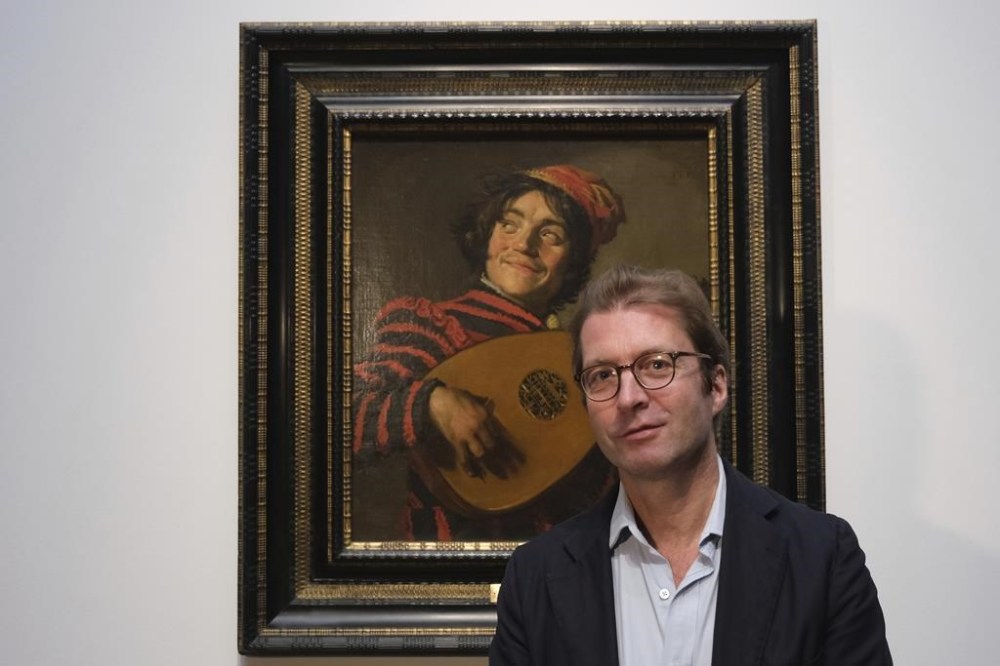
“The people, they often laugh, and that’s very remarkable in the 17th century — that they smile or even laugh, which was hardly done,” he added Tuesday at a preview of the exhibition.
The show that debuted at the National Gallery in London last year now moves to the Dutch capital.
Despite Hals’ reported fondness for a drink, he was in full control of his artistic process.
“It’s going too far if you say his style is because he drank so much. It’s really an awareness of what is going on in painting in Europe at this moment,” Lammertse said.
Instead, Hals was likely under the influence of Flemish masters Peter Paul Rubens and Anthony Van Dyk.
“He does this loose brushstroke, … because it belongs to the avant-garde of European art at this moment. But it is also functional. It … suggests a kind of movement. And he goes further than all the others in aspiring to show that movement,” he said.
The fluid brushstrokes made Hals a major influence of later artists like Vincent van Gogh and impressionists like Édouard Manet.
Hals’ most famous work, “The Laughing Cavalier,” underscores the humor in his work. The cavalier, with his smile, upturned moustache and hat at a jaunty angle, has traveled across the English Channel from the Wallace Collection in London. It’s the painting’s first overseas trip since 1870 and is one of 48 works by Hals gathered at the Rijksmuseum for the show.
The Hals exhibition follows recent blockbuster shows at the Amsterdam museum showcasing the two other great names of 17th century Dutch art — Rembrandt van Rijn and Johannes Vermeer.
“They all work in the same medium: oil paint on canvas, but they do something completely different with it,” said Rijksmuseum General Director Taco Dibbits.
“With Rembrandt, it’s emotion and the human condition. With Vermeer, it’s stillness. And with Frans Hals, it’s movement and it’s joy. Nearly everybody laughs at Frans Hals’ pictures. And when you walk through the exhibition, you start laughing yourself because it’s of a freedom with the brush strokes. Really the brush strokes dance over the canvas.”
The exhibition opens Feb. 16 at the Rijksmuseum and runs through June 9. From July 12-Nov. 3, it moves to Gemäldegalerie in Berlin.