
Lawyer says Iran rapper famous for songs after 2022 killing of Mahsa Amini sentenced to death
Advertisement
Read this article for free:
or
Already have an account? Log in here »
We need your support!
Local journalism needs your support!
As we navigate through unprecedented times, our journalists are working harder than ever to bring you the latest local updates to keep you safe and informed.
Now, more than ever, we need your support.
Starting at $15.99 plus taxes every four weeks you can access your Brandon Sun online and full access to all content as it appears on our website.
Subscribe Nowor call circulation directly at (204) 727-0527.
Your pledge helps to ensure we provide the news that matters most to your community!
To continue reading, please subscribe:
Add Brandon Sun access to your Free Press subscription for only an additional
$1 for the first 4 weeks*
- Enjoy unlimited reading on brandonsun.com
- Read the Brandon Sun E-Edition, our digital replica newspaper
*Your next Free Press subscription payment will increase by $1.00 and you will be charged $20.95 plus GST for four weeks. After four weeks, your payment will increase to $24.95 plus GST every four weeks.
Read unlimited articles for free today:
or
Already have an account? Log in here »
Hey there, time traveller!
This article was published 25/04/2024 (898 days ago), so information in it may no longer be current.
JERUSALEM (AP) — A rapper in Iran who came to fame over his lyrics about the 2022 death of Mahsa Amini and criticizing the Islamic Republic has been sentenced to death, his lawyer and rights activists said Thursday.
Confusion still surrounds the death sentence issued against 33-year-old metal shop worker Toomaj Salehi, as even Iran’s state-run IRNA news agency and its judiciary did not formally confirm it. But the news quickly drew international criticism from the United States and United Nations experts, who pointed at it as a sign of Tehran’s continuing crackdown against all dissent following years of mass protests in the country.
“Art must be allowed to criticize, to provoke, to push the boundaries in any society,” a panel of the U.N.’s independent experts on Iran said in a statement Thursday.
Word first spread Wednesday after a report by Iran’s pro-reform Shargh newspaper said Salehi had been given a death sentence by a Revolutionary Court in Isfahan, a central Iranian city recently targeted by an apparent Israeli attack. Revolutionary Courts in Iran often involve closed-door hearings, secret evidence and few rights for those on trial.
Salehi’s lawyer, Amir Raisian, told The Associated Press on Thursday that he had received notice of the death sentence against his client. Raisian said he planned to file an appeal.
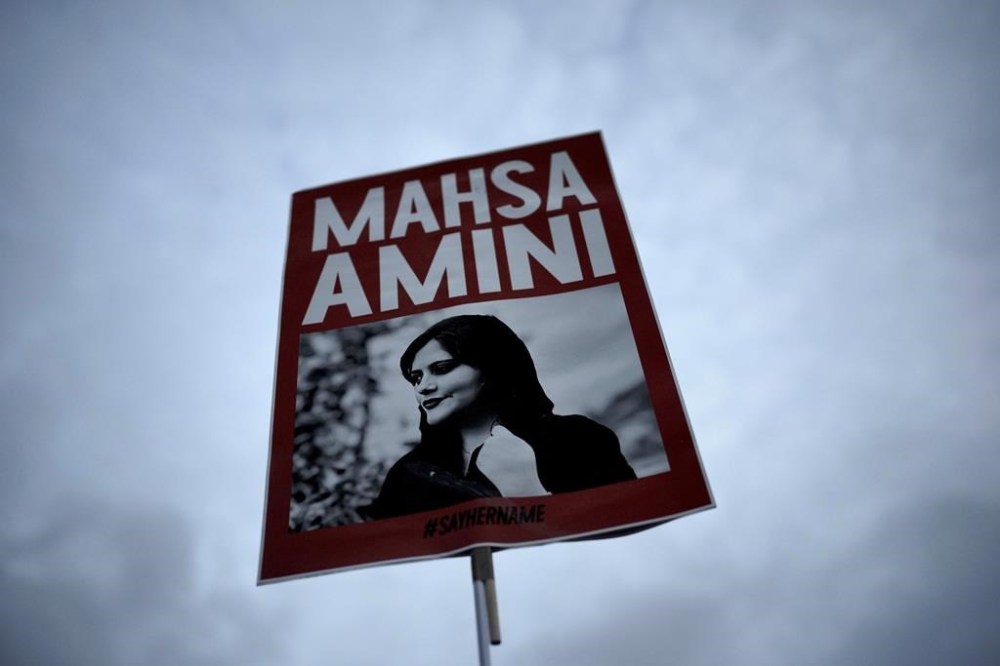
Salehi’s case stems from Amini’s death in 2022 after her arrest by police for not wearing a hijab to their liking. United Nations investigators say Iran was responsible for Amini’s death, and that it violently put down largely peaceful protests in a monthslong security crackdown that killed more than 500 people and saw over 22,000 detained.
Salehi rapped about Amini in one video, saying: “Someone’s crime was dancing with her hair in the wind.”
In another verse, he predicts the downfall of Iran’s theocracy. “Your whole past is dark, the government that took the light out of the eyes. … We go from the bottom of the pyramid and knock to the top. … Forty-four years of your government, this is the year of failure.”
His other songs vulgarly criticized the all-volunteer Basij wing of Iran’s paramilitary Revolutionary Guard, as well as referencing Supreme Leader Ayatollah Ali Khamenei.
Salehi initially received a six-year prison sentence, but had been released after Iran’s Supreme Court sent the case back to the lower court over flaws in his original sentence.
Salehi was released on bail, but then arrested again in November after saying in a video message that he was tortured after his arrest in October 2022. State media at the time released a video showing him blindfolded and apologizing for his words, a statement likely made under duress.
Iran’s judiciary did not acknowledge the death sentence, while IRNA referred to “reports” he received it.
To have a death sentence issued on a reversal of a lesser sentence is highly unusual in Iran, possibly signifying just how serious Iran’s theocracy had taken Salehi’s remarks. It also comes as other journalists, activists and musicians have been targeted since the “Women, Life, Freedom” demonstrations over Amini. An Iranian singer who won a Grammy presented by U.S. first lady Jill Biden was sentenced to more than three years in prison over his anthem supporting the 2022 protests,
Activists immediately criticized the sentence.
“This grotesque manipulation of the judicial process aims to silence dissent,” Hadi Ghaemi of the New York-based Center for Human Rights in Iran said. “Toomaj’s imprisonment stems from his vocal advocacy against state oppression. It is imperative that supporters of free speech and dissent unite to demand his immediate release.”
The sentencing also drew criticism from Washington.
“This is just another example of the Iranian regime’s horrific and pervasive human rights abuses,” State Department spokesperson Vedant Patel said Wednesday. “We once again condemn the Iranian regime’s … use of the death sentence as a tool to suppress people’s human rights and fundamental freedoms.”