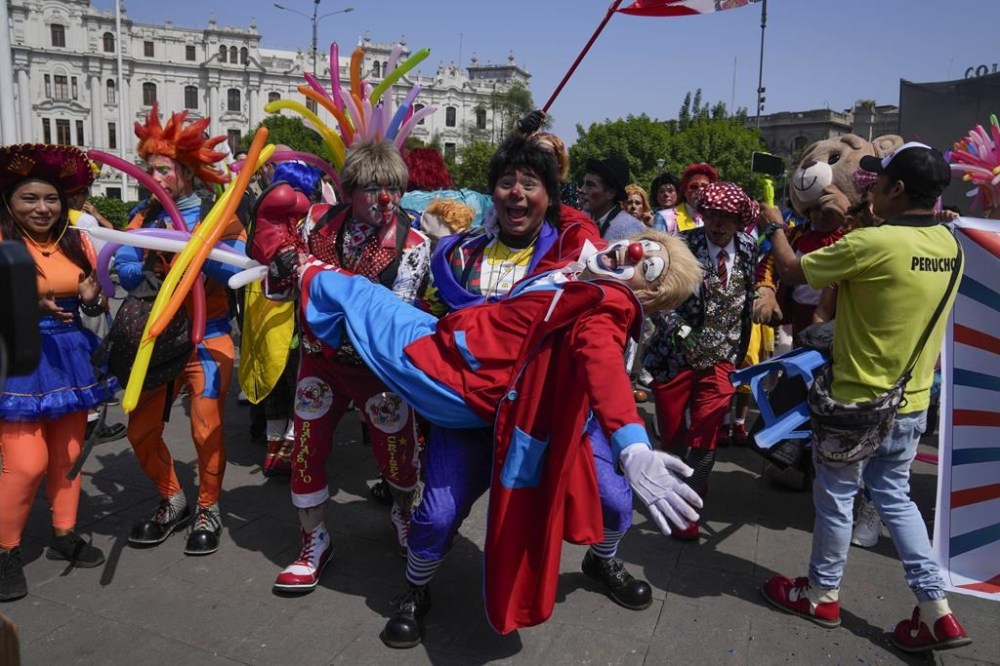
Hundreds in Peru mark Clown Day in hopes of getting the holiday official recognition
Advertisement
Read this article for free:
or
Already have an account? Log in here »
We need your support!
Local journalism needs your support!
As we navigate through unprecedented times, our journalists are working harder than ever to bring you the latest local updates to keep you safe and informed.
Now, more than ever, we need your support.
Starting at $15.99 plus taxes every four weeks you can access your Brandon Sun online and full access to all content as it appears on our website.
Subscribe Nowor call circulation directly at (204) 727-0527.
Your pledge helps to ensure we provide the news that matters most to your community!
To continue reading, please subscribe:
Add Brandon Sun access to your Free Press subscription for only an additional
$1 for the first 4 weeks*
*Your next subscription payment will increase by $1.00 and you will be charged $20.00 plus GST for four weeks. After four weeks, your payment will increase to $24.00 plus GST every four weeks.
Read unlimited articles for free today:
or
Already have an account? Log in here »
Hey there, time traveller!
This article was published 25/05/2024 (684 days ago), so information in it may no longer be current.
LIMA, Peru (AP) — With their unmistakable red noses, extravagant shoes, colorful outfits and unique makeup, hundreds of clowns Saturday gathered in the streets of Peru’s capital to mark Clown Day. They have sought for years to gain official recognition of the day.
The colorful parade in Lima, which includes awards for the best costumes, makeup, routine and improvisation, takes place every year on May 25.
“In Peru, there is Lawyer’s Day, Ceviche Day, and we also want a Clown Day because it would open doors for us to have support from the State and from the municipalities,” said Marcos Chininín, known as the clown “Chalupa.”
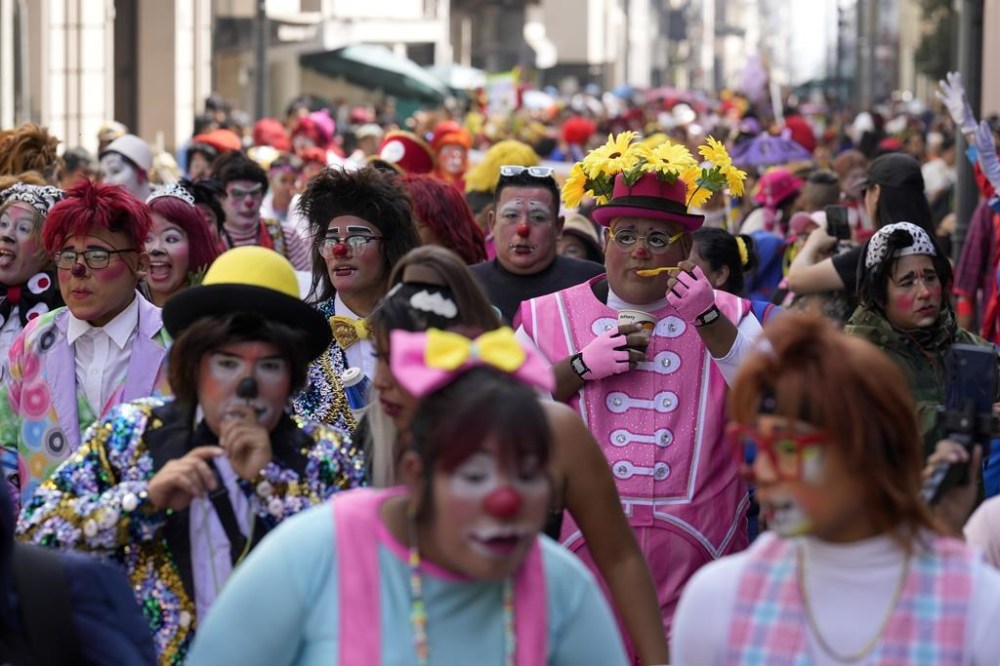
Chininin said the official recognition would give clowns access to government funds and performance spaces overseen by municipalities and local communities, as well as open the possibility of establishing schools to teach the art of clowning.
Members of Parliament have not yet discussed a proposed bill to create the holiday. Chininín, 42, estimated that about 200,000 people across Peru work as clowns, including at children’s events and the circus.
Miguel Ara Stein participated in Saturday’s parade dressed as his character “Chuchurro.” He said establishing the holiday would also be an acknowledgement of the talents that clowns must have.
“You have to have the gift of acting, the gift of character, of improvising,” Ara, 57, said. “We are all born for something and making people laugh is a gift.”