
Book Review: So you think the culture wars are new? Shakespeare expert James Shapiro begs to differ
Advertisement
Read this article for free:
or
Already have an account? Log in here »
We need your support!
Local journalism needs your support!
As we navigate through unprecedented times, our journalists are working harder than ever to bring you the latest local updates to keep you safe and informed.
Now, more than ever, we need your support.
Starting at $15.99 plus taxes every four weeks you can access your Brandon Sun online and full access to all content as it appears on our website.
Subscribe Nowor call circulation directly at (204) 727-0527.
Your pledge helps to ensure we provide the news that matters most to your community!
To continue reading, please subscribe:
Add Brandon Sun access to your Free Press subscription for only an additional
$1 for the first 4 weeks*
- Enjoy unlimited reading on brandonsun.com
- Read the Brandon Sun E-Edition, our digital replica newspaper
*Your next Free Press subscription payment will increase by $1.00 and you will be charged $20.95 plus GST for four weeks. After four weeks, your payment will increase to $24.95 plus GST every four weeks.
Read unlimited articles for free today:
or
Already have an account? Log in here »
Hey there, time traveller!
This article was published 29/05/2024 (896 days ago), so information in it may no longer be current.
“The theater, when it is any good, can change things.” So said Hallie Flanagan, a theater professor tapped by the Roosevelt administration to create a taxpayer-funded national theater during the Depression, when a quarter of the country was out of work, including many actors, directors and other theater professionals.
In an enthralling new book about this little-known chapter in American theater history, Shakespeare scholar James Shapiro examines the short, tragic life of the Federal Theatre Project. That was a New Deal program brought down by Martin Dies, a bigoted, ambitious, rabble-rousing East Texas congressman, with the help of his political allies and the media in a 1930s-era version of the culture wars.
From 1935 to 1939, this fledgling relief program, part of the WPA, or Works Progress Administration, brought compelling theater to the masses, staging over a thousand productions in 29 states seen by 30 million, or roughly one in four, Americans, two-thirds of whom had never seen a play before.
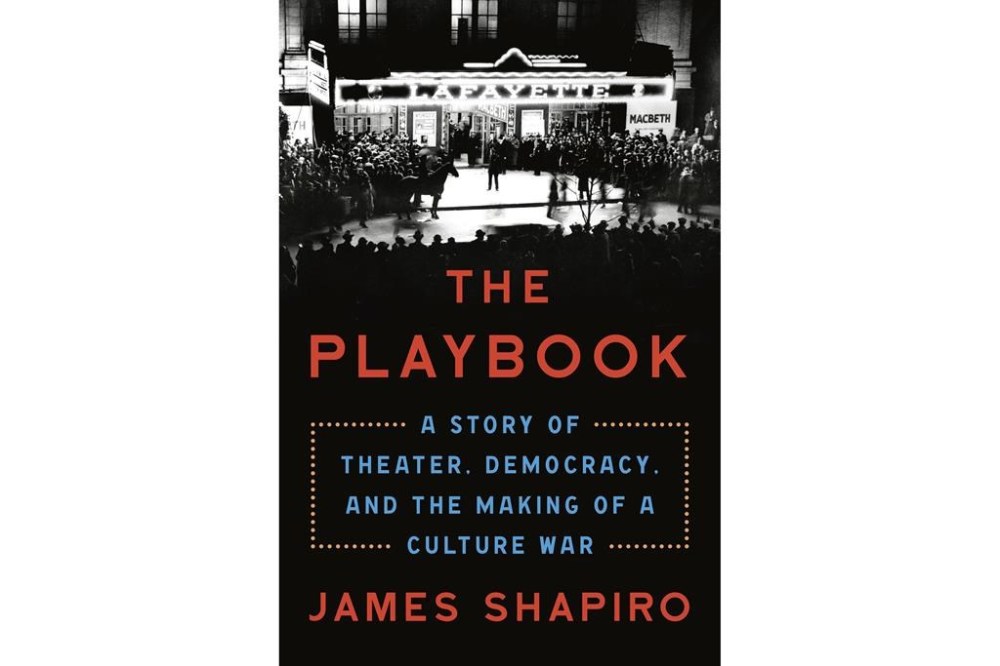
It offered a mix of Shakespeare and contemporary drama, including an all-Black production of “Macbeth” set in Haiti that opened in Harlem and toured parts of the country where Jim Crow still ruled; a modern dance project that included Black songs of protest; and with Hitler on the march in Europe, an adaptation of Sinclair Lewis’s anti-fascist novel, “It Can’t Happen Here.”
Shapiro, who teaches at Columbia University and advises New York’s Public Theater and its free Shakespeare in the Park festival, argues that Dies provided a template or “playbook” for Sen. Joseph McCarthy’s better-known House Un-American Activities Committee hearings in the 1950s and for today’s right-wing culture warriors who seek to ban books in public schools and censor productions of popular high school plays.
The Dies committee hearings began on August 12, 1938, and over the next four months, Shapiro writes, “reputations would be smeared, impartiality abandoned, hearsay evidence accepted as fact, and those with honest differences of opinion branded un-American.” The following June, President Roosevelt, whose popularity was waning, eliminated all government funding for the program.
In the epilogue Shapiro briefly wonders what might have happened if the Federal Theatre had survived. Perhaps “a more vibrant theatrical culture… a more informed citizenry… a more equitable and resilient democracy”? Instead, he writes, “Martin Dies begat Senator Joseph McCarthy, who begat Roy Cohn, who begat Donald Trump, who begat the horned `QAnon Shaman,’ who from the dais of the Senate on January 6, 2021, thanked his fellow insurrectionists at the Capitol `for allowing us to get rid of the communists, the globalists, and the traitors within our government.’”
___
AP book reviews: https://apnews.com/hub/book-reviews