
Atlantic ballet’s Indigenous dance program gives chance to train close to home
Advertisement
Read this article for free:
or
Already have an account? Log in here »
We need your support!
Local journalism needs your support!
As we navigate through unprecedented times, our journalists are working harder than ever to bring you the latest local updates to keep you safe and informed.
Now, more than ever, we need your support.
Starting at $15.99 plus taxes every four weeks you can access your Brandon Sun online and full access to all content as it appears on our website.
Subscribe Nowor call circulation directly at (204) 727-0527.
Your pledge helps to ensure we provide the news that matters most to your community!
To continue reading, please subscribe:
Add Brandon Sun access to your Free Press subscription for only an additional
$1 for the first 4 weeks*
- Enjoy unlimited reading on brandonsun.com
- Read the Brandon Sun E-Edition, our digital replica newspaper
*Your next Free Press subscription payment will increase by $1.00 and you will be charged $20.95 plus GST for four weeks. After four weeks, your payment will increase to $24.95 plus GST every four weeks.
Read unlimited articles for free today:
or
Already have an account? Log in here »
Hey there, time traveller!
This article was published 01/07/2024 (813 days ago), so information in it may no longer be current.
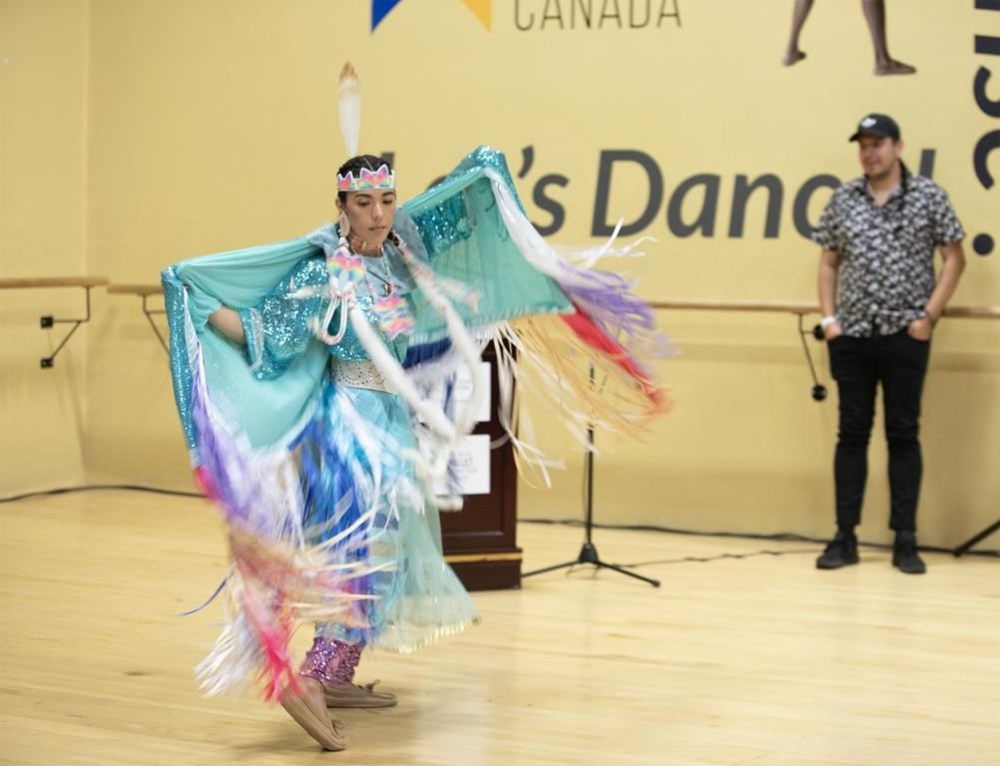
MONCTON, N.B. – Precious Abygail Dedam twirled on stage in a plume of colour — red, pink, purple and blue.
The fancy shawl dancer performed last week for a special announcement at the Atlantic Ballet of Canada in Moncton, N.B. She was there for the launch of a new professional training program for eight Indigenous dancers that will allow them to stay in the Atlantic region, close to their families and to their lands.
Susan Chalmers-Gauvin, president of Atlantic Ballet Canada, said the new training will bring together contemporary dance, ballet and traditional Indigenous dancing styles.
“Each of the dancers will take this new training and find their own creative voice, and they will, in fact, create their own new dance form that brings these worlds together,” she said.
The new two-year program that will launch in Moncton, N.B., this fall will accept eight Indigenous dancers in Grade 11.
Nipahtuwet Naka Wespahtuwet Possesom (Paul), who is the director of Atlantic Ballet Indigenous, said there is no professional dance training program in Atlantic Canada. In a Canadian first, Atlantic ballet is opening a program that will prevent Indigenous dancers from being forced to travel outside their communities to develop their art.
“I’m not even talking about for Indigenous people. There is no professional career-making dance training program in Atlantic Canada. So what better way to start than with the first people?” he said with a laugh.
Looking at the issue through an Indigenous lens, he said those who want to learn dance had to leave home.
“We’re by our communities, we’re by our families, we’re there for funerals, we’re there for births, we’re there for Christmas, we’re there for all the holidays and all the ceremonies,” Possesom said. “We don’t want to leave our home.”
The other advantage of the program is that it offers students a support system so they don’t have to worry about finding a job to feed themselves or pay bills but can simply concentrate on dance, he said.
This week, the federal government announced a grant of $400,000 to support the program, and the Ulnooweg Indigenous Communities Foundation will put in another $50,000.
Dedam, who is Esgenoôpetitj from Burnt Church First Nation, said having a dance program that offers a gamut of training “means a lot.”
“We’ve been known to be deprived of our dance culture, our language, way back, and I say way back, but it’s also been very recent as well,” said the 26-year-old who teaches dance in the Mi’kmaq community.
“Being able to revitalize all of that together, but to also have a community where we can all bring all the dancers together, and to have a professional engagement … that is the most exceptional thing to see as a dancer.”
Dakota Verner from the Oromocto First Nation is a jingle dress dancer who has been dancing since she was eight.
“(Dance) made me feel like I was more than just living on the reserve,” said the 16-year-old. “It made me feel like I was important and I can do stuff, and it makes me feel good as a person.”
She said she would “love to be in the program” and take her career further.
“I never would have thought I had an opportunity like this before. I thought I was going to have to go be in accounting,” she said with a chuckle. “But now I have a next step to be a dancer in my career, and I would love to do this.”
This report by The Canadian Press was first published July 1, 2024.