
Book Review: A new book about cult favorite Eve Babitz throws shade on reputation of Joan Didion
Advertisement
Read this article for free:
or
Already have an account? Log in here »
We need your support!
Local journalism needs your support!
As we navigate through unprecedented times, our journalists are working harder than ever to bring you the latest local updates to keep you safe and informed.
Now, more than ever, we need your support.
Starting at $15.99 plus taxes every four weeks you can access your Brandon Sun online and full access to all content as it appears on our website.
Subscribe Nowor call circulation directly at (204) 727-0527.
Your pledge helps to ensure we provide the news that matters most to your community!
To continue reading, please subscribe:
Add Brandon Sun access to your Free Press subscription for only an additional
$1 for the first 4 weeks*
- Enjoy unlimited reading on brandonsun.com
- Read the Brandon Sun E-Edition, our digital replica newspaper
*Your next Free Press subscription payment will increase by $1.00 and you will be charged $20.95 plus GST for four weeks. After four weeks, your payment will increase to $24.95 plus GST every four weeks.
Read unlimited articles for free today:
or
Already have an account? Log in here »
Hey there, time traveller!
This article was published 11/11/2024 (545 days ago), so information in it may no longer be current.
An entire generation of literary-minded women has not stopped telling itself stories influenced by master storyteller Joan Didion. The same, alas, cannot be said of Eve Babitz, a Hollywood bad girl whose life briefly intersected with Didion’s in the late 1960s and early ’70s.
Few writers, of course, have the stature of Didion, and Babitz does have a contingent of ardent and influential admirers. Her biggest fangirl might be Lili Anolik, a contributing editor at Vanity Fair whose 2014 article about Babitz, followed by her 2019 biography “Hollywood’s Eve,” fueled a revival of interest in her work.
Now Anolik is back with a new book, “Didion & Babitz,” in which she explores the complicated relationship between the frenemies and declares her devotion to the less well-known of the two: “I’m crazy for Eve, love her with a fan’s unreasoning abandon. Besides, Joan is somebody I naturally root against: I respect her work rather than like it; find her persona — part princess, part wet blanket — tough going; and resent her for siccing on us, the innocent reading public, an army, seemingly unending, of middle-class young-women personal essayists who take their feelings very ultra-seriously and expect us to do the same.”
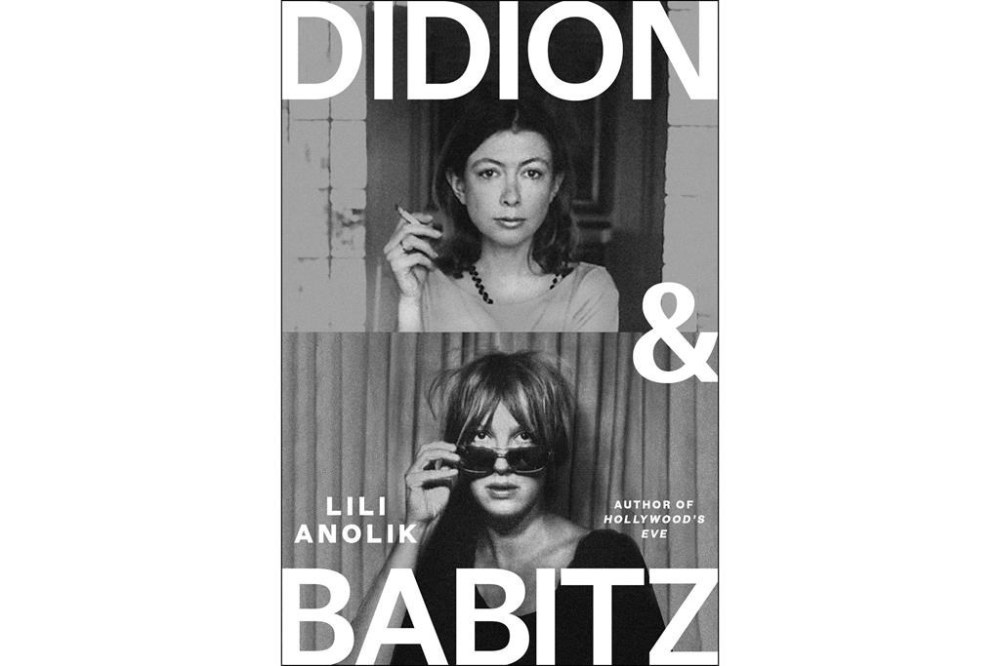
The two women met in 1967 when Didion and her husband, John Gregory Dunne, were living at 7406 Franklin Avenue in Hollywood, a louche time and place that Didion immortalized in her breakout collection of nonfiction, “Slouching Towards Bethlehem.”
In 1971, Didion helped Babitz get a story published in Rolling Stone magazine — “She is a painter, not a writer,” Didion told the editor. Eventually, that led to a book deal. But their friendship fractured when Didion and Dunne were enlisted by Babitz’s publisher to edit the book, which became “Eve’s Hollywood,” and Babitz bristled at their criticism. Later, she boasted to a friend, “I fired Joan.”
Anolik makes a convincing case for Babitz’s literary genius and sets up an interesting contrast between the two women— one loose, libidinous and joyfully debauched; the other shy, cerebral and tightly controlled.
But don’t expect the calm, organized, even-handed approach of a literary critic or biographer. In the breathless, gossipy style of the tabloids, and with frequent, winking asides to the “Reader,” Anolik dishes dirt on all the major and minor players in their haute bohemian circle, especially Didion and Dunne. In the end, everyone ends up looking bad, including, sadly, Babitz.
___
AP book reviews: https://apnews.com/hub/book-reviews