
Book Review: ‘How to Think Like Socrates’ leaves readers with questions
Advertisement
Read this article for free:
or
Already have an account? Log in here »
We need your support!
Local journalism needs your support!
As we navigate through unprecedented times, our journalists are working harder than ever to bring you the latest local updates to keep you safe and informed.
Now, more than ever, we need your support.
Starting at $15.99 plus taxes every four weeks you can access your Brandon Sun online and full access to all content as it appears on our website.
Subscribe Nowor call circulation directly at (204) 727-0527.
Your pledge helps to ensure we provide the news that matters most to your community!
To continue reading, please subscribe:
Add Brandon Sun access to your Free Press subscription for only an additional
$1 for the first 4 weeks*
*Your next subscription payment will increase by $1.00 and you will be charged $20.00 plus GST for four weeks. After four weeks, your payment will increase to $24.00 plus GST every four weeks.
Read unlimited articles for free today:
or
Already have an account? Log in here »
Hey there, time traveller!
This article was published 19/11/2024 (496 days ago), so information in it may no longer be current.
The lessons of Socrates have never really gone out of style, but if there’s ever a perfect time to revisit the ancient philosopher, now is it.
In “How to Think Like Socrates: Ancient Philosophy as a Way of Life in the Modern World,” Donald J. Robertson describes Socrates’ Athens in terms that seem all too familiar: a society recovering from a pandemic where people’s trust in government is shaken, and an extremely polarized split between political factions.
Despite its title, Robertson’s book isn’t solely a self-help guide based on ancient philosophy. Robertson’s book is certainly easier than slogging through Plato and multiple volumes of ancient Greek history.
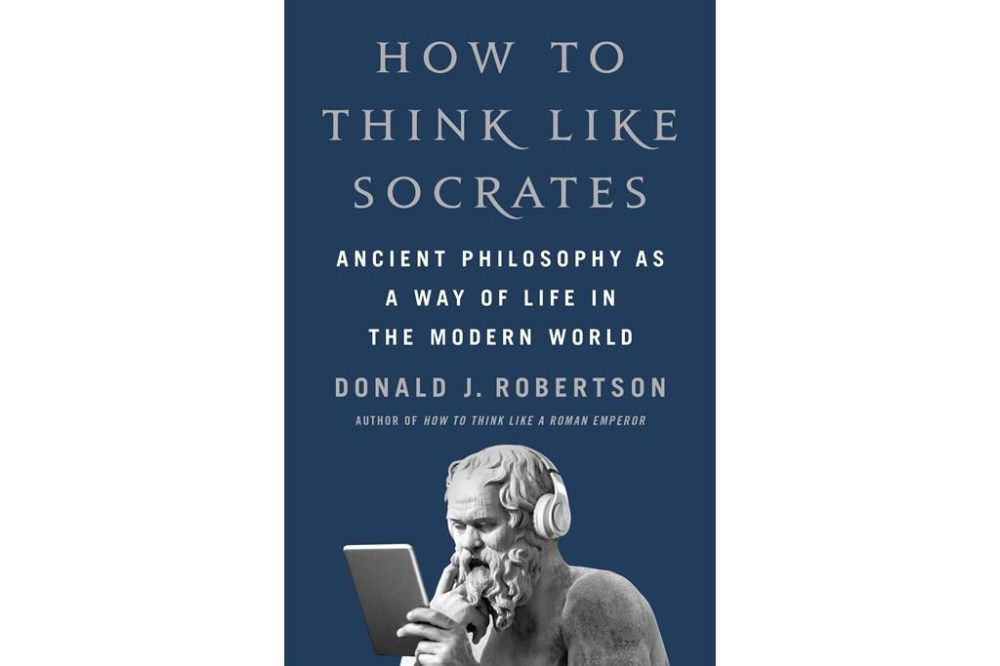
But the book is inconsistent and difficult to follow sometimes, as it bounces from an easy distillation of Socrates’ philosophy to an all-too-detailed history of ancient Greece. Some of the history is understandably needed to give context to Socrates, but often it feels as though Robertson is writing two separate books for two different audiences.
The explanation of Socrates, particularly a section walking readers through the Socratic Method — the question-based method Socrates used to teach students — is the strongest portion of Robertson’s book. The book offers a solid biography of Socrates and his times, but it could use some work weaving in the modern-day application of his lessons.
Robertson easily demonstrates throughout the book how Socratic philosophy can be used for addressing fear, including anxiety over death. His lessons on how to defend ourselves against rhetoric are particularly timely in an era of rampant misinformation.
Robertson also successfully explains to readers why they should be skeptical of the sweeping generalizations offered by self-help books.
“Wisdom requires being able to identify when a rule no longer holds true, and good advice becomes bad advice,” he writes.
Through Robertson is able to underscore how timeless Socrates’ advice remains, his book could stand to be more accessible for readers hoping to find that advice.
___
AP book reviews: https://apnews.com/hub/book-reviews