
The man accused of stabbing Salman Rushdie declines to take the stand as the defense rests
Advertisement
Read this article for free:
or
Already have an account? Log in here »
We need your support!
Local journalism needs your support!
As we navigate through unprecedented times, our journalists are working harder than ever to bring you the latest local updates to keep you safe and informed.
Now, more than ever, we need your support.
Starting at $15.99 plus taxes every four weeks you can access your Brandon Sun online and full access to all content as it appears on our website.
Subscribe Nowor call circulation directly at (204) 727-0527.
Your pledge helps to ensure we provide the news that matters most to your community!
To continue reading, please subscribe:
Add Brandon Sun access to your Free Press subscription for only an additional
$1 for the first 4 weeks*
*Your next subscription payment will increase by $1.00 and you will be charged $20.00 plus GST for four weeks. After four weeks, your payment will increase to $24.00 plus GST every four weeks.
Read unlimited articles for free today:
or
Already have an account? Log in here »
Hey there, time traveller!
This article was published 20/02/2025 (289 days ago), so information in it may no longer be current.
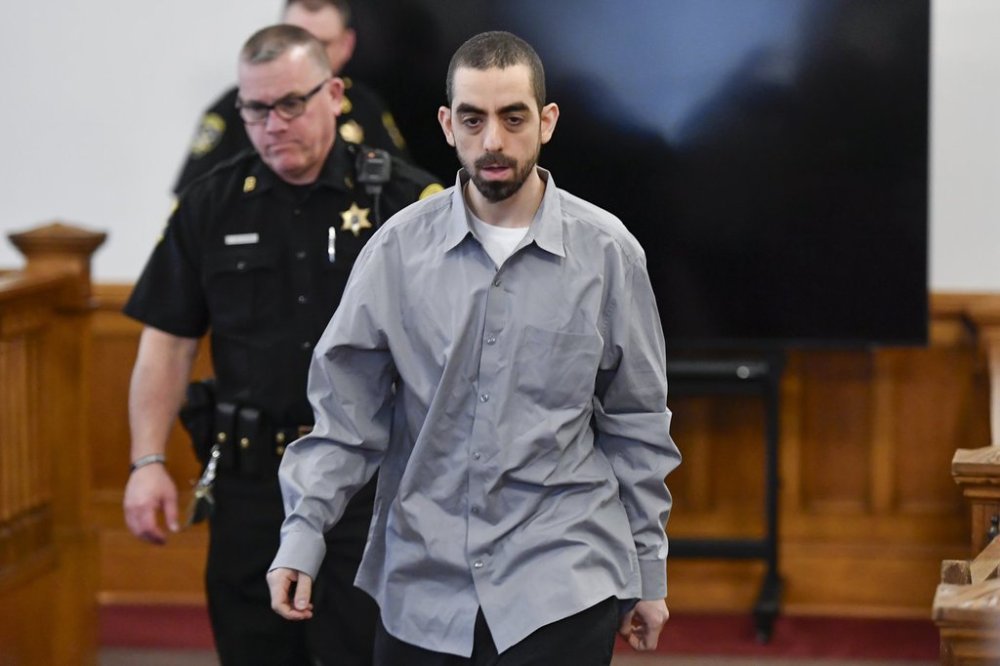
MAYVILLE, N.Y. (AP) — The New Jersey man on trial in the 2022 stabbing of author Salman Rushdie declined to testify in his defense Thursday as his lawyers rested their case without calling any witnesses.
“No, I do not,” Hadi Matar, 27, said when asked by Chautauqua County Judge David Foley whether he wished to take the stand.
Earlier Thursday, prosecutors called a forensics expert as their final witness, wrapping up seven days of witness testimony, most notably from Rushdie himself.
The lawyers are scheduled to deliver closing arguments Friday, followed by jury deliberations.
Matar is on trial in Chautauqua County Court in western New York on charges of attempted murder and assault for the attack at the nearby Chautauqua Institution that left Rushdie, 77, blind in one eye and with other serious injuries. City of Asylum founder Henry Reese, who was appearing with Rushdie, suffered a gash above his eye.
Throughout the trial, Matar, who is from Fairview, New Jersey, was often seen taking notes and speaking with his attorneys. On several occasions while being brought in or out of the courtroom, he declared, “Free Palestine” to news cameras. But defense attorneys had declined to say whether he intended to testify.
Although Matar’s lawyers declined to call any witnesses of their own, they sought to challenge prosecution witnesses as part of a strategy intended to cast doubt on whether Matar intended to kill, and not just injure, Rushdie. The distinction is important for an attempted murder conviction.
Matar came armed with a knife, not a gun, attorneys said, and Rushdie survived the stabbing, which they noted witnesses had described as a “skirmish” or “scuffle.”
“We’ve argued from the beginning that they have not, at least in our opinion, proven any type of intent to murder,” Public Defender Nathaniel Barone told reporters outside the courtroom.
He suggested Matar likely would have faced a lesser charge of assault were it not for Rushdie’s public profile.
“We think that it became an attempted murder because of the notoriety of the alleged victim in the case,” Barone said.
Rushdie was stabbed and slashed more than a dozen times in the head, throat, torso, thigh and hand in an unprovoked attack as he prepared to participate in a discussion about keeping writers safe. He spent 17 days in a Pennsylvania hospital and more than three weeks at a New York City rehabilitation center.
Matar also faces trial in U.S. District Court in Buffalo on a separate federal indictment charging him with attempting to provide material support to the militant group Hezbollah.