
A look at Louisiana’s Mardi Gras festivities through the years
Advertisement
Read this article for free:
or
Already have an account? Log in here »
We need your support!
Local journalism needs your support!
As we navigate through unprecedented times, our journalists are working harder than ever to bring you the latest local updates to keep you safe and informed.
Now, more than ever, we need your support.
Starting at $15.99 plus taxes every four weeks you can access your Brandon Sun online and full access to all content as it appears on our website.
Subscribe Nowor call circulation directly at (204) 727-0527.
Your pledge helps to ensure we provide the news that matters most to your community!
To continue reading, please subscribe:
Add Brandon Sun access to your Free Press subscription for only an additional
$1 for the first 4 weeks*
*Your next subscription payment will increase by $1.00 and you will be charged $20.00 plus GST for four weeks. After four weeks, your payment will increase to $24.00 plus GST every four weeks.
Read unlimited articles for free today:
or
Already have an account? Log in here »
Hey there, time traveller!
This article was published 27/02/2025 (392 days ago), so information in it may no longer be current.
After a weekslong pre-Lenten bash — complete with elaborate parades that meander through New Orleans, shimmery beads tossed from floats, streets lined with costumed revelers, lavish balls and seafood boils — Louisiana’s 2025 Carnival Season is approaching its grand conclusion.
Mardi Gras or Fat Tuesday, which takes place March 4, marks the party’s climax and the end of Carnival Season on the Gulf Coast. The conclusion falls the day before Ash Wednesday and is seen as a final day of feasting and revelry before the solemnity of Lent.
Each year, along with Louisiana residents, more than a million visitors travel to New Orleans to partake in the city’s world-famous Carnival celebrations.
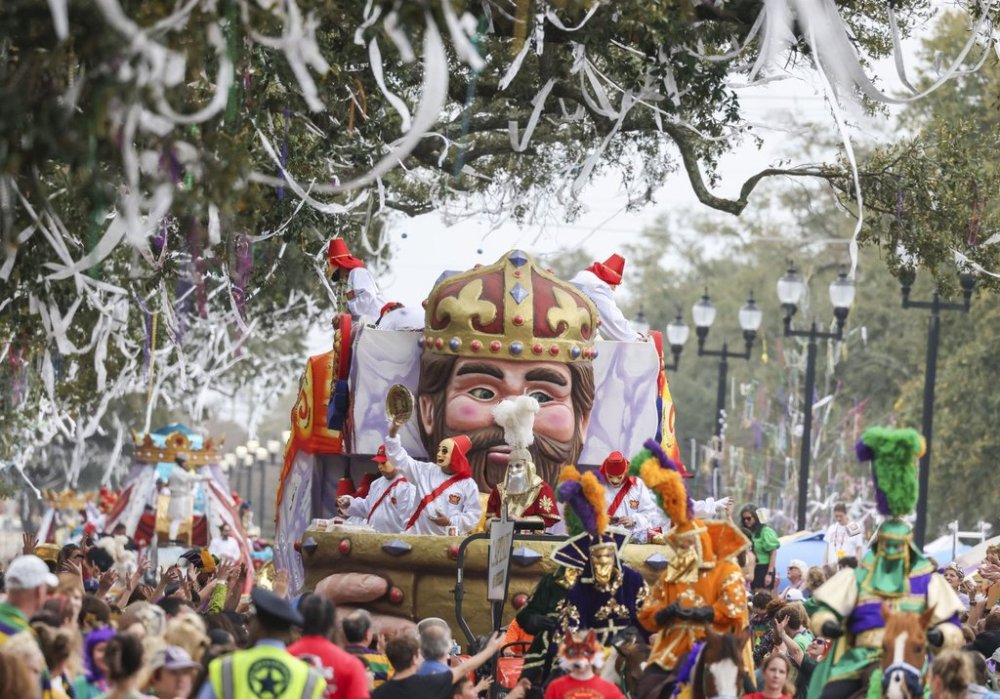
The bash includes feasting, drinking and a plethora of parades. Many spend their time along parade routes, with their hands raised in the air to catch “throws” — trinkets tossed to spectators by float riders and walking members of carnival clubs known as krewes.
While throws include plastic beads, candy, stuffed animals, cups and toys, there are also the more coveted items such as painted coconuts, hand-decorated shoes and bedazzled toilet plungers.
The annual jollification is not limited to the Big Easy. Similar celebrations are held across Louisiana and along the Gulf Coast. Mobile, Alabama, lays claim to the nation’s oldest Mardi Gras celebration. And other lavish Carnival celebrations in Brazil and Europe are world-renowned.