
Movie Review: ‘April’ is shattering and essential
Advertisement
Read this article for free:
or
Already have an account? Log in here »
We need your support!
Local journalism needs your support!
As we navigate through unprecedented times, our journalists are working harder than ever to bring you the latest local updates to keep you safe and informed.
Now, more than ever, we need your support.
Starting at $15.99 plus taxes every four weeks you can access your Brandon Sun online and full access to all content as it appears on our website.
Subscribe Nowor call circulation directly at (204) 727-0527.
Your pledge helps to ensure we provide the news that matters most to your community!
To continue reading, please subscribe:
Add Brandon Sun access to your Free Press subscription for only an additional
$1 for the first 4 weeks*
- Enjoy unlimited reading on brandonsun.com
- Read the Brandon Sun E-Edition, our digital replica newspaper
*Your next Free Press subscription payment will increase by $1.00 and you will be charged $20.95 plus GST for four weeks. After four weeks, your payment will increase to $24.95 plus GST every four weeks.
Read unlimited articles for free today:
or
Already have an account? Log in here »
Hey there, time traveller!
This article was published 25/04/2025 (411 days ago), so information in it may no longer be current.
Whatever cruelness you might assign to the month, Dea Kulumbegashvili’s “April” probably has it beat.
Kulumbegashvili’s shattering, sensational film is set in a hardscrabble, provincial region of Georgia, the Eastern European country. Nina (Ia Sukhitashvili) is the leading obstetrician at the local hospital and she leads a punishing life.
In the film’s opening scenes, she delivers a baby — Kulumbegashvili films it from overhead — who doesn’t cry once born. Sterile hallways and men demanding answers follow the stillbirth and the fleshy, bloody images of the operating room. Though Nina has done thousands of deliveries, the father calls for a police investigation. Left alone with Nina, he tells her he knows she gives abortions in the village. He calls her a murderer and spits on her.
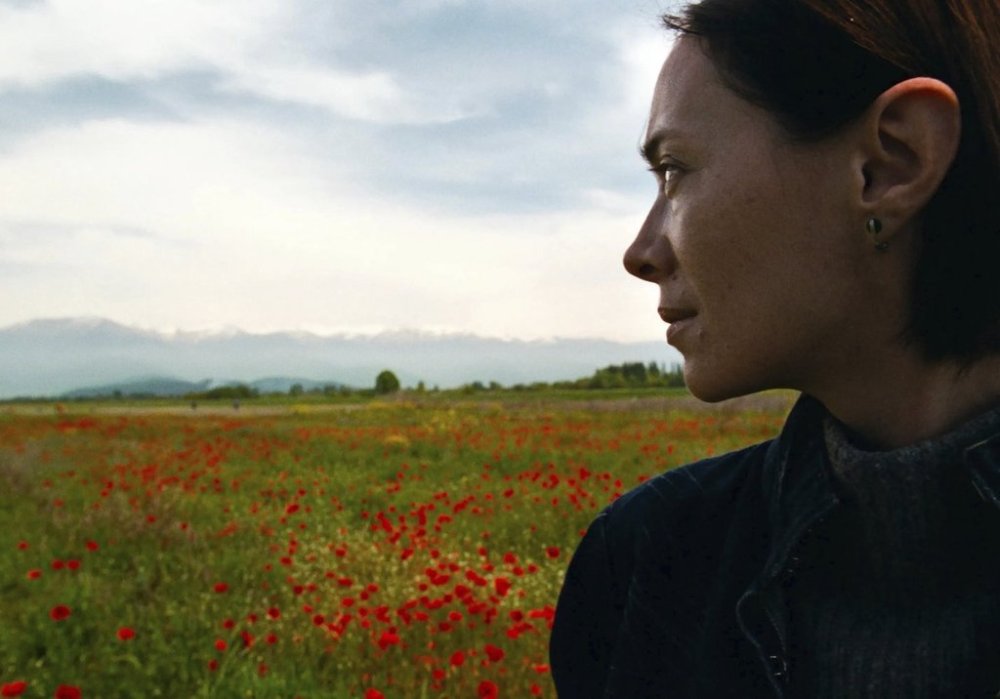
Nina experiences the moment with horror and silence, a pervading register in “April.” Kulumbegashvil’s film is formally composed and rigorously opaque, but it churns with an underlying, aching despair.
Abortion — legal but fraught in Georgia — is central to “April.” But Nina’s predicament and loneliness stem from something even deeper. Again and again, “April” places its solitary female protagonist in scenes where every gesture — professional or intimate — is treated as lesser, an imbalance that’s violently and brutally impressed upon Nina.
In “April,” where Nina traverses a harsh, isolating landscape, the most resonate, disquieting sounds are the soft, sad murmurs of the deaf-mute teen (Roza Kancheishvili) for whom Nina performs a kitchen table abortion. It’s a procedure, shot statically from the side with only half of her visible, necessitated by a mysterious rape. The girl’s mother has no answers. In “April,” even howls of pain go unuttered, and only the storm cloud skies cry.
“April” confirms Kulumbegashvili as among the most essential and uncompromising European filmmakers, extending the promise of her 2020 debut “Beginning,” about the wife of a Jehovah’s Witness leader. A prize-winner at last fall’s Venice Film Festival, “April” could be accused of leaning too much into an austere, art-film obliqueness. But Kulumbegashvili’s absolute control over the camera and the intensity of her calling make her film a grimly spellbinding and unforgettable experience.
Nina says little through the course of “April,” but when she does, it’s powerful. Being on the front lines of treating women in a place where their freedom is so restricted has brought Nina closer to desperation. When the investigation proceeds, she flatly tells her boss, “Other than my job, I have nothing to lose.” Sukhitashvili’s deft performance is most expressive in her yearning eyes.
Cinematographer Arseni Khachaturan, trading objective and subjective perspectives, toggles between images of Nina alone — driving at night, looking for a sexual partner — or crowded by men. When she explains the stillbirth circumstances, we see her view: three men, sitting in judgment.
Mixed throughout are separate, unexplained scenes of a faceless, humanlike figure with drooping, unformed bags of skin. We see her slowly shifting from one foot to the other, and hear her breathing heavily. Who is this? Is it a malformed expression of Nina’s tortured soul? Is it some adult fetus whose plight, in contrast to the unborn, has no sympathizers? These are some of the questions that this haunting film leave you to ponder.
“April,” a Metrograph Pictures release, is unrated by the Motion Picture Association. In Georgian, with English subtitles. Running time: 134 minutes. Three and a half stars out of four