
Many voters cast ballot in last federal election without feeling fully informed: poll
Advertisement
Read this article for free:
or
Already have an account? Log in here »
We need your support!
Local journalism needs your support!
As we navigate through unprecedented times, our journalists are working harder than ever to bring you the latest local updates to keep you safe and informed.
Now, more than ever, we need your support.
Starting at $15.99 plus taxes every four weeks you can access your Brandon Sun online and full access to all content as it appears on our website.
Subscribe Nowor call circulation directly at (204) 727-0527.
Your pledge helps to ensure we provide the news that matters most to your community!
To continue reading, please subscribe:
Add Brandon Sun access to your Free Press subscription for only an additional
$1 for the first 4 weeks*
*Your next subscription payment will increase by $1.00 and you will be charged $20.00 plus GST for four weeks. After four weeks, your payment will increase to $24.00 plus GST every four weeks.
Read unlimited articles for free today:
or
Already have an account? Log in here »
Hey there, time traveller!
This article was published 30/07/2025 (239 days ago), so information in it may no longer be current.
TORONTO – A new survey suggests more than half of Canadians believe they didn’t have enough information or needed more to cast their ballot in the last federal election.
The Ipsos poll says 57 per cent of respondents either believed they didn’t have enough local news or could have used more to assess candidates back in April.
Many respondents pointed to social media as among their most influential news sources, with 14 per cent specifically citing Facebook even though the social media site banned news content in Canada.
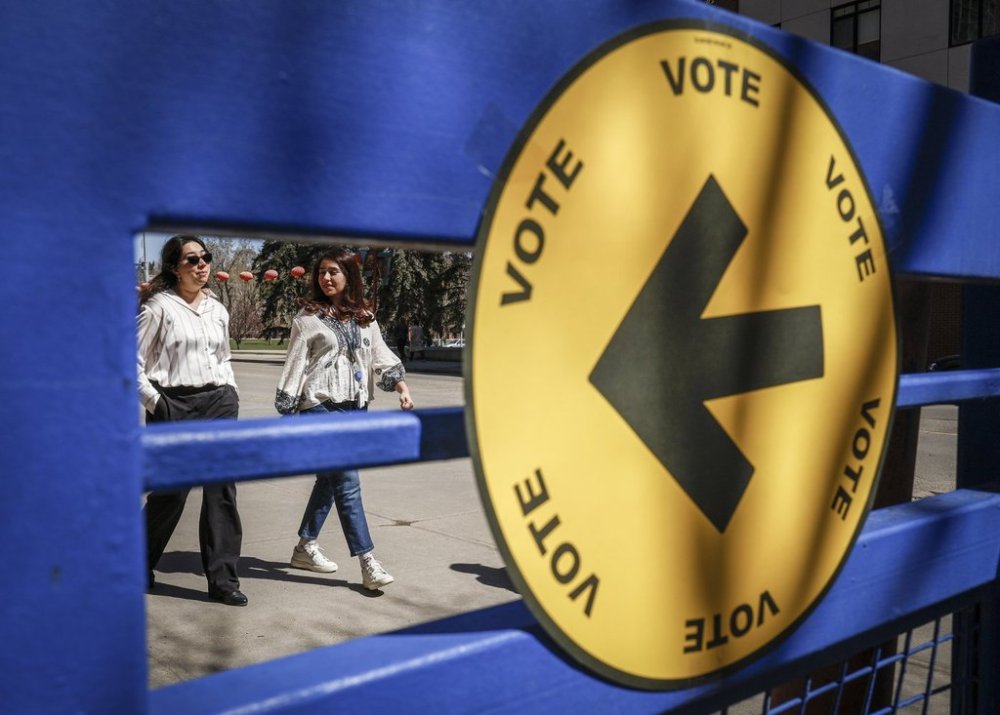
The online survey of 1,000 Canadian residents was conducted July 11 to 21 and is part of a study by the Public Policy Forum on access to local news.
The think tank concludes that a steady erosion of local news outlets leaves many Canadians “wading through the toxic waters of social media.”
Report authors include former Toronto Star columnist Tim Harper and former Maclean’s editor-in-chief Alison Uncles, who suggest a permanent non-partisan election fund could help media outlets better cover political races.
“There was scant coverage at the local level, with candidates using their own social media channels rather than have their information filtered through local reporters,” says the report, also co-authored by Sara-Christine Gemson, executive director of the Public Policy Forum Academy and a past Radio-Canada journalist.
“It is no hyperbole to argue that given the collapse of local news and the Facebook ban on news on its site, the federal election of 2025 was most likely the most poorly covered election in modern Canadian history.”
Meta stopped Canadian access to news on Facebook and Instagram in 2023 after the federal government required the social media giant to pay Canadian news outlets for posting their journalism.
Sean Simpson, senior VP at Ipsos, says the poll suggests “people are craving more information” about their local candidates and local issues.
The poll found 70 per cent of respondents said greater availability of local news would have made them better informed voters.
There was some overlap when respondents were asked which sources of information had the biggest impact on their ballot, with national media most often cited at 46 per cent, followed by word-of-mouth at 35 per cent.
While 14 per cent pointed to Facebook, 15 per cent cited other social media, such as TikTok, Reddit and Instagram.
Simpson notes that national concerns dominated the campaign as concerns over the economic policies of U.S. President Donald Trump shaped a two-party race between Conservative leader Pierre Poilievre and winning Liberal leader Mark Carney.
“It was very much an election fought on national leaders,” says Simpson, reached in Kitchener, Ont.
“It was: who’s best to deal with Trump?”
“Uncovered: How to build back election coverage for a better democracy” is set for release Thursday.
The PPF report was written in partnership with the Rideau Hall Foundation and the Michener Awards Foundation.
This report by The Canadian Press was first published July 30, 2025.